

Fitness Basics Editorial Team

A Daily Movement Audit: Questions to Ask Before You Start Any Routine
Use this checklist to assess your current movement habits, identify gaps, and set a realis…
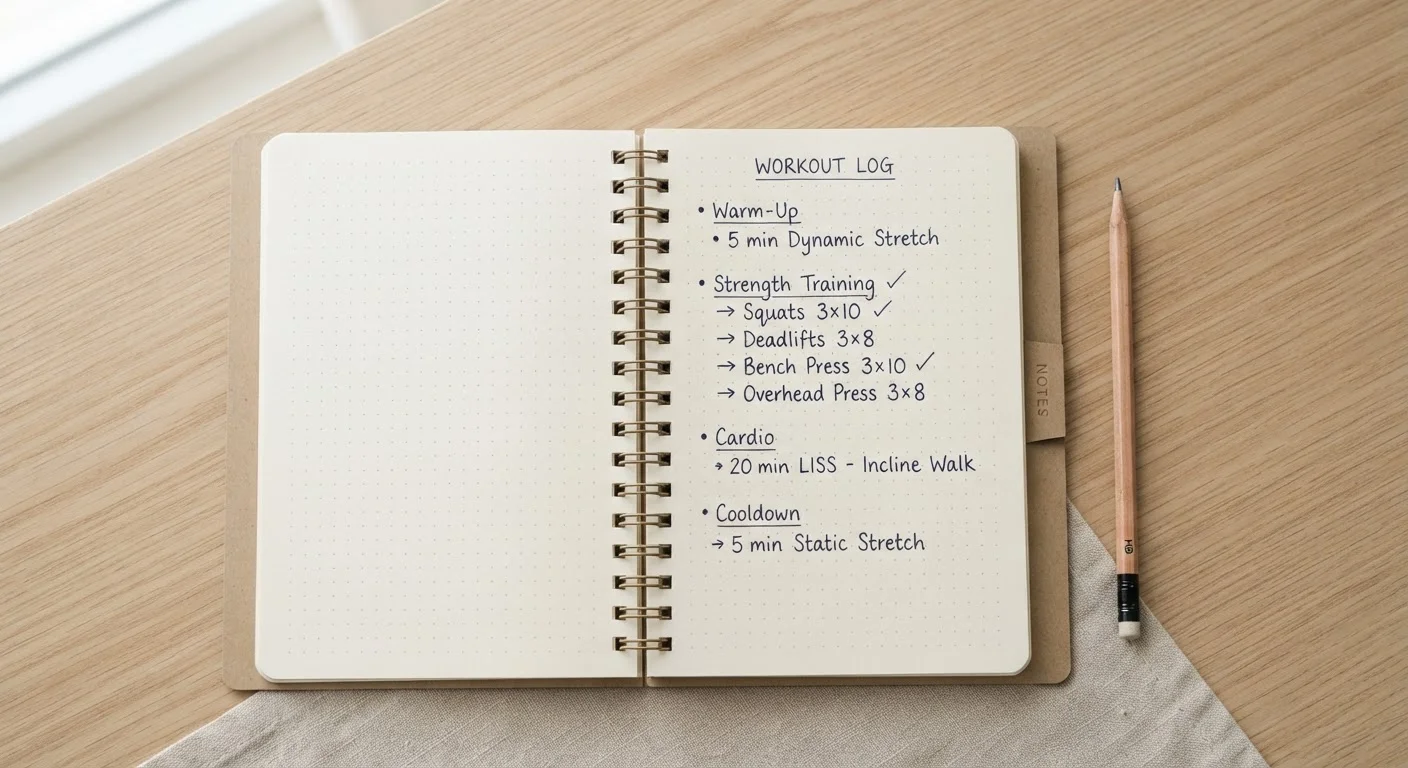
A Plain-Language Glossary of Movement and Exercise Terms
From eccentric contraction to proprioception — a straightforward reference for the termino…

Active Recovery vs. Rest Days: What the Research Actually Says
Should you move gently or do nothing at all between hard sessions? Explore the evidence be…

Bodyweight Training: What It Can — and Cannot — Do for You
No equipment needed, but there are real trade-offs. A balanced look at the genuine strengt…

Breathing and Movement: The Connection Most People Overlook
Breath isn't just oxygen delivery — it's a stabilising force during movement. Learn how br…
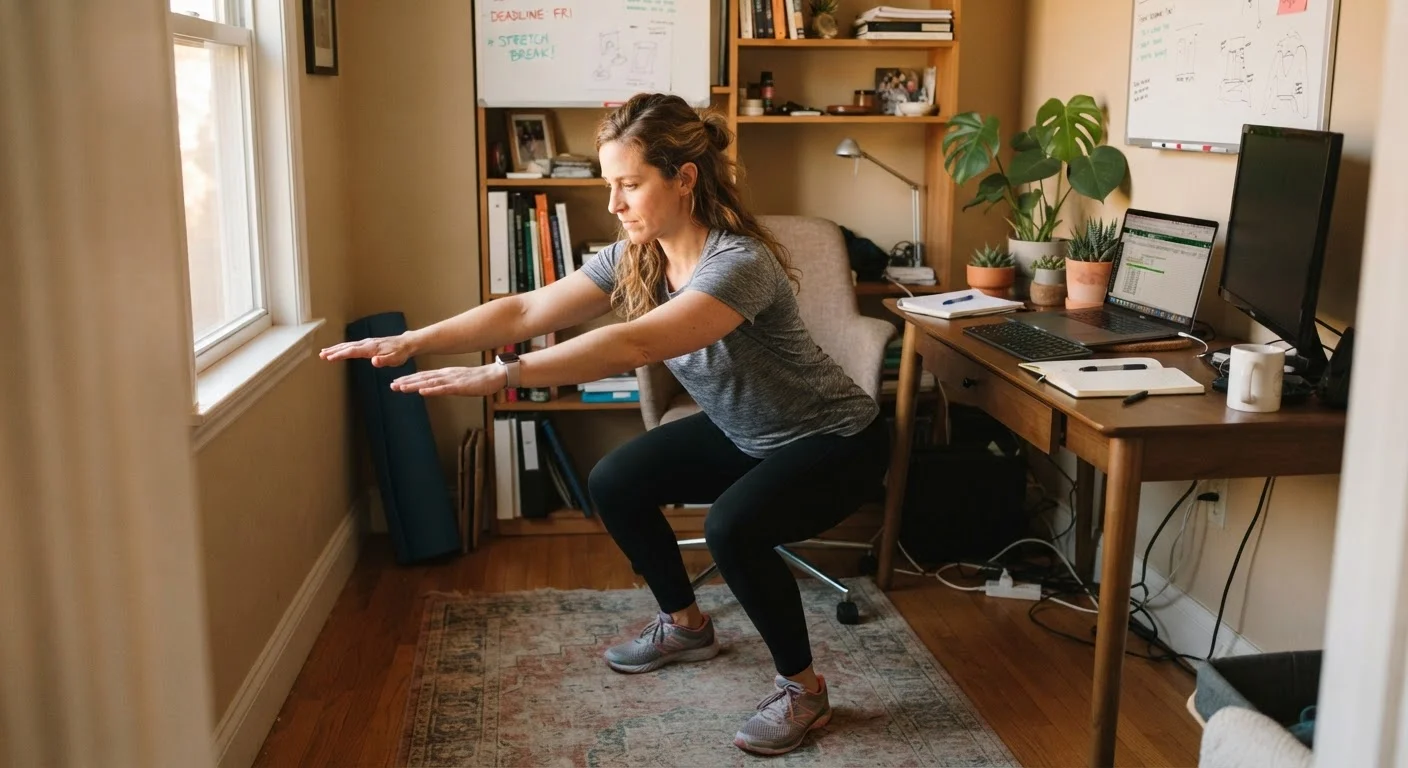
Building Consistency in Movement When Your Schedule Never Cooperates
Consistency beats intensity for long-term fitness. These practical principles help busy ad…
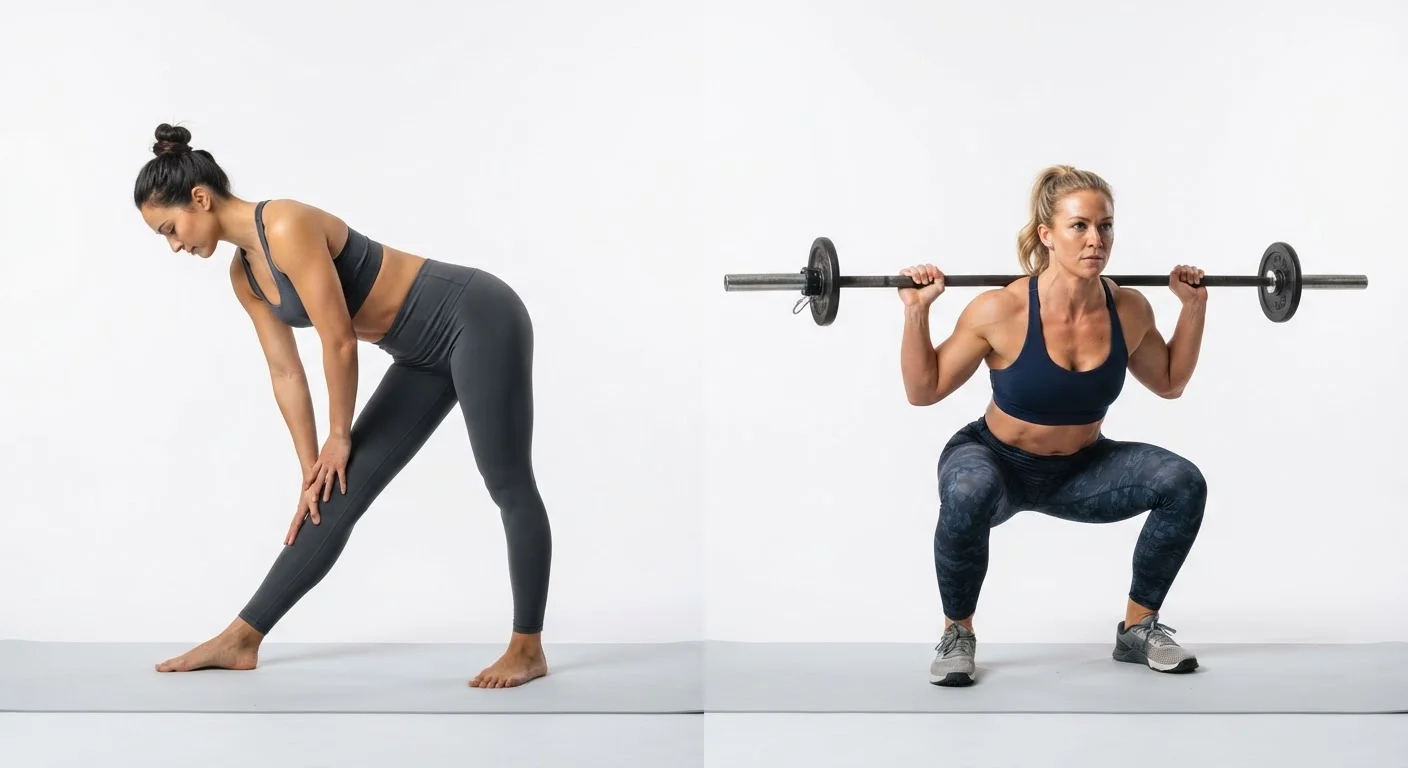
Mobility vs. Flexibility: Why the Difference Actually Matters
Flexibility and mobility are often used interchangeably, but they describe different thing…

Movement Myths That Keep People Stuck
From 'no pain, no gain' to 'cardio is the only real exercise' — these widespread beliefs a…

Movement for Life: A Complete Framework for Safe, Lasting Physical Health
Cover every layer of foundational movement — patterns, principles, recovery, progression, …

Posture as a Moving Target: What Good Alignment Really Means
Static 'perfect posture' is a misleading goal. Understand what alignment means during dyna…

Signs Your Movement Habits May Be Working Against You
Good intentions don't always produce good results. These patterns — like skipping warm-ups…

Starting Movement From Scratch: A Grounded Introduction for Busy Adults
No gym required. This guide walks complete beginners through the core ideas behind safe, s…

Strength Training vs. Stretching for Long-Term Joint Health
Both build resilience, but through different mechanisms. Compare how strengthening and str…

The Hip Hinge: One of the Most Useful Movements You Probably Aren't Doing
The hip hinge protects your spine during bending and lifting. Learn what it is, why it mat…
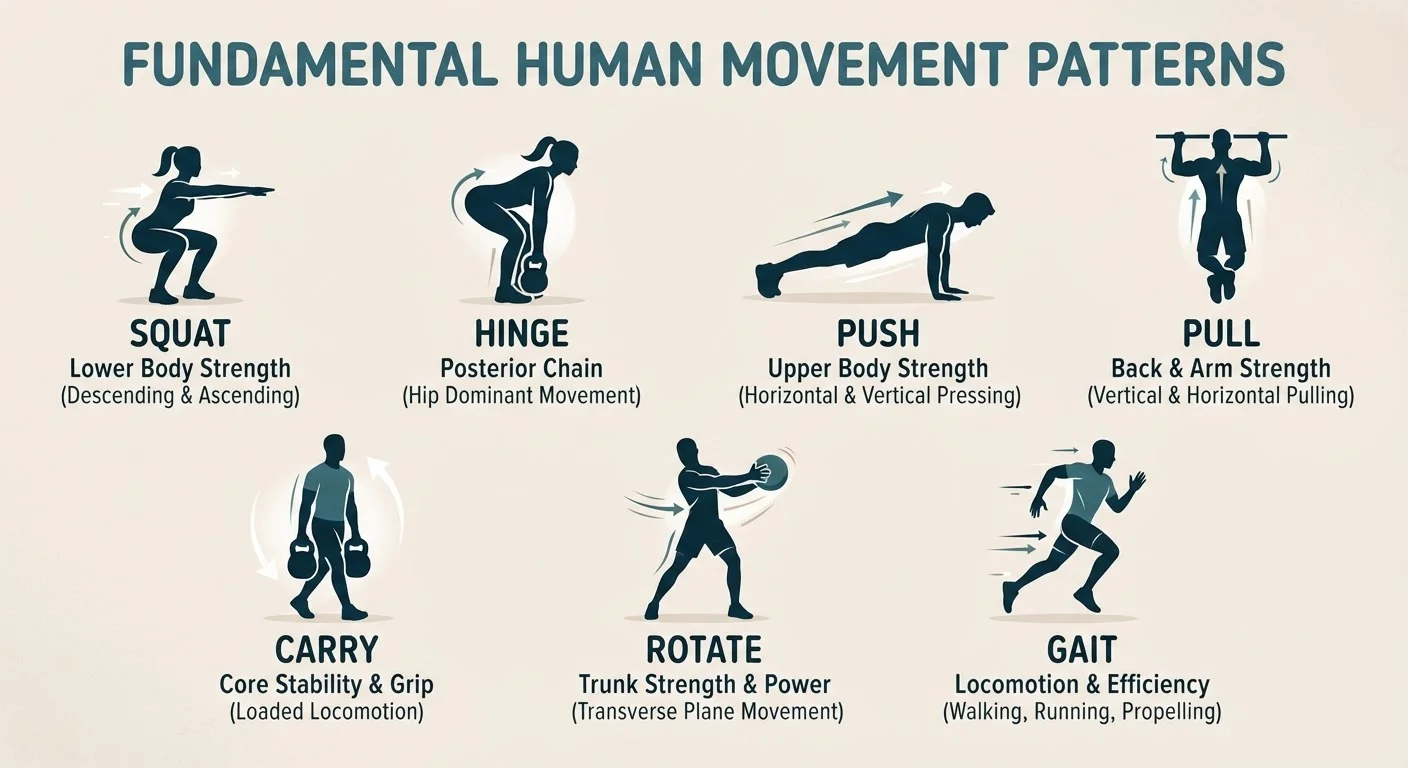
The Seven Foundational Movement Patterns Every Body Relies On
Push, pull, hinge, squat, carry, rotate, gait — learn why these seven patterns underpin al…

Why Your Lower Back Hurts After Sitting — and What Movement Can Do About It
Prolonged sitting changes how muscles load and support the spine. Understand the mechanics…

Before You Start: A Home Workout Readiness Checklist
Audit your space, schedule, and movement baselines before beginning a home routine — a pra…
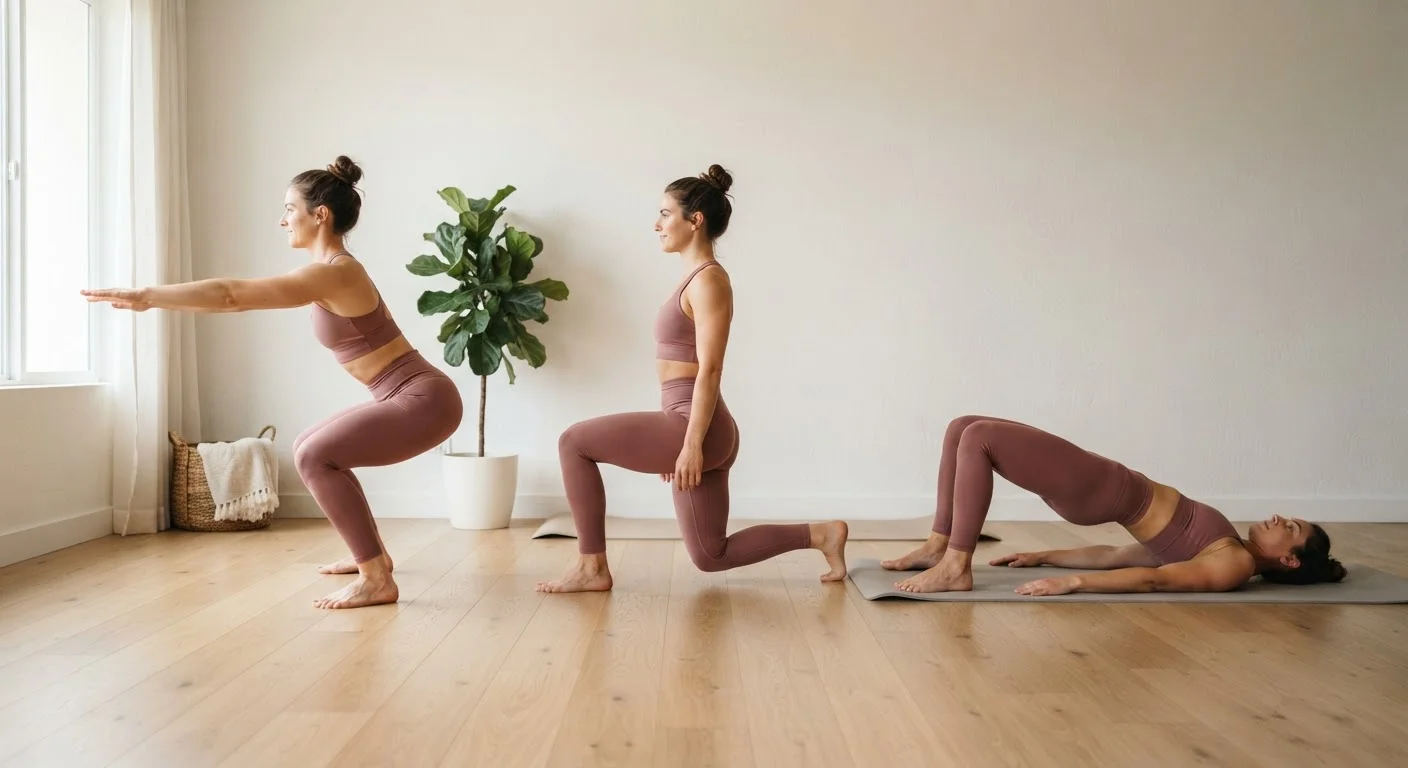
Bodyweight Squats, Lunges, and Glute Bridges: What Each One Actually Trains
A clear reference breakdown of three foundational lower-body moves — the muscles involved,…

Building a Push-Up Progression That Actually Gets You Stronger
Step-by-step instructions for advancing from wall push-ups to full floor push-ups and beyo…

Exercises That Double as Both Cardio and Strength Training at Home
A curated guide to movements that simultaneously challenge your cardiovascular system and …

No Gym, No Problem: Understanding Equipment-Free Fitness
Discover how bodyweight training works, why it's effective, and what the science says abou…
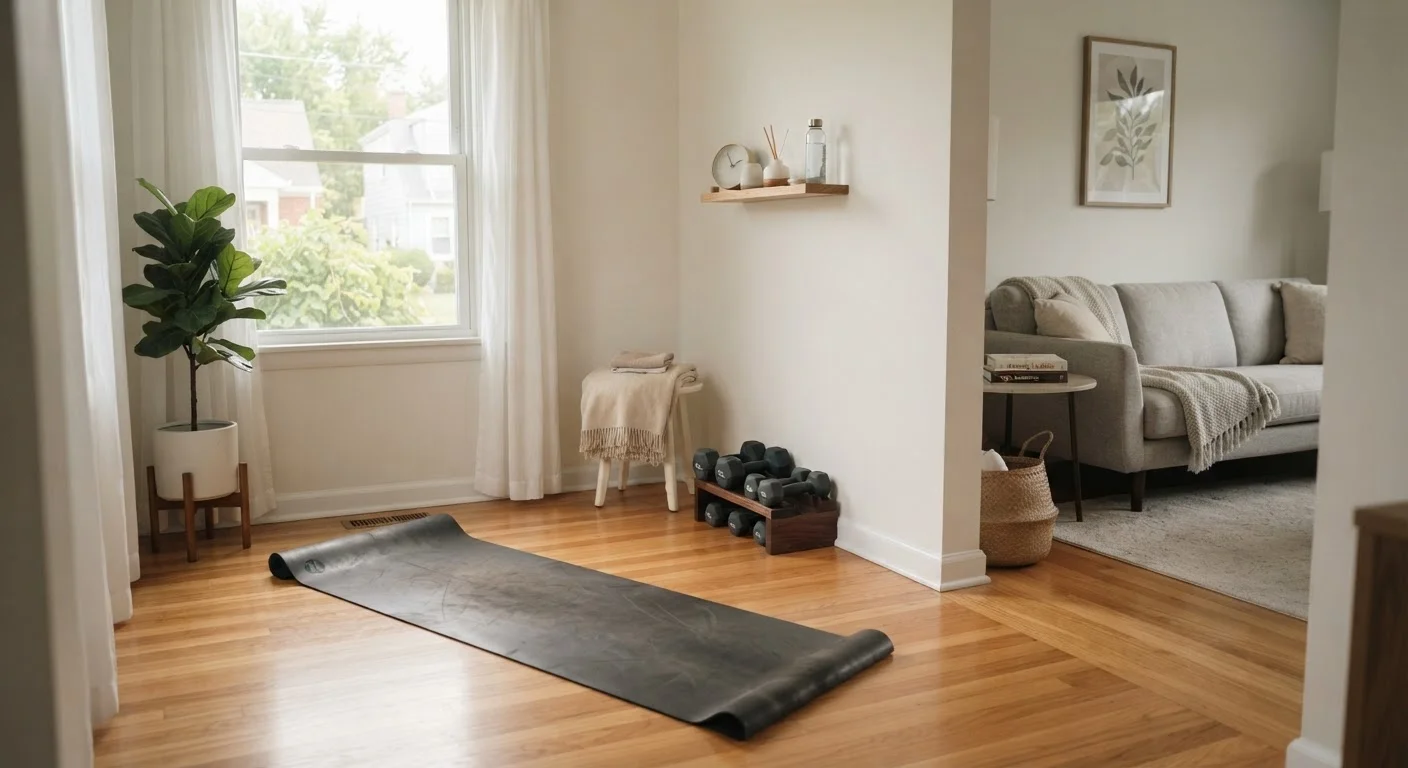
Setting Up a Home Workout Space That Won't Frustrate You
Practical steps for creating a functional exercise area at home, even in small rooms, with…

Short Daily Sessions vs. Longer Weekly Workouts at Home
Weigh the real trade-offs between exercising a little every day versus fewer, longer sessi…

Skipping Warm-Ups and Other Habits That Undermine Home Training
Explore the most common ways people sabotage their own home workouts — and the straightfor…

Starting Home Workouts When You've Never Had a Routine
A practical, zero-experience introduction to exercising at home — covering movement basics…

Structuring Rest and Recovery When Home Is Also Your Gym
Proven approaches for scheduling rest days, managing soreness, and knowing when low-intens…

The Complete Framework for Home-Based Fitness
An end-to-end guide covering workout structure, progression, rest, and recovery — everythi…
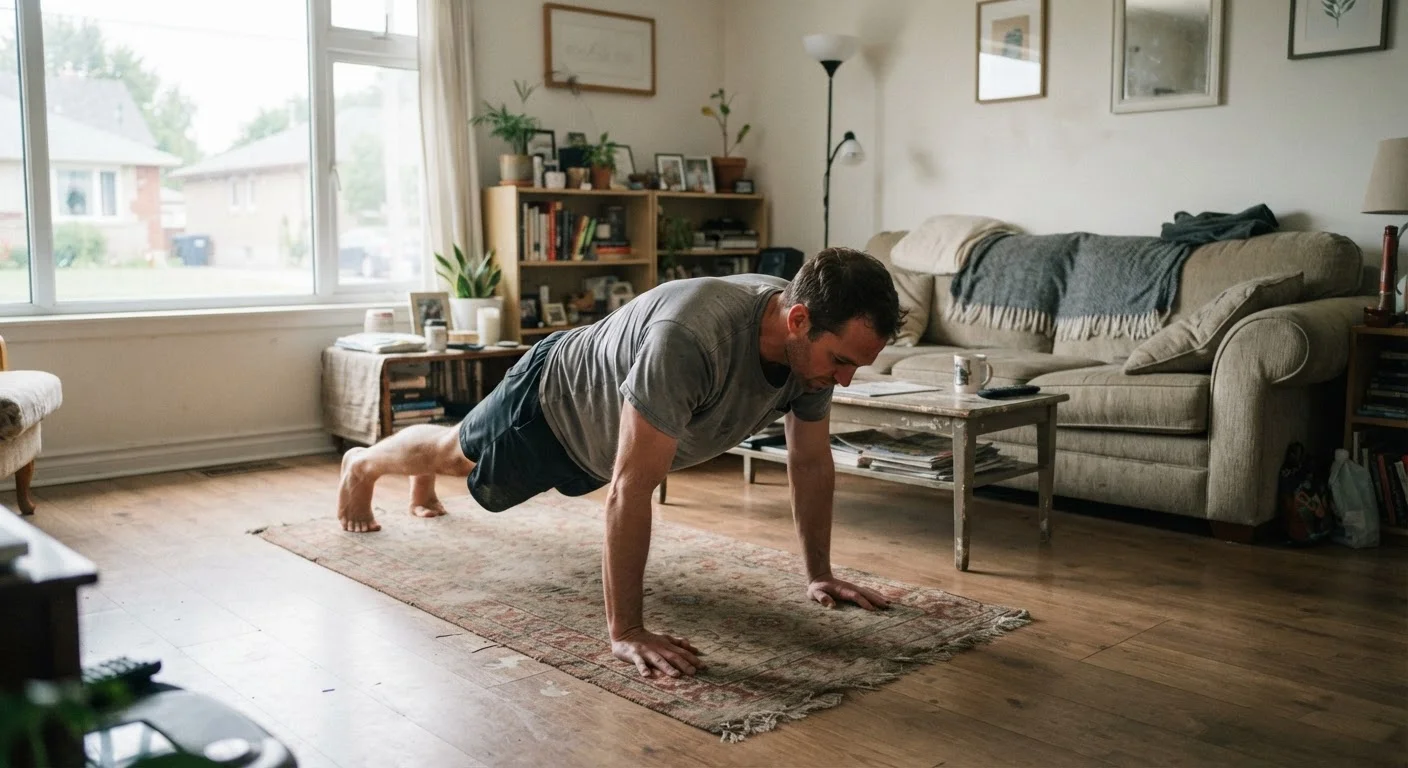
The Hidden Downsides of Only Training at Home
An honest look at the limitations of home-only fitness — from motivation gaps to movement …

Tracking Progress Without a Gym Machine or Fitness Tracker
Simple, reliable methods for measuring strength, endurance, and consistency gains at home …
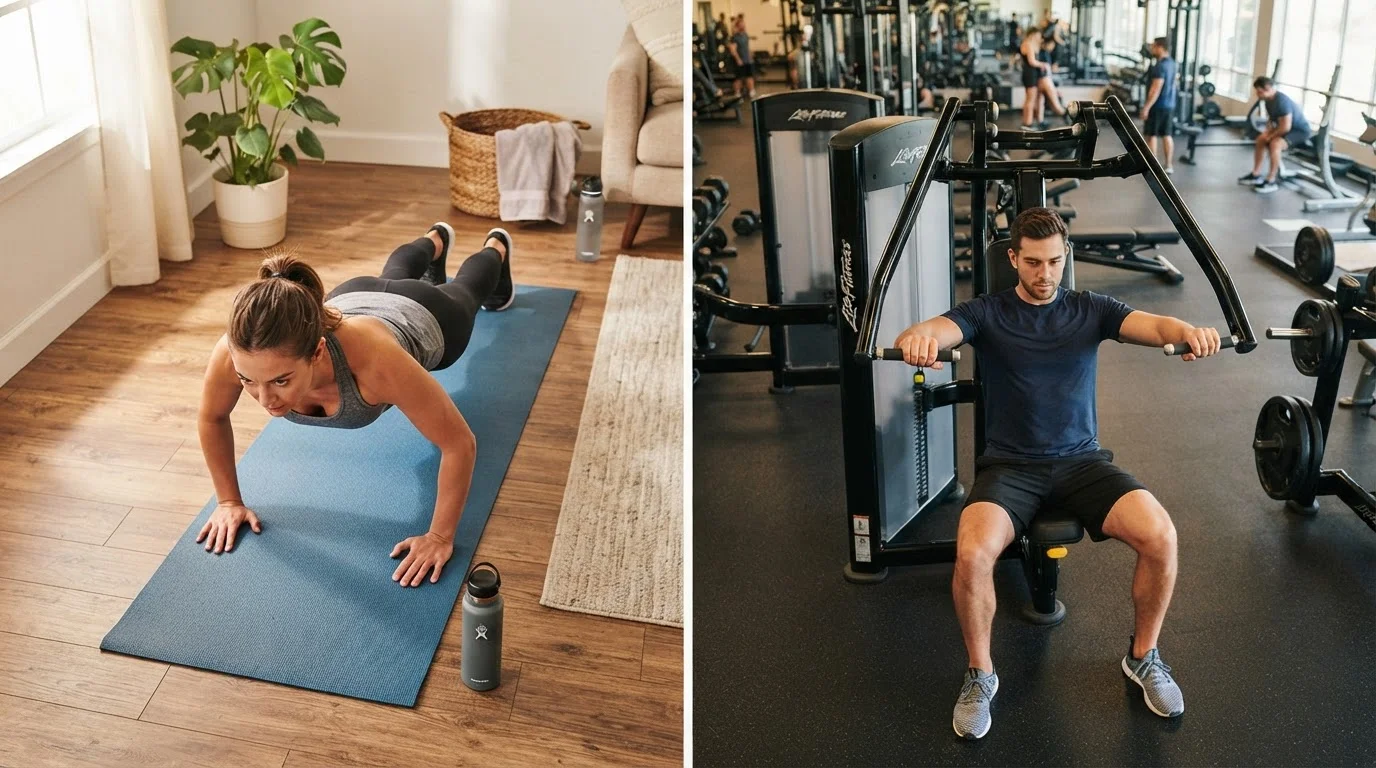
Training at Home vs. Training at a Gym: An Honest Comparison
A balanced look at how home and gym environments differ across cost, convenience, social m…

What the Research Actually Says About Bodyweight Exercise and Strength
Separating evidence-based findings from fitness folklore — what studies genuinely show abo…

Why Your Home Workout Stops Feeling Hard After Two Weeks
Learn what muscle adaptation means, why progress stalls, and how to keep bodyweight traini…

A Pre-Sleep Recovery Checklist for Better Overnight Repair
Use this practical checklist to set up your evenings — from nutrition and screen habits to…

Active Recovery vs. Complete Rest: Choosing What Your Body Actually Needs
Light movement or full stillness? Understand what distinguishes active recovery from passi…

Building a Weekly Recovery Routine That Matches Your Training Load
Learn how to structure rest days, sleep, and lighter sessions around your weekly workouts …
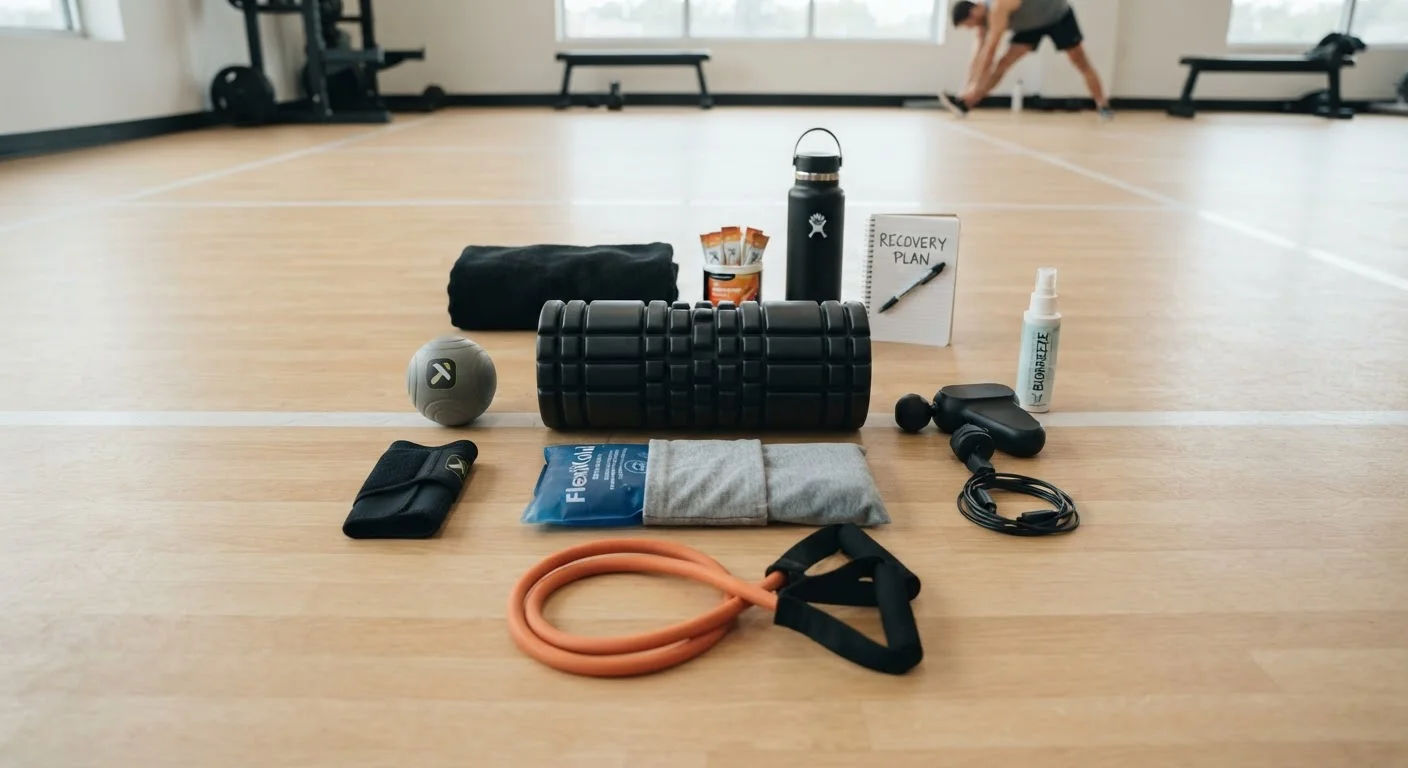
Cold Therapy, Foam Rolling, and Stretching: Recovery Tools Compared
Ice baths, foam rollers, and static stretching each claim to speed recovery. See how the e…

Common Recovery Mistakes That Quietly Stall Fitness Progress
Skipping cool-downs, ignoring sleep debt, and treating rest days as optional are holding m…
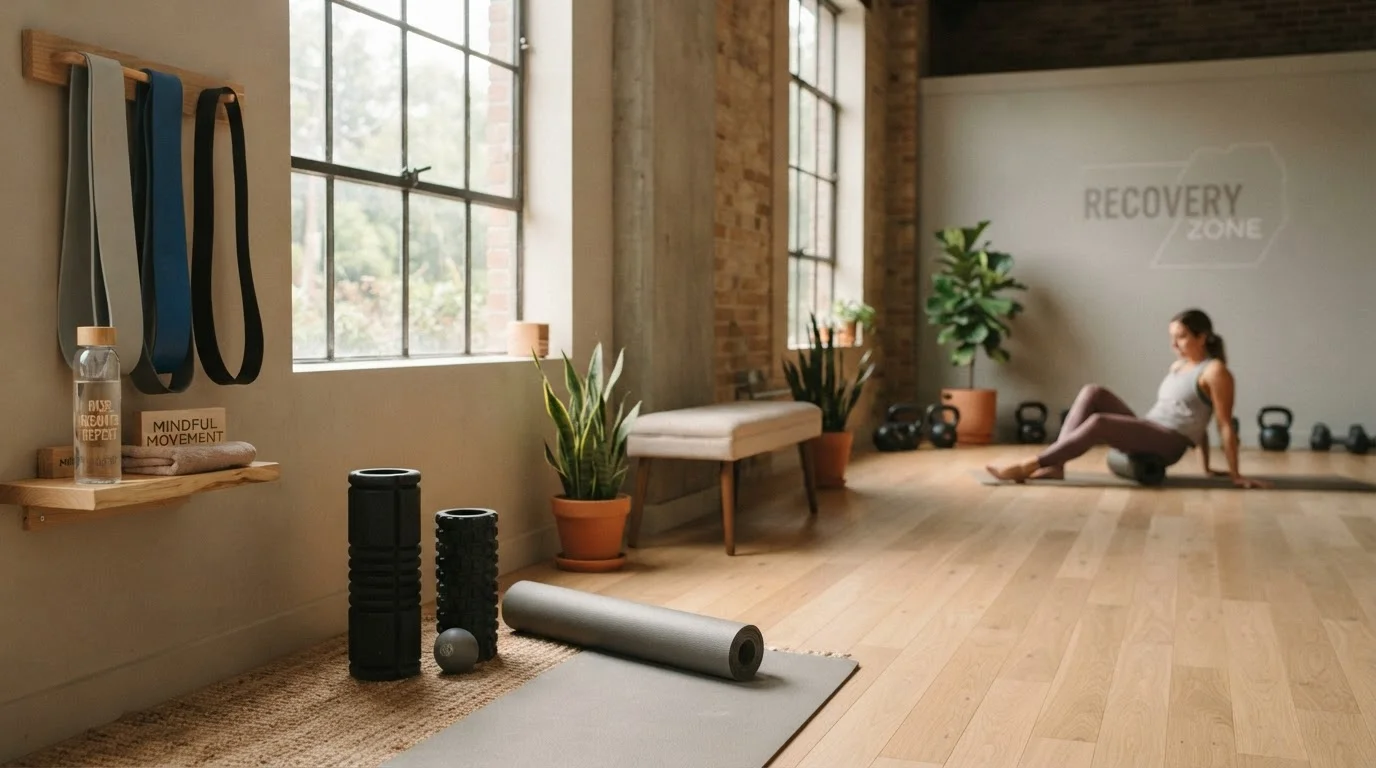
Debunking Recovery Myths That Persist in Gym Culture
"No pain, no gain" and "more training always means more progress" are just the start. Sepa…

How Stress and Mental Fatigue Affect Physical Recovery
Psychological stress and poor sleep share physiological pathways with exercise fatigue. Un…

Nutrition's Role in Recovery: What to Eat Between Workouts
Protein timing, carbohydrates, and hydration all influence how well your body repairs afte…

Overtraining Syndrome: What It Is and How It Differs From Ordinary Fatigue
Overtraining is more than feeling tired after a hard week. Understand the distinction betw…
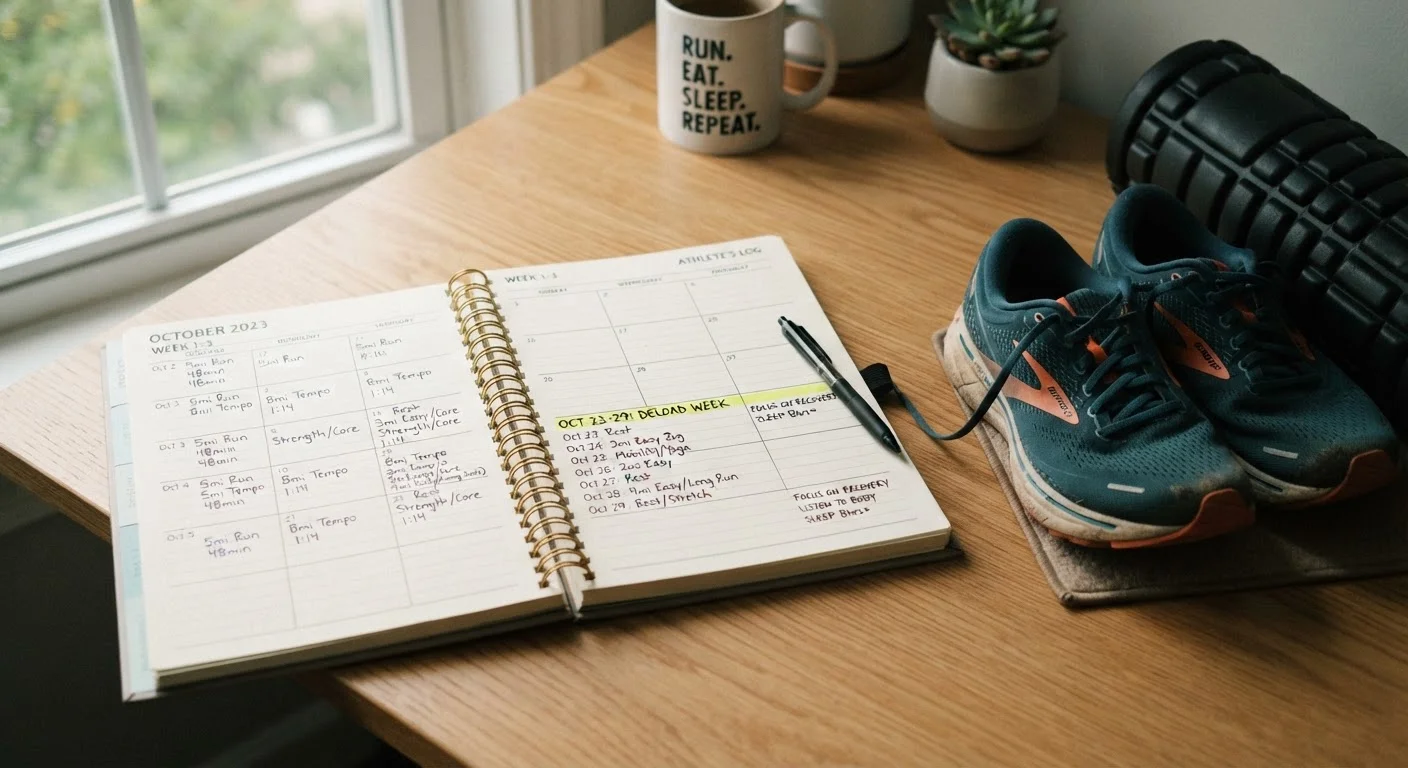
Periodisation and Planned Deload Weeks: Structuring Rest Into Your Training Cycle
Deload weeks and periodised programmes build intentional recovery into training rather tha…

Rest and Recovery in Fitness: A Complete Beginner's Overview
New to structured exercise? This guide explains what recovery means, why it matters from d…

Rest, Recovery, and Long-Term Athletic Health: An End-to-End Guide
From sleep science and active recovery to deload strategy and burnout prevention, this com…

Sleep and Muscle Repair: What Happens in Your Body Overnight
Deep sleep triggers hormonal processes essential for tissue repair and strength gains. Her…

The Pros and Cons of Training Through Mild Soreness
Light exercise on sore muscles may aid circulation and mood — but there are real risks too…

The Signals Your Body Sends When It Needs More Rest
Persistent soreness, poor sleep, and mood dips can all be signs of under-recovery. Recogni…

Why Recovery Is Training: The Science Behind Rest Days
Rest days aren't laziness — they're when fitness gains actually happen. Explore the physio…