

Key Takeaways
- Short, frequent movement sessions build more durable habits than occasional long workouts.
- Anchoring movement to existing daily cues removes the need for willpower or perfect timing.
- Foundational movement patterns — hinge, squat, push, pull — cover most fitness needs efficiently.
- Flexibility in format (5 minutes vs. 45) is what keeps a routine alive through unpredictable weeks.
- Tracking streaks or completions reinforces identity, not just behavior.
Why Schedules Derail Movement — and What Actually Fixes It
The problem most busy adults face isn't motivation — it's architecture. A fitness plan built around a fixed 45-minute block will collapse the moment that block disappears, which, for most people, happens weekly. The solution isn't more discipline; it's a more flexible structure.
Research in behavioral science consistently shows that habit formation is driven by cue-routine-reward loops, not by willpower. When movement is attached to an existing daily cue — brewing coffee, ending a work call, walking to lunch — it becomes far less dependent on ideal conditions. That's the foundation of durable consistency.
For a complementary look at how this same logic applies to mindfulness habits, see anchoring a daily practice to your existing schedule.
The Movement Patterns Worth Prioritizing
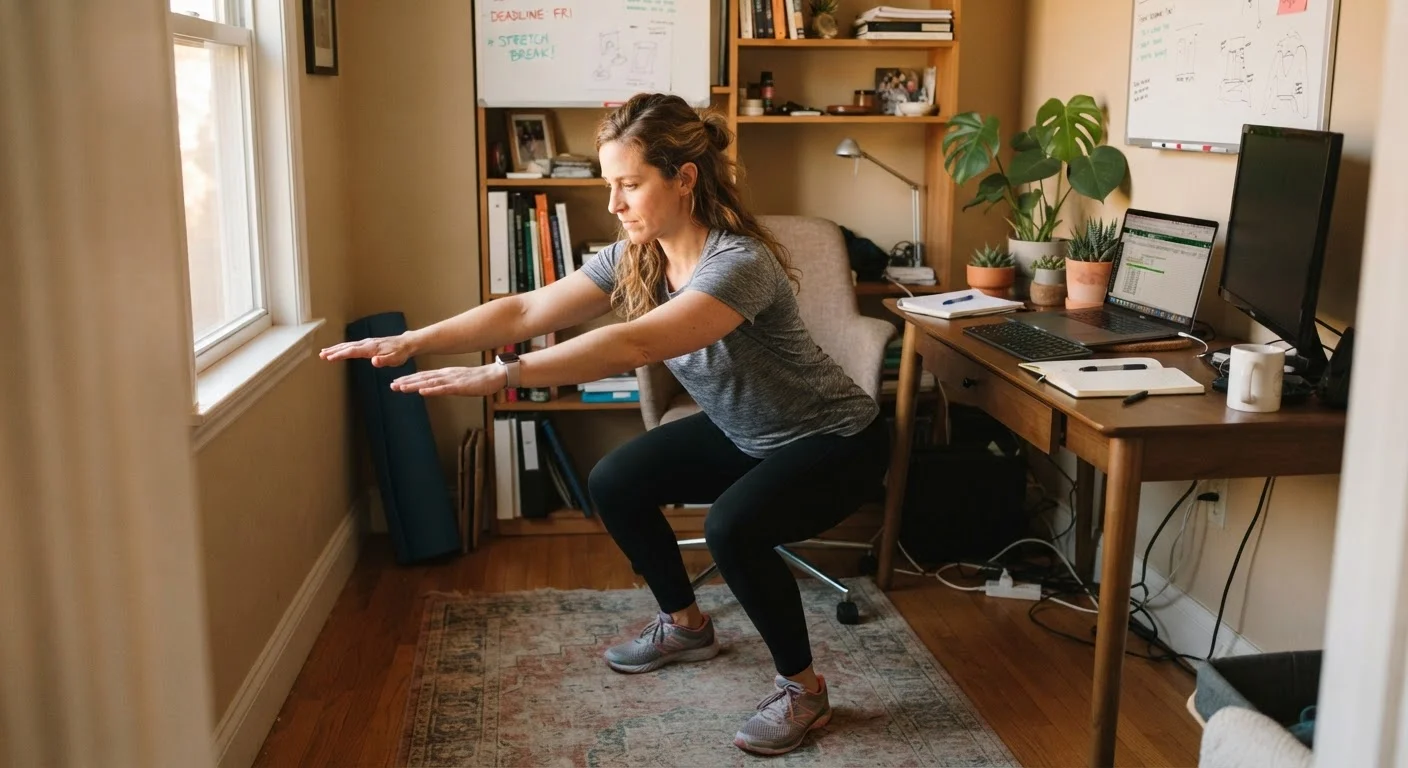
When time is scarce, knowing what to do matters as much as when to do it. Exercise science identifies six foundational movement patterns that together engage the whole body: squat, hinge, push, pull, carry, and rotate. Bodyweight versions of these patterns require no equipment and can be performed in a few square feet.
Rather than building a complicated program, busy adults benefit from rotating through two or three of these patterns per session. A five-minute squat and push-up circuit done four times a week produces more cumulative training stimulus than one weekend session that leaves you sore for three days.
This is the core argument behind regularity outperforming peak-effort workouts for long-term functional strength. It also means your body encounters movement variety — which matters for joint health and posture. For more on how dynamic movement affects alignment, see what alignment really means during movement.
150 min
Weekly moderate movement recommended for adults
The U.S. Department of Health and Human Services Physical Activity Guidelines for Americans recommend at least 150 minutes of moderate-intensity aerobic activity per week for most adults.
~22 min
Daily movement if spread evenly across the week
Breaking the 150-minute weekly target into daily segments shows that consistency across shorter sessions is a realistic path for most time-constrained adults.
Quick Wins You Can Implement This Week
The fastest way to build consistency is to lower the entry point so dramatically that skipping feels more effortful than doing it. The practices below are designed for exactly that — small commitments that compound over time.
One important note: if you have existing injuries, chronic conditions, or haven't been physically active for an extended period, speak with a healthcare professional before significantly increasing your movement load. General guidance here is not a substitute for individualized assessment.
If you're also working on making other daily habits stick — like nutrition — the same cue-based approach applies. See how it translates to consistent eating patterns on a packed schedule.
Protecting Your Progress: Avoiding Common Traps
Consistency isn't just about adding movement — it's about sustaining it without injury or burnout. Two of the most common traps are repeating the same motion daily without variation (which overloads specific tissues) and skipping warm-up entirely when pressed for time.
Even 90 seconds of light dynamic movement — hip circles, arm swings, gentle spinal rotation — meaningfully prepares joints and reduces injury risk. Consider it a non-negotiable minimum, not an optional extra. Similarly, patterns that quietly work against you are worth understanding before they become problems.
Treat Rest Days as Active Recovery
Rest days don't mean zero movement — they mean lower intensity. A 10-minute walk, gentle stretching, or slow mobility work on rest days supports recovery while keeping the daily movement habit intact. This approach helps prevent the 'restart' cycle many people fall into after true sedentary days.
Finally, pair your movement habit with a flexible morning framework. Morning habits that hold up on unpredictable days offer a practical model for weaving physical activity into the first part of your day without rigid time commitments.
This article is for general informational and educational purposes only and does not constitute medical advice. Consult a qualified healthcare professional before beginning any new exercise program, especially if you have existing health conditions or concerns.