

Key Takeaways
- Prolonged sitting compresses lumbar discs and inhibits the deep muscles that stabilize the spine.
- Hip flexor tightness from sitting alters pelvic alignment, increasing stress on the lower back.
- Short, frequent movement breaks are more protective than a single long exercise session.
- Targeted movement patterns — not passive rest alone — help restore muscle function and reduce pain.
- Consistent habits around posture and mobility matter more than any single stretch or exercise.
Sitting-Related Lower Back Pain
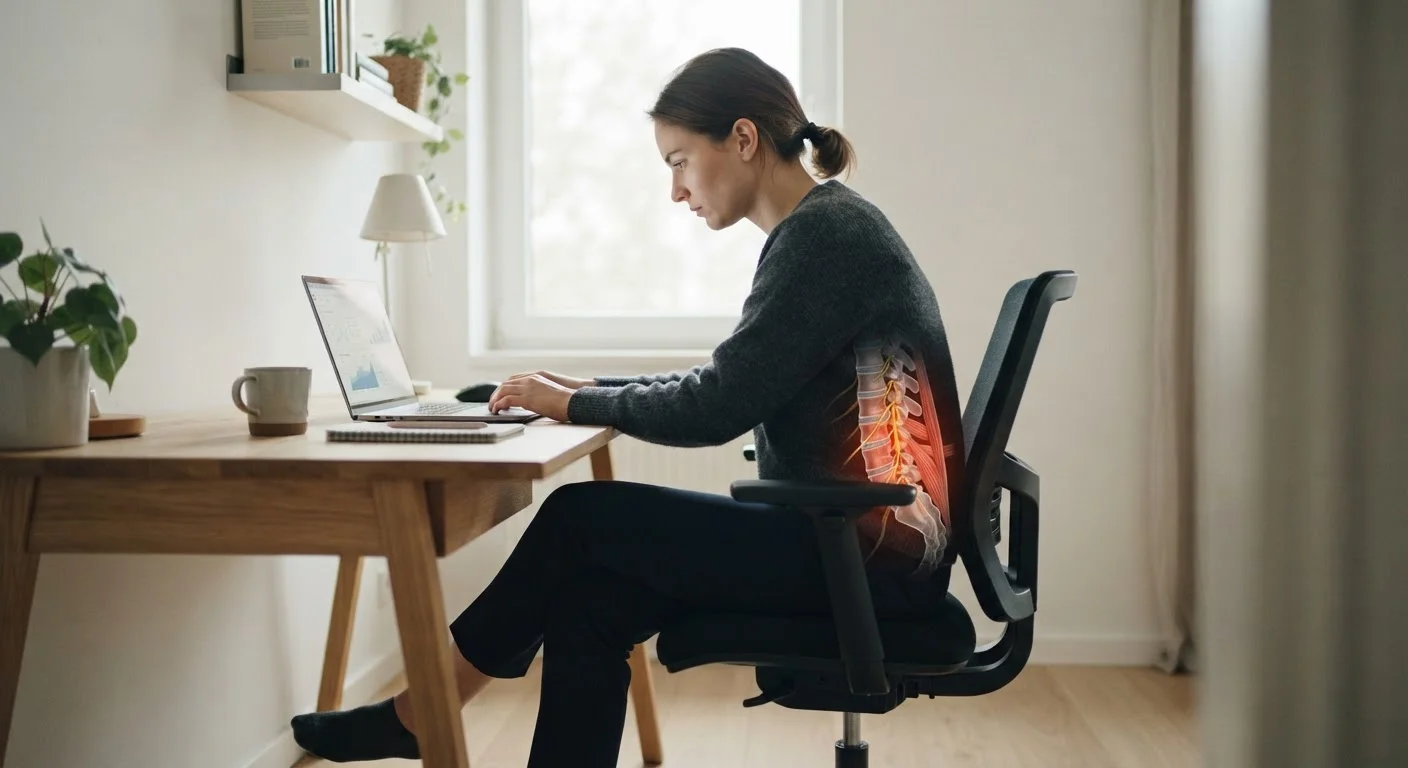
Lower back pain triggered or worsened by prolonged sitting occurs when spinal-support muscles are held in shortened or lengthened positions for extended periods, gradually reducing their ability to stabilize the spine effectively. Unlike acute injuries, this type of discomfort builds slowly through repetitive loading patterns rather than a single event. It is one of the most common musculoskeletal complaints among desk-based workers.
Sustained lumbar flexion in a seated position increases intradiscal pressure and can alter motor control patterns in deep stabilizing muscles such as the multifidus and transverse abdominis, reducing their reflexive activation.
What Sitting Actually Does to Your Spine
The spine is designed for movement. When you sit for extended periods, you remove the dynamic loading that keeps spinal tissues healthy and muscles responsive. Three specific mechanisms drive most sitting-related lower back pain.
Increased intradiscal pressure. Sitting — particularly in a slumped or forward-leaning posture — raises the pressure inside the lumbar intervertebral discs significantly compared with standing or walking. Over hours, this sustained compression can contribute to disc irritation and the dull, diffuse ache many people feel by mid-afternoon.
Deep stabilizer inhibition. The multifidus and transverse abdominis are small, deep muscles that provide moment-to-moment stability to the lumbar spine. Research in rehabilitative science consistently shows that sustained or awkward postures can reduce the reflexive activation of these muscles, leaving the spine less protected between movements.
Hip flexor shortening. The iliopsoas — a group of muscles connecting the lumbar vertebrae to the femur — adaptively shortens when held in a flexed position for hours. Tight hip flexors pull the pelvis into an anterior tilt (tilting the front of the pelvis downward), which increases the curve in the lower back and amplifies compressive forces on the lumbar facet joints.
Pain Is Not Always a Structural Signal
Sitting-related lower back pain is often driven by muscle fatigue, altered motor patterns, and sustained tissue loading rather than identifiable structural damage. Many people assume recurring back pain means something is 'wrong' with their spine, but imaging studies frequently show no correlation between structural findings and pain levels. This does not mean the pain is not real — it means movement-based strategies can be highly effective even when scans appear normal. Always seek professional evaluation if your symptoms are severe, progressive, or neurological.
The Movement Patterns That Make a Difference
Understanding the mechanics above points directly toward solutions. The goal is not simply to 'exercise more' but to restore the specific movement qualities sitting erodes: hip mobility, spinal stability, and coordinated muscle activation.
Hip mobility work. Exercises that move the hip through its full range — kneeling hip flexor stretches, leg swings, and deep squat holds — counteract the adaptive shortening that occurs during sitting. Improved hip mobility reduces the compensatory load the lumbar spine takes on during everyday bending and lifting. For a practical entry point into protective movement, the hip hinge pattern is especially worth learning — it trains the hips and hamstrings to absorb bending forces so the lower back does not have to.
Low-load spinal stability training. Exercises like the dead bug, bird-dog, and glute bridge train the deep stabilizers without placing high compressive forces on the spine. These are not about dramatic effort — they work precisely because they target the small muscles that high-intensity training often bypasses.
Frequent positional change. No single posture — even a 'perfect' one — is ideal for extended periods. The most protective strategy is variety: standing, walking, and shifting seated positions regularly throughout the day. Brief movement breaks every 30 to 60 minutes interrupt the sustained loading patterns that drive cumulative discomfort.
The 30-Minute Rule for Desk Workers
Set a discreet timer to prompt a brief positional change every 30 minutes. Even standing for two minutes, rolling through your ankles, or performing a single set of glute bridges by your desk is enough to interrupt the sustained loading that drives cumulative discomfort. Small, consistent interruptions outperform occasional longer breaks.
Building a Practical Habit That Sticks
The gap between knowing what helps and actually doing it consistently is where most people struggle. A few structural principles make the difference.
Attach movement to existing routines. Standing up every time you take a phone call, doing a quick set of hip mobility exercises before your morning coffee, or walking to a colleague's desk instead of sending a message — these micro-habits compound without requiring dedicated workout time.
It is also worth examining whether your movement habits outside of sitting are inadvertently making things worse. Patterns like skipping warm-ups or repeating the same limited range of motion daily can quietly deepen the problem — the signs your movement habits may be working against you are often subtle until discomfort becomes persistent.
For desk workers who want a structured starting point, gentle yoga-based sequences offer an accessible bridge between passive stretching and active stability work. A sequence of poses designed specifically for people who spend long hours seated — such as those outlined in resources on yoga poses for desk workers — can address both the physical tightness and the mental fatigue that accumulate together.
Prioritize consistency over intensity. Ten minutes of purposeful movement spread across a workday will generally outperform a single intense session that leaves the body in the same static position for the remaining 14 hours. Lower back health is built in the gaps between exercise, not just during it.
This article is for general informational purposes only and does not constitute medical advice. If you are experiencing persistent, severe, or radiating back pain, please consult a qualified healthcare professional before beginning any new exercise program.