

Key Takeaways
- A 6×6 foot clearing is enough space for a full bodyweight workout routine.
- Dedicated workout zones reduce friction and make it easier to stay consistent.
- You don't need special flooring, equipment, or a separate room to train effectively.
- Lighting, ventilation, and clutter removal matter more than gear.
- Small setup rituals signal your brain that it's time to exercise.
What you will need
Why Your Setup Matters More Than Your Equipment
The single biggest barrier to home workouts isn't motivation — it's friction. When your exercise space requires 15 minutes of rearranging before you can start, that overhead compounds over days and weeks until sessions are skipped entirely. A thoughtfully arranged space removes that friction before it accumulates.
Research in behavioral science consistently shows that environment shapes behavior more reliably than willpower. Reducing the number of decisions and physical steps between you and your first rep is a structural solution, not a psychological trick. You're designing conditions where starting is easier than not starting.
This doesn't require a spare room, expensive flooring, or a rack of equipment. As the complete framework for home-based fitness demonstrates, the most durable training setups are simple, repeatable, and built around the space you already have.
What you will need
How to Set Up Your Space Step by Step
Follow the steps below in order. Each one addresses a specific friction point that commonly derails home exercisers. Most can be completed in under 30 minutes and require no purchases.
Choose and clear your exercise zone
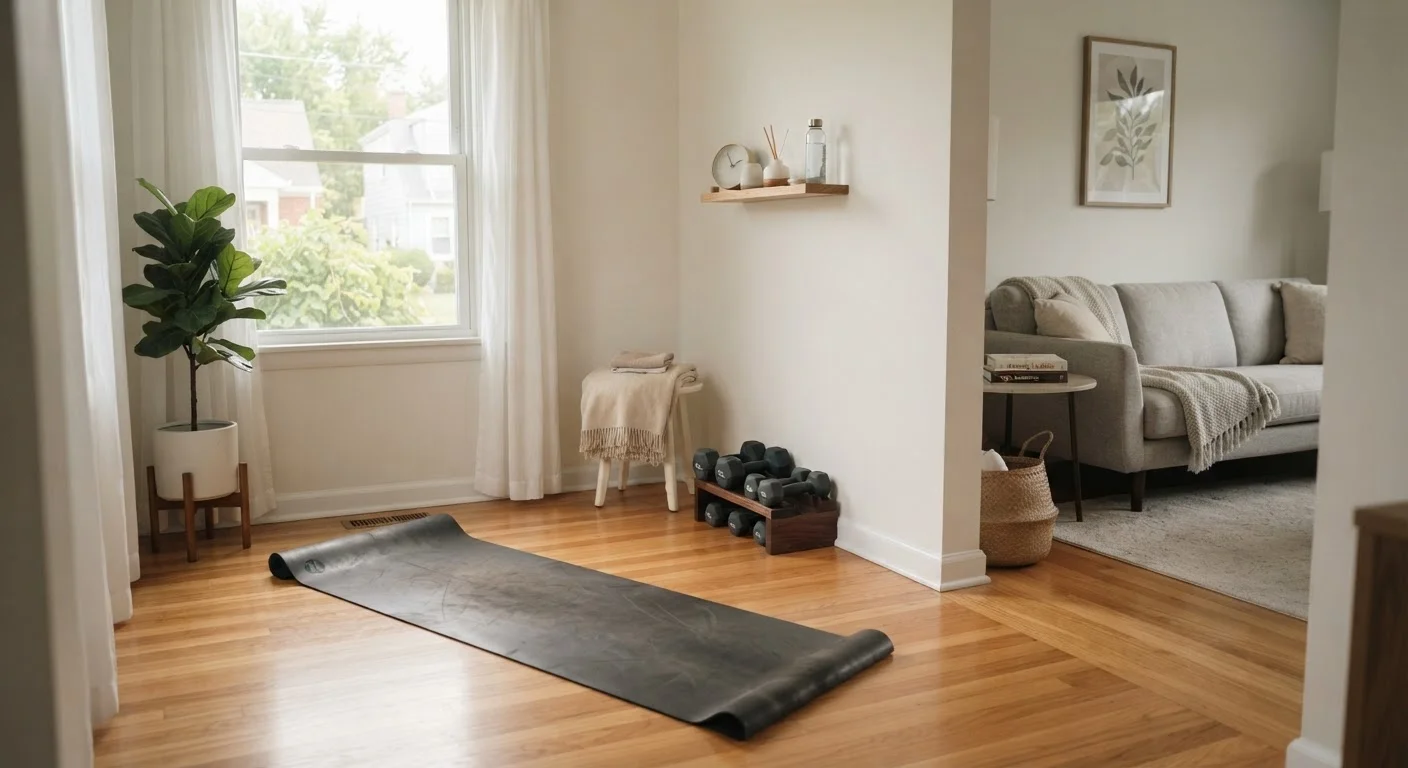
Pick one consistent location — a bedroom corner, a cleared living room section, or even a hallway. Consistency matters: returning to the same spot each session reduces decision fatigue. You need a minimum of roughly 6×6 feet to perform most bodyweight movements, including push-ups, lunges, and standing exercises with arm extension.
Remove loose rugs and anything within arm's reach that could be knocked over. If you're working in a shared space, identify a time window when that area is reliably available to you.
Address flooring and surface safety
You don't need to install gym flooring. A standard yoga mat (approximately 3×6 feet) handles most floor-based exercises. For standing and dynamic movements, exercising directly on carpet is fine; hardwood and tile surfaces call for a mat or supportive footwear to reduce slip risk.
If you plan to jump or do plyometric work, consider a folded blanket under the mat for extra impact absorption — especially on concrete or tile in an apartment setting.
Optimize lighting and ventilation
Poor lighting makes it harder to check form, and a stuffy room raises perceived exertion, making workouts feel harder than they are. Maximize natural light where possible, or position a floor lamp to illuminate your full body rather than casting shadows.
Open a window before you start, or use a fan directed across your body. Adequate airflow helps regulate core temperature, which supports endurance during longer sessions.
Reduce visual and physical clutter
A cluttered environment competes for attention and raises cortisol, both of which undermine workout focus. You don't need a pristine room — but the area within your workout zone should be visually settled. Move laundry baskets, bags, or stacked items to the perimeter before your session.
If clutter consistently returns to your workout zone, consider a dedicated basket or bin nearby where items can be quickly relocated and retrieved after training.
Set up audio or visual cues that signal workout time
Environmental cues reinforce behavioral habits. A consistent audio cue — a specific playlist, a podcast reserved only for workouts, or a timer alarm — signals your nervous system that focused movement is starting. This is not motivational fluff; it's applied habit science.
Position your phone or tablet at eye level or slightly below, not flat on the floor, so you can check form guidance or timers without straining your neck. A small shelf, stacked books, or a chair work equally well as stands.
Keep minimal equipment accessible but stored neatly
If you use a resistance band, foam roller, or similar tools, store them at the edge of your workout zone — visible enough to be grabbed easily, but not underfoot. A small basket or hook on a nearby wall keeps items organized without requiring a separate storage area.
Keeping equipment out of sight entirely often leads to skipping its use. Visible, accessible tools have higher usage rates — a pattern consistently observed in behavior-design research.
Check Your Space for Safety First
Before any workout, scan your area for trip hazards — loose rugs, cables, or furniture edges within reach. Exercising on a slippery surface without shoes can cause falls, particularly during dynamic movements like jumping jacks or lunges. If you have an underlying health condition or haven't been active in some time, consult a qualified healthcare professional before starting a new exercise routine.
Once your space is set up, pair it with a realistic routine. If you're new to exercising at home, starting home workouts when you've never had a routine gives you a practical first-week framework that complements the setup work you've done here.
Use a Setup Ritual to Build Consistency
Spending 60–90 seconds preparing your space — rolling out a mat, moving a chair, turning on music — functions as a mental transition into workout mode. This small routine reduces the activation energy needed to start and can improve follow-through over time.
Maintaining Your Space and Knowing Its Limits
A well-arranged space degrades over time if it isn't maintained. Schedule a brief two-minute reset after each session — mat back in position, any moved furniture returned, equipment stowed. This prevents the slow accumulation of disorder that gradually reclaims your workout zone.
Avoid Exercising on Slippery Surfaces
Polished tiles and certain laminate floors can become hazardous when bare feet or socks are involved. Use a non-slip mat or wear supportive footwear during dynamic or lateral movements. A thin yoga mat provides both cushioning and grip for most bodyweight exercises.
It's also worth being honest about what a home space cannot easily replicate. Heavy loading, barbells, and certain machine-based movements genuinely require a gym environment. For an honest look at those trade-offs, see the hidden downsides of only training at home. Understanding those limits helps you plan realistically rather than hitting an invisible ceiling later.
Before you begin any new routine in your freshly prepared space, run through the home workout readiness checklist to audit your movement baselines and schedule. And when you're training regularly, structuring rest and recovery when home is also your gym will help you build in the recovery time your body needs.
This article is for informational purposes only and is not a substitute for professional medical advice. Consult a qualified healthcare professional before beginning any new exercise program, particularly if you have an existing health condition.