

Key Takeaways
- "Natural" does not automatically mean safe when combined with prescription or OTC medications.
- Common kitchen ingredients like garlic, ginger, and turmeric can interact with blood-thinning drugs.
- Always disclose kitchen remedies to your healthcare provider before starting them alongside treatment.
- Topical and internal uses of the same ingredient carry different risk profiles.
- Timing matters — some remedies are best used between doses, not alongside them.
- Certain populations, including pregnant individuals and those with chronic conditions, require extra caution.
Summary
18 items · 20–35 minutes
Why This Compatibility Check Matters
Kitchen remedies — ginger for nausea, turmeric for inflammation, garlic for immune support — sit in a gray zone that many people underestimate. They feel safe because they're food. But at therapeutic amounts, several common pantry ingredients behave more like botanical drugs than like seasoning. They can amplify medication effects, blunt drug absorption, or introduce unpredictable variables into an otherwise stable treatment plan.
This guide is designed for anyone already under conventional medical care who wants to thoughtfully incorporate food-based remedies rather than simply hoping they won't clash. It is general health education, not medical advice. Always discuss any additions to your health routine with a qualified healthcare provider — especially if you take prescription medication, are pregnant, or manage a chronic condition.
For a broader look at how the natural-equals-safe assumption creates avoidable problems, see our breakdown of the most common reasoning error in herbal self-care.
Before You Start: Information Gathering
Consulting Your Healthcare Team
Evaluating the Remedy Itself
Timing and Monitoring During Use
Tools and Resources for This Audit
Working through this checklist is more effective when you have the right reference points at hand. The tools below will help you gather accurate information before making any decisions.
Current Medication List
A written or digital list of every medication, supplement, and OTC product you take — essential for accurate interaction checks.
Pharmacist Consultation
Pharmacists are specifically trained in drug interactions and can review your full medication profile against any remedy you're considering.
Reputable Drug Interaction Checker
Academic medical center or hospital-published databases allow you to search food and supplement interactions with specific medications.
Symptom and Remedy Log
A simple notebook or notes app entry to track what you're using, when, and any changes in how you feel — useful for provider conversations.
Kitchen Remedies Reference Glossary
A structured reference pairing pantry ingredients with their traditional and researched health applications, useful for scoping your remedy choice.
High-Risk Combinations to Know Before You Start
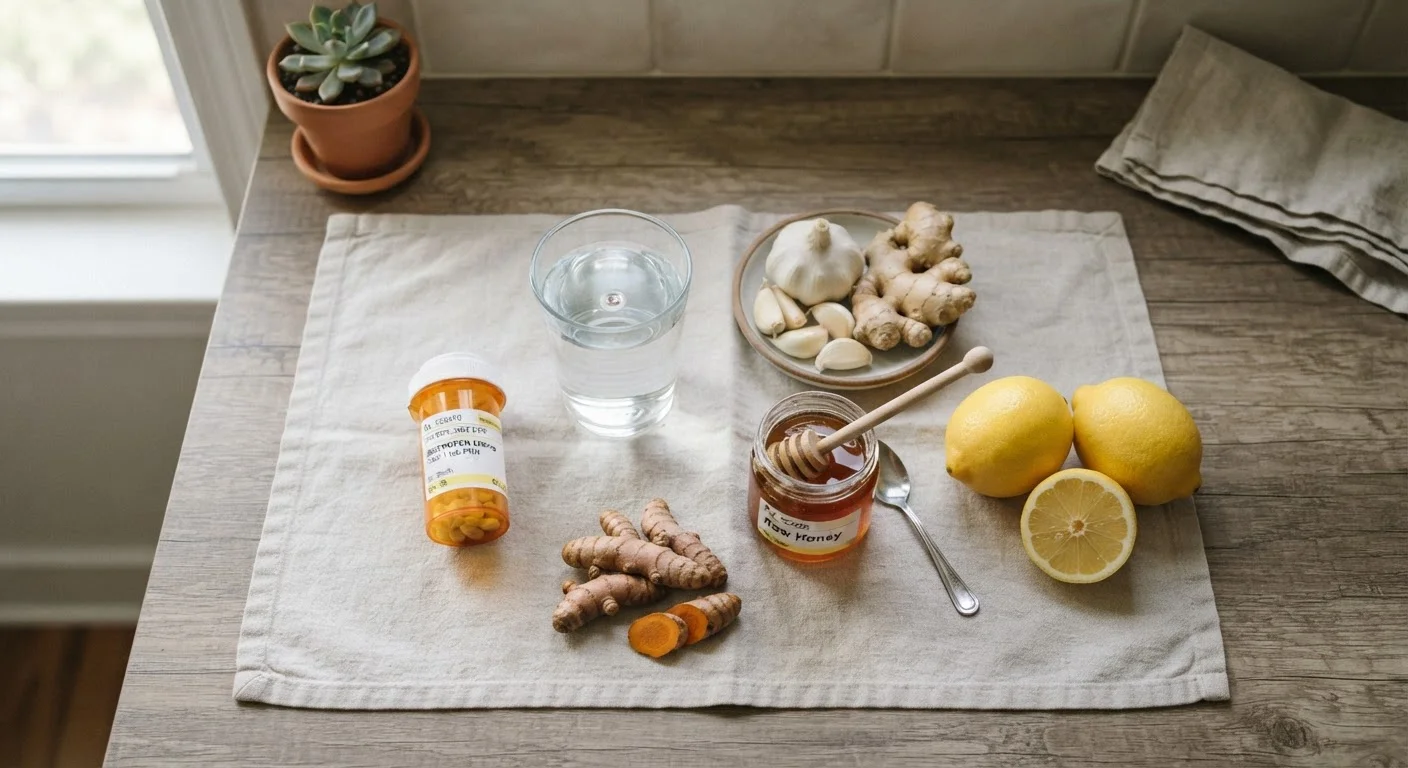
Certain kitchen remedies have the most documented potential to interfere with medications. Garlic, ginger, and turmeric all have mild antiplatelet (blood-thinning) properties. At culinary quantities this is rarely a concern, but at supplemental or concentrated therapeutic doses — capsules, tinctures, large daily extracts — the picture changes. If you are on warfarin, aspirin, clopidogrel, or other anticoagulants, this interaction class deserves a direct conversation with your prescribing clinician.
Grapefruit is perhaps the most clinically validated food-drug interaction: it inhibits the enzyme CYP3A4, which metabolizes dozens of medications, leading to unexpectedly elevated drug levels. While grapefruit is less of a "kitchen remedy" and more of a breakfast staple, it illustrates how dramatically a common food can alter drug pharmacokinetics.
Blood-Thinning Risk Is Real at Therapeutic Doses
Garlic, ginger, turmeric, and fish oil all have mild antiplatelet effects that are generally inconsequential in cooking. However, at concentrated therapeutic doses — common in capsule or extract form — these effects can potentiate anticoagulant medications such as warfarin. This combination can increase bleeding risk in a clinically meaningful way. If you take any blood-thinning medication, do not use concentrated forms of these ingredients without explicit guidance from your prescribing clinician or pharmacist.
For a structured overview of documented herb and food interactions with prescription drugs, review the herb–drug interactions educational guide before completing this checklist. If you are considering topical applications of any kitchen ingredient, also check when natural topical remedies can make skin conditions worse.
Grapefruit Is the Best-Documented Food-Drug Interaction
Grapefruit and grapefruit juice inhibit CYP3A4, a liver enzyme responsible for metabolizing over 85 medications, including certain statins, calcium channel blockers, and immunosuppressants. Even small amounts consumed hours apart from a dose can significantly raise drug blood levels. If you take any of these drug classes, check with your pharmacist before consuming grapefruit regularly — even as a juice or snack, not just a remedy.
If you are pregnant or nursing, the risk calculus shifts significantly. Many ingredients considered routine in cooking may carry different considerations at therapeutic doses during pregnancy. See why the rules are different for herbal remedies during pregnancy for detailed guidance specific to that context.
For a practical lookup of which pantry ingredients are traditionally and scientifically associated with specific minor complaints, the Kitchen Remedies for Minor Ailments glossary is a useful companion to this checklist. You can also explore the broader herbal remedies hub for plant-based options beyond the kitchen pantry.
This article is for informational and educational purposes only. It is not a substitute for professional medical advice, diagnosis, or treatment. Always consult a qualified healthcare provider before combining kitchen or herbal remedies with any medication or existing medical treatment plan.