

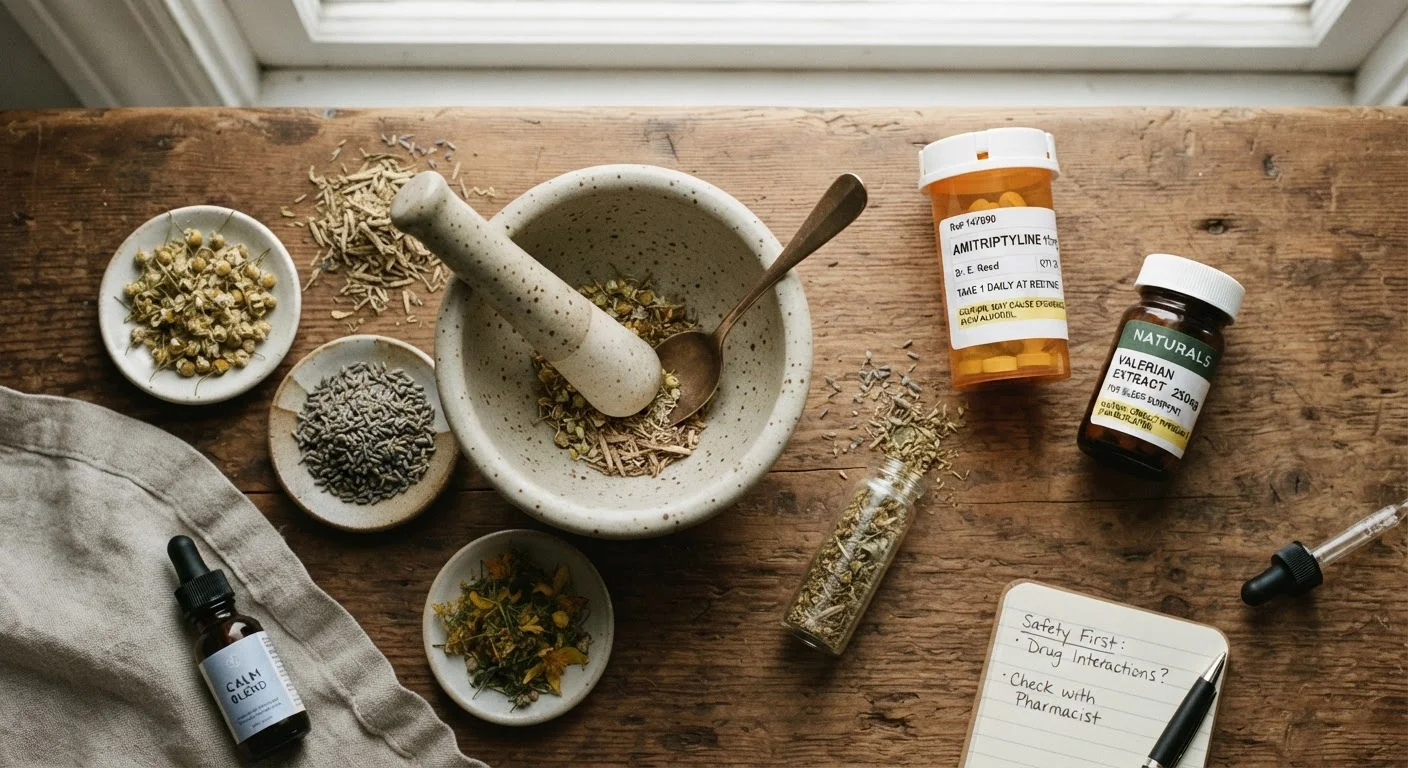
Key Takeaways
- Some herbs are pharmacologically active and can alter how prescription drugs work in the body.
- St. John's Wort is one of the most documented herb–drug interaction risks, affecting dozens of medications.
- Interactions can make a drug more or less effective, or increase risk of side effects.
- Always tell your prescribing doctor and pharmacist about any herbs or supplements you take.
- Risk varies by herb, drug, dose, and individual — not all combinations are equally concerning.
- Special populations including pregnant individuals and those on blood thinners face heightened risks.
Herb–Drug Interactions
An herb–drug interaction occurs when a plant-based remedy alters the way a pharmaceutical medication works in the body. This can mean the drug becomes more potent, less effective, or produces unexpected side effects. Interactions happen through several mechanisms, including changes to how the body absorbs, metabolizes, or eliminates a drug.
Many clinically significant herb–drug interactions involve cytochrome P450 enzymes — particularly CYP3A4 — which are responsible for metabolizing a large proportion of pharmaceutical drugs in the liver.
Why This Topic Deserves Serious Attention
The phrase "natural remedy" carries an implicit reassurance that can be misleading. Herbs contain biologically active compounds — the same property that gives them potential benefit also means they can interfere with pharmaceutical drugs in ways that matter clinically. This is not a fringe concern. A widely cited review published in Drug Safety found herb–drug interactions to be an underreported but real source of adverse events, particularly among people managing chronic conditions.
For a fuller grounding in how herbs work as pharmacological agents, see the full-spectrum guide to herbal medicine. The key point here is that treating herbal products as categorically different from drugs — simply because they're plant-based — creates a blind spot that can have real health consequences.
~70%
Adults who don't tell doctors about supplement use
Research published in JAMA Internal Medicine found that approximately 70% of patients using herbal supplements did not disclose this to their physicians.
Over 60
Drugs affected by St. John's Wort
According to pharmacological reviews, St. John's Wort has documented interactions with more than 60 pharmaceutical medications through CYP enzyme induction.
15–20%
Adults using herbal supplements in the US
National Health Interview Survey data indicates that roughly 15–20% of US adults report using herbal or botanical supplements, a figure that has grown steadily.
How Herb–Drug Interactions Actually Happen
Interactions generally fall into two categories: pharmacokinetic and pharmacodynamic.
- Pharmacokinetic interactions affect how a drug is absorbed, distributed, metabolized, or excreted. The most clinically significant involve liver enzymes — particularly the cytochrome P450 family. An herb that induces (speeds up) these enzymes will cause drugs to be broken down faster, reducing their concentration in the bloodstream and potentially their effectiveness. An herb that inhibits these enzymes has the opposite effect, allowing drug levels to build higher than intended.
- Pharmacodynamic interactions occur when an herb and drug have similar or opposing effects on the body. For example, an herb with mild sedative properties taken alongside a prescribed sedative can compound the effect beyond what either would produce alone.
Understanding these mechanisms helps explain why the same herb can interact differently with different drugs — it depends on which pathways are shared.
Not All Interactions Are Equally Severe
Herb–drug interaction research exists on a spectrum of quality, from well-controlled pharmacokinetic studies to single case reports. Some documented interactions are theoretical — based on known enzyme activity — rather than confirmed in clinical outcomes. This doesn't mean they can be ignored, but it does mean context matters. A pharmacist or clinical herbalist can help you assess the actual risk level of a specific combination.
The Most Documented Herb–Drug Interactions
Research has identified several herbs where interaction risk is well-established rather than merely theoretical:
- St. John's Wort (Hypericum perforatum)
- The most studied herb–drug interactor. It is a potent inducer of CYP3A4 and P-glycoprotein, which means it accelerates the metabolism of a wide range of drugs — including oral contraceptives, HIV antiretrovirals, cyclosporine (an organ transplant drug), warfarin, and some antidepressants. Clinical consequences have included transplant rejection, contraceptive failure, and serotonin syndrome when combined with SSRIs.
- Garlic (Allium sativum)
- At supplemental doses (higher than culinary use), garlic has demonstrated antiplatelet and mild anticoagulant properties. This raises the risk of bleeding when combined with warfarin or other blood thinners. It may also modestly affect CYP2E1 enzyme activity.
- Ginkgo (Ginkgo biloba)
- Ginkgo has antiplatelet effects and has been associated with increased bleeding risk, particularly when taken with anticoagulants or antiplatelet drugs like aspirin or clopidogrel.
- Valerian (Valeriana officinalis)
- Used for sleep and anxiety, valerian's CNS depressant properties can be additive with prescribed sedatives, anxiolytics, or alcohol, intensifying sedation beyond safe levels.
- Echinacea (Echinacea purpurea)
- Evidence suggests echinacea may modestly affect CYP1A2 and CYP3A4 metabolism, though clinical impact appears more variable than with St. John's Wort. Still worth flagging to a pharmacist if you're on drugs with a narrow therapeutic index.
For a broader look at herbs with credible research behind them, see herbs with meaningful evidence behind them.
Practical Steps for Safer Use
Awareness is the starting point, but a few concrete habits significantly reduce interaction risk:
- Disclose everything to your healthcare team. List every herb, supplement, and over-the-counter product at every appointment. Your pharmacist can run an interaction check quickly and is often the most accessible professional for this.
- Be especially cautious with narrow therapeutic index drugs. Medications like warfarin, digoxin, lithium, cyclosporine, and HIV antiretrovirals have a small margin between an effective and a harmful dose. Even modest pharmacokinetic changes from an herb can shift them into a dangerous range.
- Don't assume a product is safe because it's labeled "natural" or "herbal." Regulatory oversight of dietary supplements in the US differs substantially from prescription drugs. See our everyday herb cabinet reference for general safety considerations on commonly used herbs.
- Consult before combining, not after. If you're considering adding an herbal remedy while on a prescription medication, check first. The kitchen remedies compatibility guide offers useful framing for this kind of decision.
For those new to herbal remedies, the guide starting with herbal remedies is a useful foundation before incorporating any new herb into your routine.
Special note for pregnant individuals: herb–drug interaction risks are amplified during pregnancy. Consult a qualified healthcare provider before using any herbal product. See also herbal remedies during pregnancy for more context.
This article is for general informational and educational purposes only and does not constitute medical advice. Always consult a qualified healthcare professional before making changes to your medication regimen or adding herbal supplements.