

Key Takeaways
- Yoga nidra is practiced lying down and guides you through specific stages of consciousness, requiring no prior meditation experience.
- Seated meditation asks practitioners to actively sustain attention, while yoga nidra is a more receptive, instructor-led experience.
- Both practices activate the parasympathetic nervous system and may help reduce stress and improve sleep quality.
- Yoga nidra suits those who struggle to sit still; seated meditation builds long-term attentional skills over time.
- Neither practice is a substitute for medical care — consult a healthcare professional if stress is affecting your health.
Our Verdict
Yoga nidra and seated meditation share the same destination — a quieter, more resilient mind — but take meaningfully different roads to get there. Yoga nidra offers a structured, guided, completely passive entry point, while seated meditation builds an active attentional skill that deepens with practice. Neither is objectively superior; the right fit depends on your temperament, schedule, and what your nervous system needs most right now.
| Best for | Recommended |
|---|---|
| Those who find it hard to sit still or stay awake during quiet practice | Yoga Nidra |
| Those who want to build independent, portable attentional skills over time | Seated Meditation |
| Those recovering from burnout or dealing with high physical tension | Yoga Nidra |
| Those seeking a flexible, equipment-free daily practice | Seated Meditation |
Where They Come From
Both yoga nidra and seated meditation descend from India's contemplative traditions, and both treat the mind as the primary terrain worth exploring. Yoga nidra — literally "yogic sleep" — was systematized in the 20th century by teachers drawing on ancient tantric texts, particularly the Mandukya Upanishad's map of consciousness. Seated meditation encompasses a broad family of practices (vipassana, mindfulness, loving-kindness, and others) that span Buddhist, Hindu, and secular lineages going back thousands of years.
What unites them is the goal: moving the nervous system out of chronic fight-or-flight activation and into a state of alert rest. Both have been studied for their effects on stress hormones, sleep, and emotional regulation. For a broader look at how yoga practices target mental calm, see our complete guide to yoga for calm.
How Each Practice Actually Works
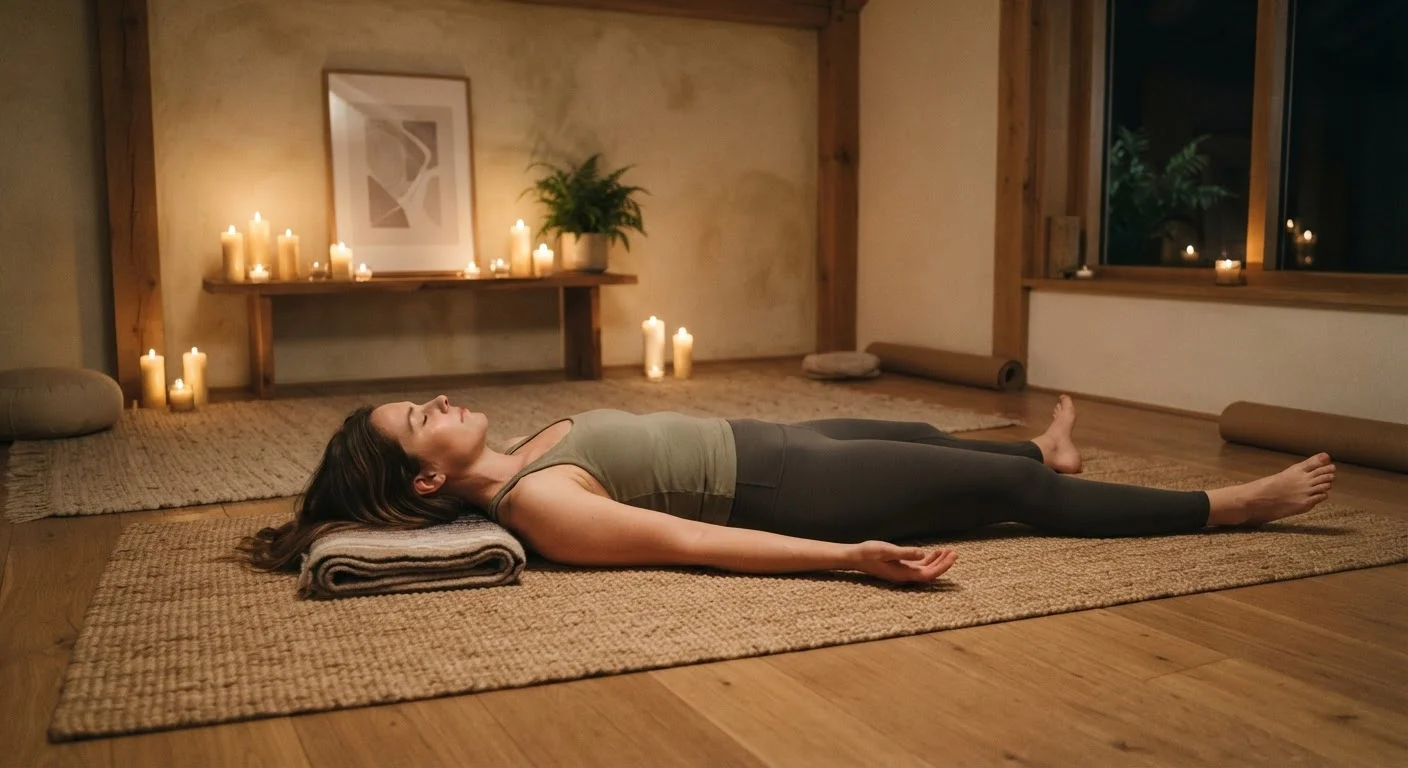
Yoga nidra is almost entirely guided. You lie down in savasana (corpse pose), close your eyes, and follow a teacher's voice through a structured rotation: body scan, breath awareness, pairs of opposite sensations, visualization, and a personally meaningful intention called a sankalpa. The aim is to hover in the hypnagogic threshold between waking and sleep — a state researchers associate with reduced cortisol and increased theta brainwave activity. Because the instructor carries the structure, your only task is to listen and receive.
Seated meditation asks something more active of you. Whether you're following the breath, repeating a silent phrase, or practicing open awareness, you are continuously choosing where to place attention — and gently returning when the mind wanders. That return is, in fact, the core training. Over time, the practice strengthens what psychologists call metacognitive awareness: the ability to notice your own mental states without being hijacked by them.
If you're weighing other styles of guided versus self-directed practice, breath awareness vs. guided meditation offers a useful side-by-side look.
| Yoga Nidra | Seated Meditation | |
|---|---|---|
| Body position | Lying down (savasana) | Seated, upright |
| Guidance required | Instructor or audio guide essential | Self-directed after learning basics |
| Beginner accessibility | Very accessible from session one | Moderate; frustration common early on |
| Active mental effort | Receptive and passive | Active attention training |
| Typical session length | 20–45 minutes | 5–45 minutes (flexible) |
| Primary research focus | Sleep, anxiety, cortisol reduction | Anxiety, depression, stress resilience |
| Main challenge | Risk of falling fully asleep | Maintaining consistent daily habit |
What the Research Suggests
~65%
Participants reporting reduced anxiety after yoga nidra
A review of multiple small-scale yoga nidra studies found the majority of participants reported decreased anxiety scores, though researchers note the evidence base is still limited.
8 weeks
Typical program length in mindfulness meditation trials
The widely studied Mindfulness-Based Stress Reduction (MBSR) program, developed at UMass Medical School, uses an eight-week structured format as its standard research framework.
Studies on yoga nidra — while still relatively small in scale — indicate reductions in self-reported anxiety, improvements in sleep onset, and decreased heart rate variability consistent with parasympathetic activation. Research on mindfulness-based seated meditation is more extensive, with meta-analyses supporting modest but meaningful reductions in anxiety, depression symptoms, and perceived stress in non-clinical populations.
It's worth noting that most studies combine yoga nidra with broader yoga programs, making it harder to isolate effects from the nidra practice alone. Similarly, meditation research varies widely in session length and population. Both practices show genuine promise, but neither has been proven to replace clinical treatment for anxiety disorders or sleep conditions. If stress is significantly affecting your daily functioning, please speak with a qualified healthcare professional.
For a comparison of two other well-studied relaxation methods, mindfulness meditation vs. progressive muscle relaxation is worth reading alongside this article.
Practical Considerations: Time, Space, and Learning Curve
A yoga nidra session typically runs 20–45 minutes and requires lying down comfortably — a mat, blanket, and quiet room are all you need. Because an audio guide does the heavy lifting, beginners often report feeling the benefits after their first or second session. The main challenge: falling fully asleep, which is easy to do. This is generally harmless but means missing the intentional theta-state window the practice targets.
Seated meditation can begin with as little as five to ten minutes and needs nothing but a chair or cushion. The learning curve, however, is steeper. Many beginners feel frustrated that their mind won't quiet — but that restlessness is not failure; it's the practice working. Building a consistent habit typically takes weeks before the cognitive benefits become noticeable.
If you practice yoga and want to layer nidra into your existing routine, setting up a calming yoga session has practical preparation tips that apply equally well to a nidra session. You might also explore restorative vs. yin yoga if floor-based, passive practices resonate with you.
This article is for general informational purposes only and does not constitute medical advice. If you have health concerns, please consult a qualified healthcare professional.