
Restorative Yoga vs Yin Yoga: Two Slow Practices, Very Different Intentions

Key Takeaways
- Restorative yoga uses props to fully support the body, aiming for complete nervous system relaxation with no muscular effort.
- Yin yoga applies mild, sustained stress to connective tissue — fascia, ligaments, and joint capsules — over long holds.
- Both practices stimulate the parasympathetic nervous system, but through different physiological mechanisms.
- Restorative is generally safer during high-stress periods or recovery from injury; yin involves mild discomfort by design.
- The two practices can complement each other within a weekly wellness routine.
Option A
Restorative Yoga
The deeply supported nervous system reset.
Best for: Anyone seeking passive stress relief with zero muscular effort, especially after illness, burnout, or high-output weeks.
Option B
Yin Yoga
The slow, deliberate connective tissue practice.
Best for: People looking to improve joint mobility and fascia flexibility while also cultivating mental stillness.
If you're experiencing burnout or recovering from illness
Restorative Yoga
Complete physical support removes all demand from the body, making it ideal when your system has nothing left to give.
If you want to improve hip, spine, or joint mobility over time
Yin Yoga
Long-held poses gently stress connective tissue, which responds best to slow, sustained pressure rather than dynamic stretching.
If you struggle to wind down before sleep
Restorative Yoga
The passive, prop-supported poses signal safety to the nervous system and are unlikely to introduce the mild discomfort that yin sometimes brings.
If you sit for long hours and feel chronically stiff
Yin Yoga
Targeting deep connective tissue helps address the structural tightness that builds from prolonged static postures at a desk.
If you're a complete beginner to yoga seeking stress relief
Restorative Yoga
No physical challenge is involved, making the learning curve almost nonexistent and the experience immediately calming.
What Sets These Two Practices Apart
From the outside, restorative and yin yoga can look nearly identical — both happen mostly on the floor, both move slowly, and both avoid the heat and intensity of vinyasa or power yoga. The meaningful difference lies not in appearance but in intention and mechanism.
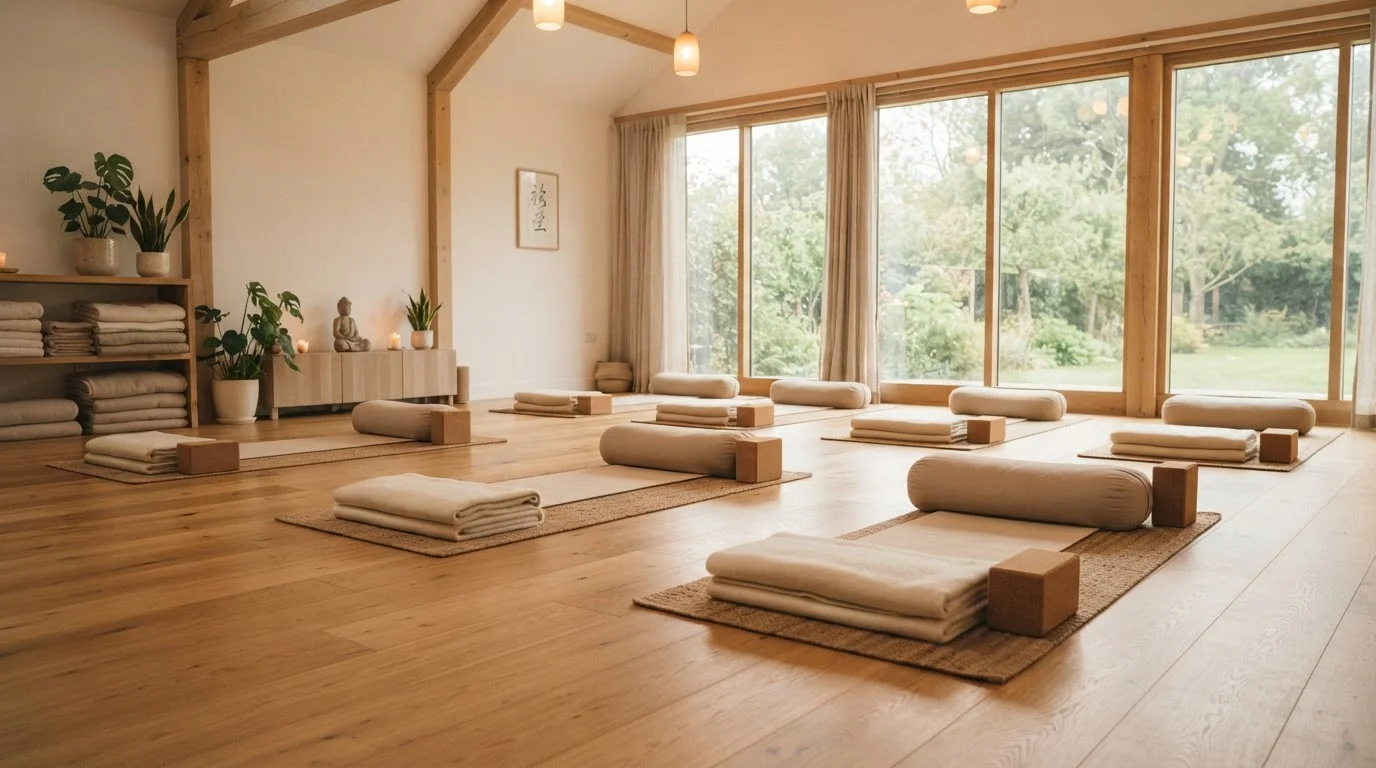
Restorative yoga is built around the idea of complete release. Props — bolsters, blankets, blocks, eye pillows — are stacked until the body is so thoroughly supported that no muscle needs to engage. A single restorative session may cover only four or five poses held for five to twenty minutes each. The goal is to activate the parasympathetic nervous system, often called the "rest and digest" state, by removing all perceived demand from the body. Judith Hanson Lasater, who helped popularize the practice in the West, has described it as "active relaxation" — the body is doing nothing, but the result is measurable physiological change.
Yin yoga, rooted partly in Taoist principles and developed in the West by Paul Grilley and Sarah Powers, targets a different tissue layer entirely. While muscles are kept relatively relaxed, poses are held long enough — typically three to five minutes — to place mild, sustained stress on fascia, ligaments, tendons, and joint capsules. These dense connective tissues do not respond to the rhythmic loading of dynamic exercise; they require slow, prolonged pressure to remodel over time. Yin poses often feel like mild discomfort that you learn to observe rather than resist.
Understanding this distinction helps clarify why forcing relaxation in yoga often backfires — each practice has its own internal logic, and applying the wrong expectation undermines both.
| Criterion | Restorative Yoga | Yin Yoga |
|---|---|---|
| Primary target | Nervous system reset | Connective tissue remodeling |
| Muscular effort | None — fully supported | Minimal — muscles relaxed |
| Prop use | Extensive (bolsters, blankets, blocks) | Moderate (blocks, blankets) |
| Typical hold duration | 5–20 minutes per pose | 3–5 minutes per pose |
| Physical sensation | Comfortable, effortless | Mild, sustained discomfort |
| Mental challenge | Low — passive surrender | Moderate — observing sensation |
| Best timing | Anytime; ideal pre-sleep | Earlier evening; post-activity |
| Suitable during illness/burnout | Yes — zero demand | Use caution; check with provider |
The Physiology Behind Each Approach
Both practices influence the autonomic nervous system, but they do so differently. In restorative yoga, the near-total absence of physical effort — combined with slowed breathing and sensory withdrawal from an eye pillow or dim lighting — directly cues the body out of sympathetic arousal. Research on relaxation response techniques, including work from Herbert Benson at Harvard Medical School, consistently shows that passive rest with breath awareness can lower cortisol, reduce heart rate, and slow respiration.
Yin yoga's physiological story is more nuanced. The mild, sustained compression and tension applied to connective tissue stimulates mechanoreceptors — sensory cells embedded in fascia — which send calming signals through the nervous system. Practitioners often report a meditative quality that deepens as they stop bracing against discomfort and simply observe it. This mirrors practices described in meditation basics: learning to witness sensation without reactivity.
3–5 min
Typical yin hold duration for connective tissue benefit
Connective tissue researchers suggest slow, sustained load — rather than repetitive movement — is needed to stimulate fascial adaptation.
~20 min
Minimum restorative session length for relaxation response
Studies on passive relaxation practices suggest the physiological shift into parasympathetic dominance deepens significantly after roughly 20 minutes of stillness.
It's worth noting that yin yoga's long holds can temporarily create a slight "pins and needles" sensation as circulation adjusts. This is generally normal and resolves quickly, but anyone with joint hypermobility, recent injury, or chronic pain should consult a qualified yoga teacher or healthcare provider before beginning.
This article is for informational purposes only and is not a substitute for professional medical or therapeutic advice. Always consult a qualified healthcare provider before beginning any new movement practice, especially if you have existing health conditions.
Choosing Between Them — and Combining Both
The good news is that you rarely have to choose one permanently. Many practitioners find that the two practices complement each other naturally across a week. After a demanding stretch of work or travel, restorative yoga provides the nervous system reset that yin's mild intensity cannot. On calmer days, yin addresses the cumulative stiffness that builds in hips, thoracic spine, and shoulders — areas that benefit most from connective tissue work.
If you're building an evening yoga wind-down routine, restorative yoga is usually the safer anchor because it introduces no discomfort that might keep the mind alert. Yin is better placed earlier in the evening, giving the nervous system time to settle before sleep.
For those also exploring rest from a broader fitness angle, the question of how slow yoga fits alongside more structured recovery is worth examining — our overview of active recovery versus complete rest explores that territory in depth.
Ultimately, neither practice is superior. Restorative yoga asks nothing of the body; yin asks only that you tolerate stillness in the presence of mild sensation. Both build a quieter relationship with the mind — and for busy adults carrying chronic stress, that may be among the most valuable skills available.