

Key Takeaways
- Your environment directly influences how quickly your nervous system settles into a calm state.
- Props like blankets and blocks make restorative poses more accessible and effective for relaxation.
- Setting a simple intention before you begin helps shift focus away from performance and toward presence.
- Timing and hunger levels meaningfully affect how comfortable and focused your session feels.
- A brief breathing exercise before your first pose can accelerate the transition from stress to calm.
Summary
18 items · 15–30 minutes
Why Preparation Matters as Much as the Practice Itself
Most yoga sessions are won or lost before the first pose. When you begin practice in a chaotic room, on an uncomfortable surface, or with an unsettled mind, the body's stress response stays quietly active — and relaxation feels just out of reach. Research in stress physiology consistently shows that the nervous system needs clear environmental and psychological cues to shift from sympathetic (alert) to parasympathetic (rest) mode. Your preparation ritual provides exactly those cues.
This checklist is designed specifically around mental relaxation rather than physical performance. Whether you are entirely new to the practice or returning after a long break, these steps help you arrive on the mat already moving in the right direction. For a broader look at building a stress-relieving practice, see our complete guide to calming yoga practices.
Your Space
Your Equipment
Your Body
Your Mindset
Tools That Support a Calm Setup
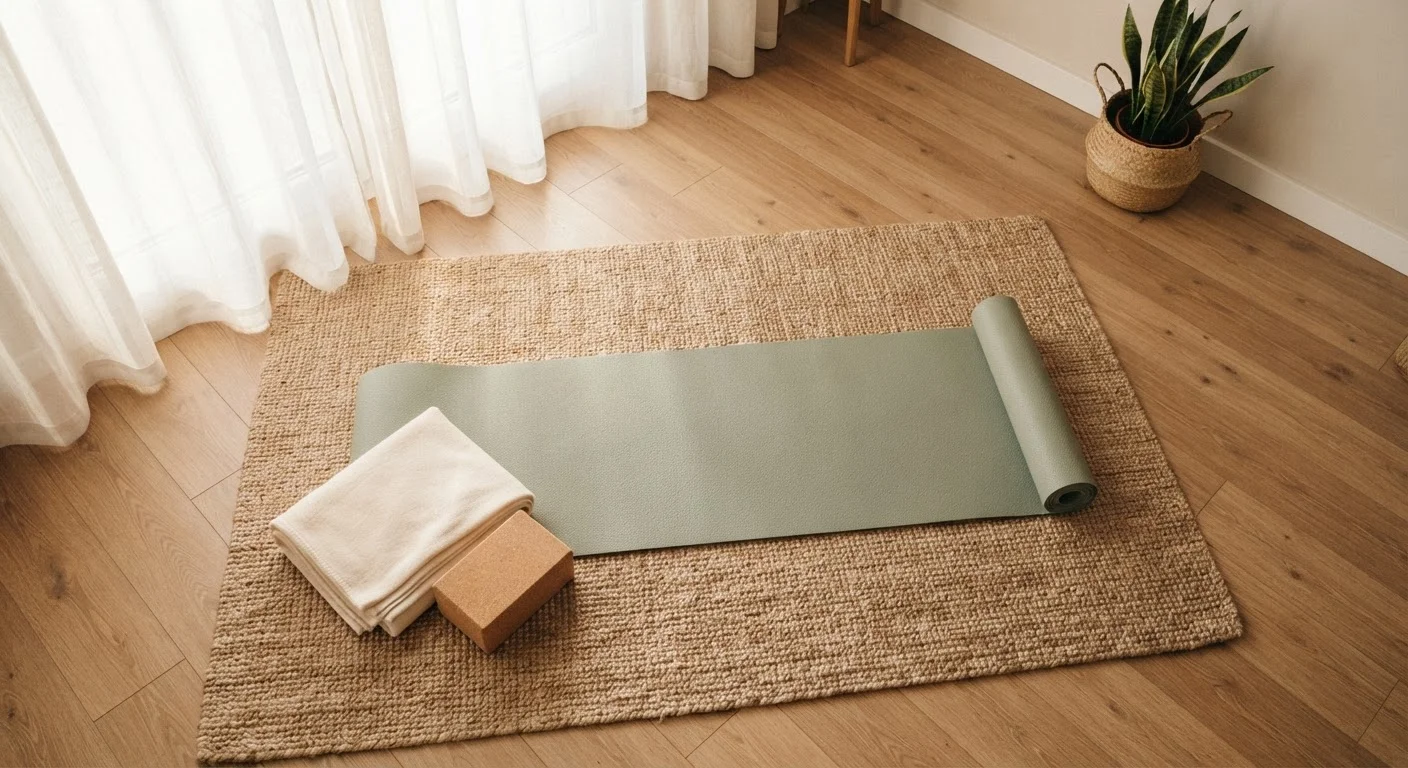
You do not need expensive equipment to practice calming yoga effectively. A few simple items, used intentionally, make a meaningful difference — especially for supported and restorative poses. If you are curious why props deserve a more prominent role in your practice, our guide to blocks, bolsters, and blankets explains how each one deepens relaxation.
Non-slip yoga mat
Provides a stable, defined surface that physically and psychologically marks your practice space.
Yoga block or firm book
Supports hands, hips, or forehead in restorative poses, reducing strain and increasing comfort.
Blanket or large towel
Adds warmth and cushioning during floor poses, especially helpful in Savasana (lying relaxation pose).
Timer or soft-alarm app
Frees you from clock-watching by signalling the end of your session with a gentle tone.
Eye pillow or folded cloth
Blocks light and provides gentle pressure during restorative poses to deepen the relaxation response.
Don't Skip the Basics for Special Populations
If you are pregnant, recovering from injury, managing a chronic health condition, or returning to movement after a long break, this general checklist is not a substitute for personalised guidance. Please consult a qualified healthcare professional or certified yoga therapist before beginning or resuming practice. They can help you adapt poses and preparation steps to your specific needs.
Once your setup feels complete, you may also find it helpful to compare notes with our beginner's meditation preparation checklist, which covers a similar pre-session audit for seated meditation. Many of the environmental principles overlap, and building both habits together can reinforce a consistent daily calm practice — explore the Meditation Basics hub for more accessible starting points.
This article is for informational purposes only and is not a substitute for professional medical advice, diagnosis, or treatment. If you have any health concerns or conditions that may be affected by physical activity, please consult a qualified healthcare professional before beginning a yoga practice.