

Key Takeaways
- Trying to force calm during yoga can activate the stress response instead of quieting it.
- Breath-holding, competitive mindset, and skipping props are among the most common culprits.
- Genuine relaxation emerges from allowing rather than achieving — a subtle but powerful shift.
- Consistent, gentle practice builds a more reliable pathway to calm over time.
The Paradox at the Heart of Relaxation Yoga
There is a quiet irony in the yoga studio: the harder some people try to relax, the more tension they accumulate. This isn't a personal failing — it's a physiological reality. The nervous system doesn't respond well to demands, even well-intentioned ones. When you mentally insist that you should feel calm right now, you often trigger the same low-grade vigilance that keeps stress simmering all day.
Understanding why this happens — and recognizing the specific habits that feed it — can transform your practice. The goal isn't to try less; it's to practice differently. The mistakes below are common, correctable, and worth knowing before you roll out the mat again.
For a broader look at how slow movement actually influences the nervous system, see what happens to your nervous system during a gentle yoga session.
Common Mistakes That Undermine a Restorative Practice
These errors appear across experience levels — from first-timers to long-time practitioners. Recognizing them is the first step toward a genuinely calming session.
Holding the breath during challenging or unfamiliar poses.
Why it happens: Breath-holding is a reflexive stress response — the body braces against perceived effort or discomfort, and breathing pauses automatically.
Treating relaxation poses as a performance goal rather than a process.
Why it happens: Many practitioners carry achievement-oriented habits from work or fitness into yoga, unconsciously measuring whether they are 'doing it right' or relaxing 'enough.'
Skipping props and muscling through poses without adequate support.
Why it happens: Props can feel like admissions of limitation, especially for people who equate yoga with flexibility or strength. Many beginners and experienced practitioners alike avoid them out of pride or unfamiliarity.
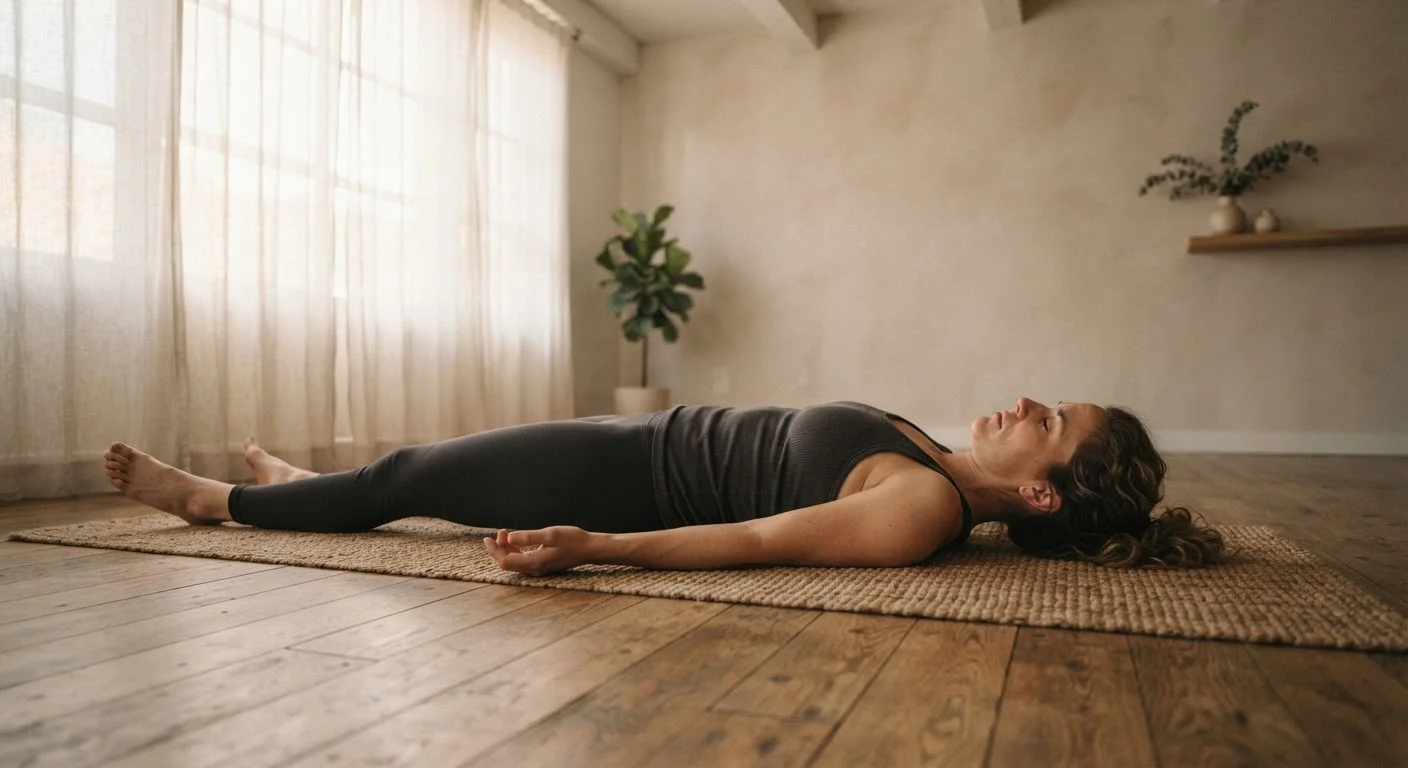
Rushing through or skipping Savasana at the end of a session.
Why it happens: Savasana can feel unproductive, especially when time is short or a busy mental state makes stillness uncomfortable. The discomfort of lying still often causes people to cut it short.
Practicing in a distracting or overstimulating environment.
Why it happens: It's tempting to multitask or set up near a phone, television, or noisy space — especially when carving out time feels difficult and any environment feels 'good enough.'
Comparing your internal experience to how the practice 'should' feel.
Why it happens: Social media, class culture, and wellness marketing often depict yoga relaxation as an immediate, blissful state. When your experience doesn't match, judgment and frustration follow.
If you're newer to calming yoga and want a solid foundation before working through these corrections, starting yoga for stress relief with no prior experience offers a practical, jargon-free entry point.
Why Intention Shapes Outcome More Than Technique
Yoga research consistently points to one variable that influences outcomes as much as the poses themselves: the quality of attention you bring. A 2018 review in Frontiers in Human Neuroscience found that mindful, interoceptive awareness — noticing internal body sensations without judgment — was a key mechanism through which yoga reduced self-reported stress. Technique matters, but the mental stance matters equally.
~38%
Stress reduction reported with regular yoga
A review published in the Journal of Alternative and Complementary Medicine found that regular yoga practice was associated with meaningful reductions in perceived stress across multiple study populations.
8 weeks
Typical timeframe for measurable nervous system change
Research on mindfulness-based programs, including yoga, generally identifies eight weeks of consistent practice as a threshold for observable changes in stress reactivity and well-being measures.
This is why two people can perform identical poses and have completely different experiences. One scans the room, compares their posture to others, and leaves feeling vaguely unsatisfied. The other notices the weight of their limbs on the mat, follows the rhythm of the breath, and leaves feeling lighter. The poses were the same; the intention was not.
Breathwork is one of the most reliable bridges between intention and physiological calm. The principles of breathwork in calming yoga explores how conscious breathing amplifies the effect of every pose you practice.
Building a Practice That Actually Lets You Rest
Avoiding these mistakes isn't about adding more steps — it's about removing the pressures that quietly sabotage your sessions. A few practical shifts can make a meaningful difference.
Don't Mistake Discomfort for Progress
Mild muscle stretch during yoga poses is normal, but pain, sharp sensations, or dizziness are not. Pushing through physical discomfort in pursuit of deeper relaxation can cause injury and heighten the very stress response you're trying to calm. If something hurts, ease back or come out of the pose entirely. Consult a healthcare professional if you have any underlying physical conditions before beginning a yoga practice.
Start by choosing the right style for your goal. Not all slow yoga is the same: restorative yoga and yin yoga serve very different intentions, and matching your approach to what your body and mind need that day removes one layer of friction before you even begin.
Props are another underused resource. Bolsters, blankets, and blocks allow the body to be fully supported rather than held — a prerequisite for genuine release. See how props deepen relaxation in calming poses for guidance on integrating them. And if time is the obstacle, even a brief session can be structured for real calm — practising yoga for calm in just ten minutes shows you how.
This article is for general informational purposes only and is not a substitute for professional medical or mental health advice. If you are managing anxiety, chronic stress, or any health condition, please consult a qualified healthcare provider before beginning or changing any wellness practice.