

Key Takeaways
- Calming yoga prioritizes mental relaxation over physical performance — flexibility is not a prerequisite.
- Even a single 10–15 minute session can engage the body's rest-and-digest response.
- You need minimal equipment: a flat surface, comfortable clothing, and a quiet space.
- Slow, breath-led styles like Yin and Restorative yoga are ideal starting points for stressed beginners.
- Consistency matters more than session length — short, regular practice builds lasting stress resilience.
Start here
Why Yoga Works for Stress Relief
Next
What to Expect as a Complete Beginner
Then
Setting Up Your First Session
Practice
Four Beginner Poses That Calm the Mind
Keep going
Building a Sustainable Practice
Why Yoga Works for Stress Relief
When stress hits, your body activates its fight-or-flight response — heart rate rises, muscles tighten, and breathing becomes shallow. Yoga interrupts this cycle through a deliberate combination of slow movement, controlled breathing, and directed attention. Together, these elements signal safety to the nervous system, encouraging a shift toward the parasympathetic state sometimes called "rest and digest."
This is not simply folk wisdom. Research published in peer-reviewed journals consistently associates regular yoga practice with reduced self-reported stress, lower salivary cortisol levels, and improved mood. To understand the physiology in more depth, see what happens to your nervous system during a gentle yoga session.
Crucially, these benefits do not depend on performing advanced poses. The mental-relaxation benefits come primarily from how you move and breathe, not how far your hamstrings stretch.
Parasympathetic nervous system
The branch of the nervous system responsible for rest and recovery. When active, it slows the heart rate, relaxes muscles, and counteracts the stress response.
Yin yoga
A slow yoga style where poses are held for several minutes, targeting deep connective tissue and promoting mental stillness through sustained, gentle pressure.
Restorative yoga
A deeply relaxing yoga style that uses props such as bolsters and blankets to fully support the body in passive poses, allowing complete physical and mental release.
Savasana
A final resting pose performed lying flat on the back. It gives the nervous system time to absorb the benefits of a practice session.
Diaphragmatic breathing
Breathing that engages the diaphragm fully, allowing the belly to expand on the inhale. This style of breathing activates the parasympathetic nervous system more effectively than shallow chest breathing.
What to Expect as a Complete Beginner
Many newcomers worry they will look foolish, fall over, or simply "not be a yoga person." These concerns are understandable but largely unfounded in a stress-focused practice. Calming yoga is intentionally slow-paced, and wobbling in a pose is entirely normal — even experienced practitioners do it.
Expect your first few sessions to feel a little unfamiliar. You may notice thoughts crowding in, mild physical discomfort as you explore new ranges of motion, or impatience with the pace. This is normal. The discomfort of slowing down is, for many people, precisely where the stress-relief work begins.
You will not be expected to sit in silence or achieve a blank mind. Most beginner-friendly sessions simply invite you to notice your breath and gently return attention to it when your mind wanders — a skill that gets easier over time. If you are also curious about pure meditation, a structured first week of meditation can complement your yoga practice well.
Setting Up Your First Session
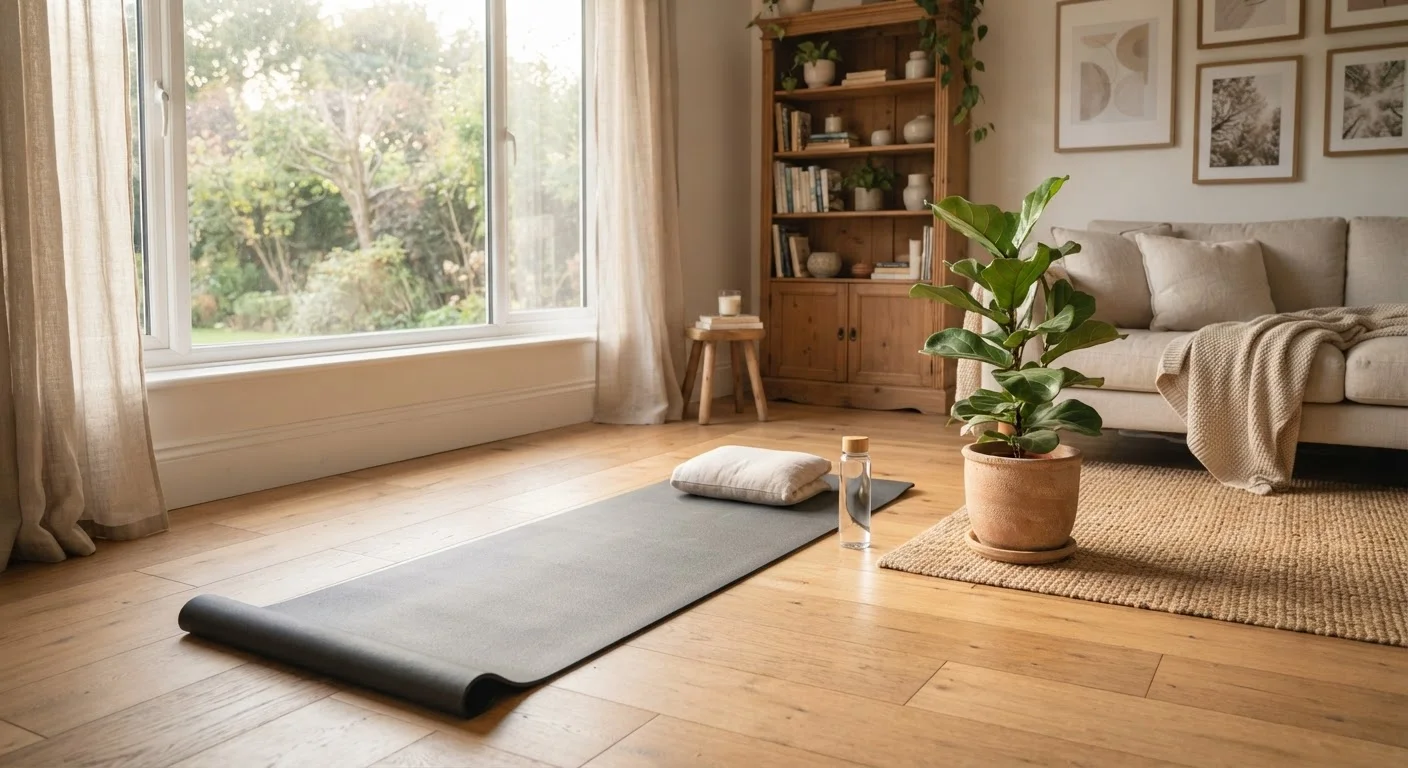
A successful first session depends more on environment than equipment. Choose a space where you are unlikely to be interrupted for 15–20 minutes. Dim the lights if possible, and consider a room temperature on the warmer side — muscles relax more readily in gentle warmth.
- Mat or surface: A non-slip yoga mat is ideal, but a folded blanket or carpeted floor works for a first try.
- Props: A firm cushion, a folded blanket, and a rolled towel serve as affordable alternatives to yoga blocks and bolsters.
- Clothing: Anything comfortable and stretchy that allows free movement of hips and shoulders.
- Audio or guidance: A free beginner-focused audio or video class can provide structure if practicing alone feels uncertain.
Set a gentle timer so you are not checking the clock, and silence notifications. Even a brief 15-minute window, protected from distraction, is enough to begin. For ideas on fitting this into a packed schedule, practising yoga for calm in ten minutes offers practical sequences.
Start with just five minutes if needed
If 15–20 minutes feels daunting, begin with just five minutes of slow breathing in Child's Pose or Legs Up the Wall. A tiny, consistent practice is far more valuable than a perfect session that never happens. You can always extend the time once the habit feels natural.
Four Beginner Poses That Calm the Mind
The following poses are chosen for accessibility and their particular effectiveness at promoting relaxation. Hold each for 5–10 slow breaths, releasing tension with every exhale rather than pushing for a deeper stretch.
- Child's Pose (Balasana)
- Kneel and fold forward, resting your forehead on the mat with arms extended or by your sides. This gentle forward fold quiets mental activity and stretches the lower back without strain.
- Legs Up the Wall (Viparita Karani)
- Lie on your back and extend legs vertically against a wall. This supported inversion is deeply restorative and requires almost no flexibility.
- Supine Twist (Supta Matsyendrasana)
- Lie on your back, draw one knee to your chest, and gently guide it across your body while keeping both shoulders grounded. This releases tension held in the spine and hips.
- Corpse Pose (Savasana)
- Lie flat on your back, arms slightly away from your body, palms facing up. This deliberate rest pose allows the nervous system to integrate the session and is often described as the most important pose in yoga.
For a broader overview of calming practices and how to sequence them, the complete guide to yoga for calm covers breathwork, supported poses, and more.
Building a Sustainable Practice
Consistency is the ingredient that transforms occasional sessions into genuine stress resilience. Research on habit formation suggests that attaching a new behavior to an existing routine — such as practicing for 10 minutes after your morning coffee or before bed — makes it significantly easier to maintain.
Start with a frequency you can honestly commit to: two or three times per week is a realistic and effective target for beginners. Gradually increasing session length as the practice becomes familiar is more sustainable than starting long and burning out.
Notice what you feel after each session — even jotting one word in a notebook builds self-awareness and motivation. On days when a full session feels impossible, the stress relief tools hub offers complementary techniques, including breathwork and brief mindfulness exercises, that can fill the gap. Yoga does not need to stand alone; it works beautifully alongside meditation basics as part of a broader calm-building routine.
This article is for general informational and educational purposes only and does not constitute medical advice. If stress, anxiety, or any physical concern is significantly affecting your wellbeing, please consult a qualified healthcare professional before beginning a new exercise or wellness practice.