

Key Takeaways
- Props reduce muscular effort so the nervous system can shift into a rest-and-digest state.
- Blocks, bolsters, and blankets each serve distinct roles in supporting calming poses.
- Using props is not a shortcut — research links reduced physical strain to deeper parasympathetic activation.
- The main drawbacks are cost, storage space, and a learning curve for optimal positioning.
- Most prop benefits can be replicated with household items when you are just starting out.
Enable longer holds in restorative poses
Because props remove the need to actively maintain a position, practitioners can stay in poses for several minutes rather than seconds, giving the nervous system more time to down-regulate.
Reduce compensatory muscle tension
Without support, tightness in one area — say, the hamstrings in a forward fold — causes other muscles to recruit unnecessarily. Props interrupt that chain reaction, allowing broader muscular release.
Make calming poses accessible for all body types
Flexibility and joint range of motion vary widely. Props level the playing field so that the physiological benefit of a pose is available regardless of baseline mobility.
Support deeper, more regulated breathing
A body that is not bracing against gravity can allow the diaphragm to move freely, supporting the slow, full exhales that signal safety to the autonomic nervous system.
Provide grounding proprioceptive feedback
The sensation of weight and contact from a bolster or blanket gives the body clear positional information, which can anchor attention and reduce the mental restlessness that undermines relaxation.
Initial cost can be a barrier
A quality bolster, two blocks, and a dedicated blanket can represent a meaningful upfront spend, which puts proper props out of reach for some practitioners without workarounds.
Storage space is a real consideration
Bolsters in particular are bulky. For practitioners in small apartments, storing a full prop kit between sessions can create logistical friction that discourages regular use.
Correct placement requires practice
Using a prop at the wrong angle or height can create pressure rather than ease. Without guidance, trial and error can be frustrating and occasionally counterproductive.
May create a dependency on perfect conditions
Practitioners who only practice with full prop support may find it harder to settle into relaxation when props are unavailable — for example, when traveling or practicing outdoors.
Our Verdict
Yoga props genuinely earn their place in a relaxation-focused practice. By removing the muscular effort needed to hold a pose, they allow the body to stay longer, breathe more freely, and signal safety to the nervous system — all of which support the calm state you are practicing for. The initial investment and storage demands are real, but for most practitioners the functional gains outweigh those costs.
Anyone whose stress-relief yoga practice is undermined by physical discomfort, tightness, or the feeling of straining to relax will benefit most from incorporating props.
What Props Actually Do for Your Nervous System
In a restorative or gentle yoga context, the goal is not to stretch further — it is to stay longer. Sustained, supported stillness is what gives the parasympathetic nervous system time to override the body's stress response. Props make that stillness possible by removing the low-level muscular effort that keeps the body braced even in "relaxing" poses.
When a bolster supports the full length of your spine in a reclined twist, your back muscles are no longer working to prevent you from rolling over. When a block lifts the floor to meet your sitting bones in a forward fold, your hip flexors stop recruiting to compensate for tight hamstrings. That released effort is precisely what allows the body to interpret a pose as genuinely safe rather than merely tolerated.
This principle sits at the heart of restorative yoga, and it informs every prop choice covered below. For a broader look at how supported poses fit into a full calming practice, see the complete guide to yoga for calm.
Enable longer holds in restorative poses
Because props remove the need to actively maintain a position, practitioners can stay in poses for several minutes rather than seconds, giving the nervous system more time to down-regulate.
Reduce compensatory muscle tension
Without support, tightness in one area — say, the hamstrings in a forward fold — causes other muscles to recruit unnecessarily. Props interrupt that chain reaction, allowing broader muscular release.
Make calming poses accessible for all body types
Flexibility and joint range of motion vary widely. Props level the playing field so that the physiological benefit of a pose is available regardless of baseline mobility.
Support deeper, more regulated breathing
A body that is not bracing against gravity can allow the diaphragm to move freely, supporting the slow, full exhales that signal safety to the autonomic nervous system.
Provide grounding proprioceptive feedback
The sensation of weight and contact from a bolster or blanket gives the body clear positional information, which can anchor attention and reduce the mental restlessness that undermines relaxation.
What Each Prop Does Best
Blocks
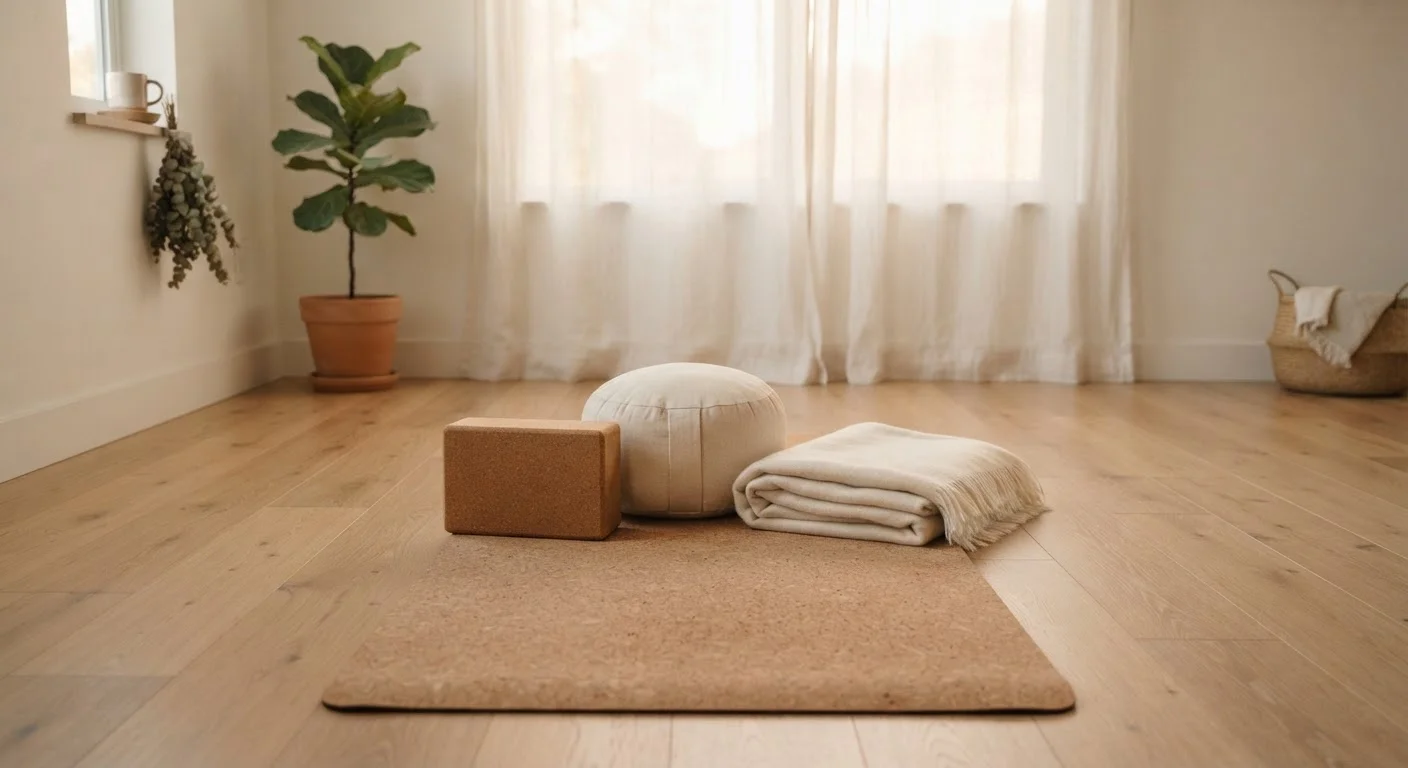
Blocks — typically foam, cork, or wood — close the gap between the body and the floor. In seated poses, placing a block under the sitting bones tilts the pelvis forward slightly, reducing lumbar strain and allowing the breath to move through the belly without restriction. In supine poses, a block under the sacrum in supported bridge creates gentle traction that many practitioners find immediately calming.
Bolsters
A bolster is a firm, cylindrical or rectangular cushion designed to support large portions of the body. Placed lengthwise under the spine in a supported fish or savasana variation, it opens the chest and encourages the long, slow exhales associated with parasympathetic activation. The weight and warmth of the body settling into a bolster also provides a grounding, proprioceptive signal that can quiet racing thoughts.
Blankets
Folded blankets are among the most versatile props available. Used under the knees in savasana, they release the lower back. Rolled and placed under the neck, they replace the need to strain to hold the head in neutral. A blanket draped over the body during final relaxation adds mild proprioceptive weight — similar in principle to a weighted blanket — which some practitioners find reduces restlessness. For guidance on which poses benefit most from these supports, the reference guide to calming asanas is a useful companion.
A Note on Prop Firmness
Softness is not always better in a restorative context. A bolster or blanket roll that is too soft may allow the body to sink unevenly, creating subtle strain rather than support. As a general guide, the prop should feel firm enough that it does not compress significantly under your weight. If you are using household substitutes, layering and compressing your makeshift prop before use helps assess whether it will hold its shape throughout a longer hold.
The Honest Drawbacks of Using Props
Props are worth using, but a balanced assessment means acknowledging where they fall short or create friction.
Initial cost can be a barrier
A quality bolster, two blocks, and a dedicated blanket can represent a meaningful upfront spend, which puts proper props out of reach for some practitioners without workarounds.
Storage space is a real consideration
Bolsters in particular are bulky. For practitioners in small apartments, storing a full prop kit between sessions can create logistical friction that discourages regular use.
Correct placement requires practice
Using a prop at the wrong angle or height can create pressure rather than ease. Without guidance, trial and error can be frustrating and occasionally counterproductive.
May create a dependency on perfect conditions
Practitioners who only practice with full prop support may find it harder to settle into relaxation when props are unavailable — for example, when traveling or practicing outdoors.
It is also worth noting that poor prop placement can introduce new discomfort rather than remove existing tension — a block at the wrong height, for instance, can create compression rather than ease. Taking a class with a qualified instructor, even once, can prevent that trial-and-error frustration. Equally, if physical discomfort during yoga feels significant or persistent, that warrants a conversation with a healthcare professional rather than a prop adjustment.
For common errors that can undermine a restorative session even when props are present, why forcing relaxation in yoga backfires addresses those patterns directly.
Getting Started Without Spending Much
You do not need a full studio kit to experiment with props. A firm sofa cushion can stand in for a bolster. Two paperback books of equal thickness approximate a low block. A folded bath towel works as a blanket for under the knees. These substitutes let you test whether supported poses genuinely help your practice before committing to dedicated equipment.
When you are ready to set up your space intentionally, setting up a calming yoga session offers a practical checklist that includes prop preparation alongside environment and mindset cues. Pairing supported poses with conscious breathwork also amplifies their effect — the principles behind that are explored in breathwork in calming yoga.
If you find that stillness in supported poses leads naturally toward meditation, meditation basics and the broader stress relief tools hub offer evidence-backed next steps.
This article is for general informational purposes only and is not a substitute for professional medical or healthcare advice. If you have any health concerns, please consult a qualified healthcare provider before beginning or changing a yoga or exercise practice.