
The Anatomy of Savasana: Why Lying Still Is One of Yoga's Most Demanding Poses

Key Takeaways
- Savasana is an active, intentional practice of stillness — not simply lying down.
- The difficulty comes from quieting the mind while the body remains fully conscious.
- Physiologically, savasana supports a shift toward parasympathetic nervous system activity.
- Proper alignment and props can make the pose significantly more accessible.
- Even a few minutes of savasana may help integrate the calming effects of a yoga session.
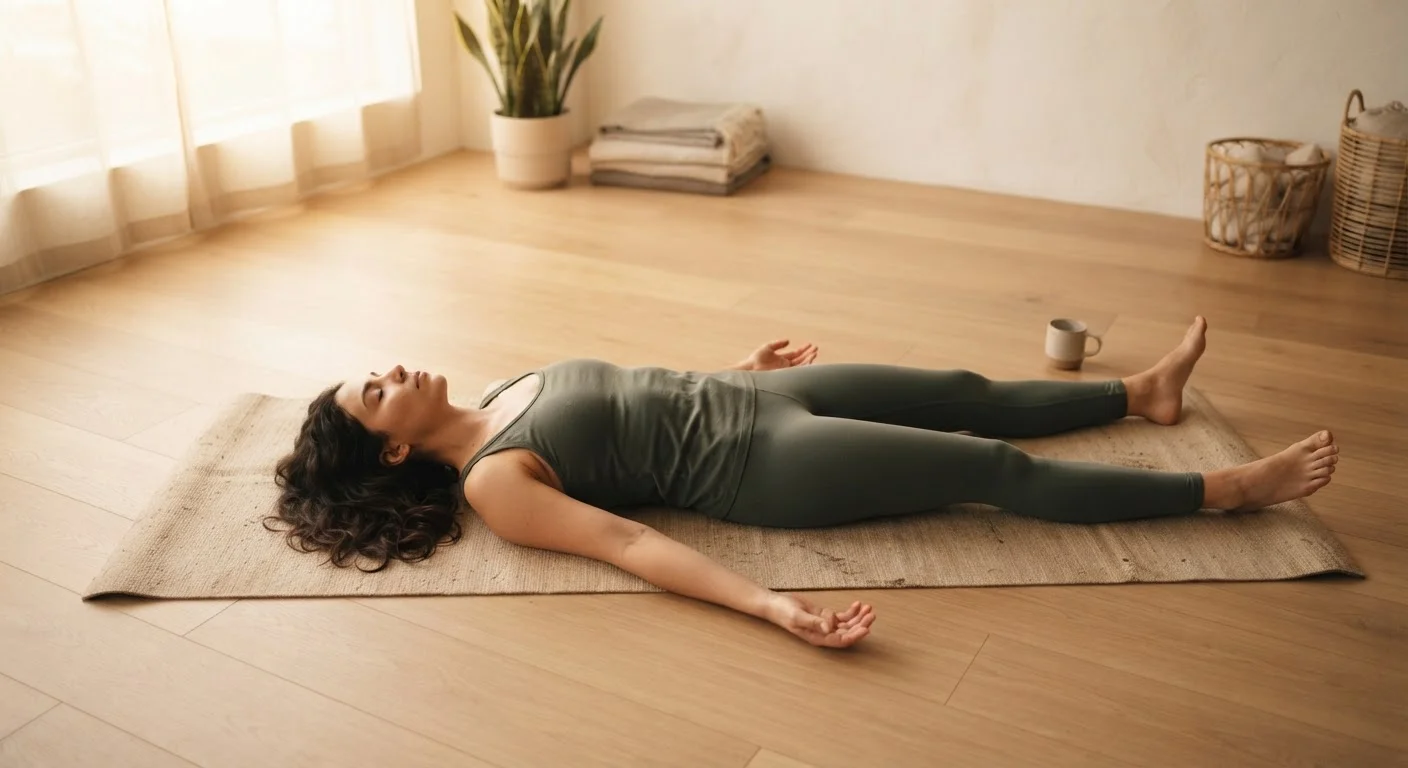
Savasana (Corpse Pose)
Savasana — pronounced shah-VAH-sah-nah — is the final resting posture in most yoga classes, where practitioners lie flat on their backs with eyes closed and limbs relaxed. Despite its still appearance, it is considered a conscious practice of surrendering physical effort and mental activity. The goal is not sleep, but a state of alert, effortless rest.
In yoga physiology, savasana is associated with stimulating the parasympathetic nervous system, shifting the body away from a stress-activated 'fight-or-flight' state toward rest-and-digest recovery — a transition sometimes called the 'relaxation response.'
What Actually Happens When You Lie Still
To an observer, savasana looks like the easiest moment in any yoga class. To the person in it, the experience can feel anything but easy. The moment movement stops, the mind often accelerates — replaying to-do lists, judging the session, anticipating the next task. This is not a personal failing; it reflects how the brain is wired.
During active movement, the nervous system is occupied with proprioception, balance, and breath coordination. Savasana removes those anchors. What remains is raw awareness — and for many people, that unmediated contact with their own mental activity is unfamiliar and uncomfortable.
Physiologically, the shift from active asana to still rest triggers measurable changes. Heart rate and breathing slow. Muscle tension decreases. Research on the relaxation response — a concept developed by cardiologist Herbert Benson — suggests that deliberate relaxation practices can reduce stress hormone activity and lower blood pressure, though individual responses vary and more research is ongoing.
~5–10 min
Recommended savasana duration per 60-minute class
Yoga educators commonly suggest one minute of savasana per ten minutes of active practice to allow adequate nervous system recovery.
~15–20%
Reduction in cortisol observed in some relaxation-response studies
Research on deliberate relaxation practices, including those reviewed in Benson's foundational work, has noted reductions in stress hormone markers, though effects vary by individual and study design.
The Anatomy of the Pose: What 'Correct' Savasana Looks Like
Savasana is not simply collapsing onto the mat. Subtle alignment choices make a meaningful difference in how well the body can actually rest.
- Legs: Feet fall naturally outward, about hip-width apart. Forcing them together creates low-grade muscular effort.
- Arms: Rest a few inches away from the torso, palms facing upward — a position that gently opens the chest and signals openness rather than guarding.
- Head and neck: The cervical spine should feel long and neutral. A thin folded blanket under the head prevents the chin from tipping up or dropping toward the chest.
- Lower back: If the lumbar curve is pronounced, a bolster or rolled blanket under the knees relieves compression and allows the hips to release fully.
These adjustments matter because unresolved physical discomfort — even mild tension in the lower back or neck — keeps the nervous system partially activated, undermining the very stillness you are working toward. See the reference guide to calming yoga poses for how savasana fits alongside other restorative postures.
Why the Mind Resists — and How to Work With It
The mental challenge of savasana is not a sign you are doing it wrong. It is, in fact, evidence of why the practice matters. Yoga philosophy describes this restlessness as chitta vritti — the fluctuations of the mind — and savasana is considered one of the most direct ways to observe and gradually settle that activity.
Practically, a few evidence-informed strategies can help:
- Breath anchoring: Directing gentle attention to the natural rhythm of the breath gives the mind a soft focal point without forcing control. Breathwork principles that apply during active poses carry naturally into savasana.
- Body scanning: A systematic mental sweep from feet to crown — simply noticing sensation without judgment — engages the mind just enough to prevent it from wandering into planning or rumination.
- Non-striving: Paradoxically, trying hard to relax often deepens tension. Research and clinical observation both suggest that accepting whatever mental state arises, rather than fighting it, produces better outcomes. Why forcing relaxation often backfires explores this dynamic in depth.
Use a Gentle Cue to Stay Present
If your mind drifts repeatedly during savasana, try silently labeling the exhale — for example, mentally noting 'release' with each breath out. This gives awareness a simple anchor without introducing effort or control. Over time, the cue becomes less necessary as the practice deepens.
Savasana as Integration, Not Just Rest
Experienced teachers often describe savasana as the most important pose in the sequence — not because it is the most physically demanding, but because it is when the body integrates everything that came before. The nervous system uses this window to consolidate the calming signals generated during the active practice.
This integration function distinguishes savasana from simply sitting down between tasks. The posture itself — horizontal, still, deliberately held — creates physiological conditions that seated or standing rest does not fully replicate. Gravity is distributed evenly across the body. There is no postural effort required to remain upright. These conditions give the musculoskeletal and autonomic systems an unusually complete opportunity to reset.
Savasana also sits in an interesting relationship to other quiet practices. It shares the floor-based stillness of restorative yoga, but unlike supported restorative poses, it uses no props to shape the body's experience. Compare that to yin yoga, which targets connective tissue through extended holds. The differences between restorative and yin yoga help clarify where savasana fits in the broader landscape of contemplative movement.
If you are new to building a calming yoga practice, setting up your session mindfully beforehand can make settling into savasana at the end noticeably easier.
This article is for informational purposes only and does not constitute medical advice. If you have a health condition that affects your ability to lie flat or engage in yoga practice, please consult a qualified healthcare professional before beginning.