
Hormonal Health Through the Decades: How Testosterone Changes from Your 20s to Your 60s

| Peak testosterone age | Early-to-mid 20s (Established endocrinological consensus) |
| Average annual decline (post-30) | ~1–2% per year (American Urological Association guidelines) |
| Key binding protein | SHBG (Sex Hormone-Binding Globulin) (Increases with age, reducing free testosterone) |
| Clinical term for low testosterone | Hypogonadism (Endocrine Society clinical practice guidelines) |
| Testosterone measurement types | Total, Free, and Bioavailable (Standard hormone panel interpretation) |
| Conversion process in fat tissue | Aromatization (T → Estrogen) (Well-established biochemical mechanism) |
The Testosterone Timeline: A Decade-by-Decade Overview
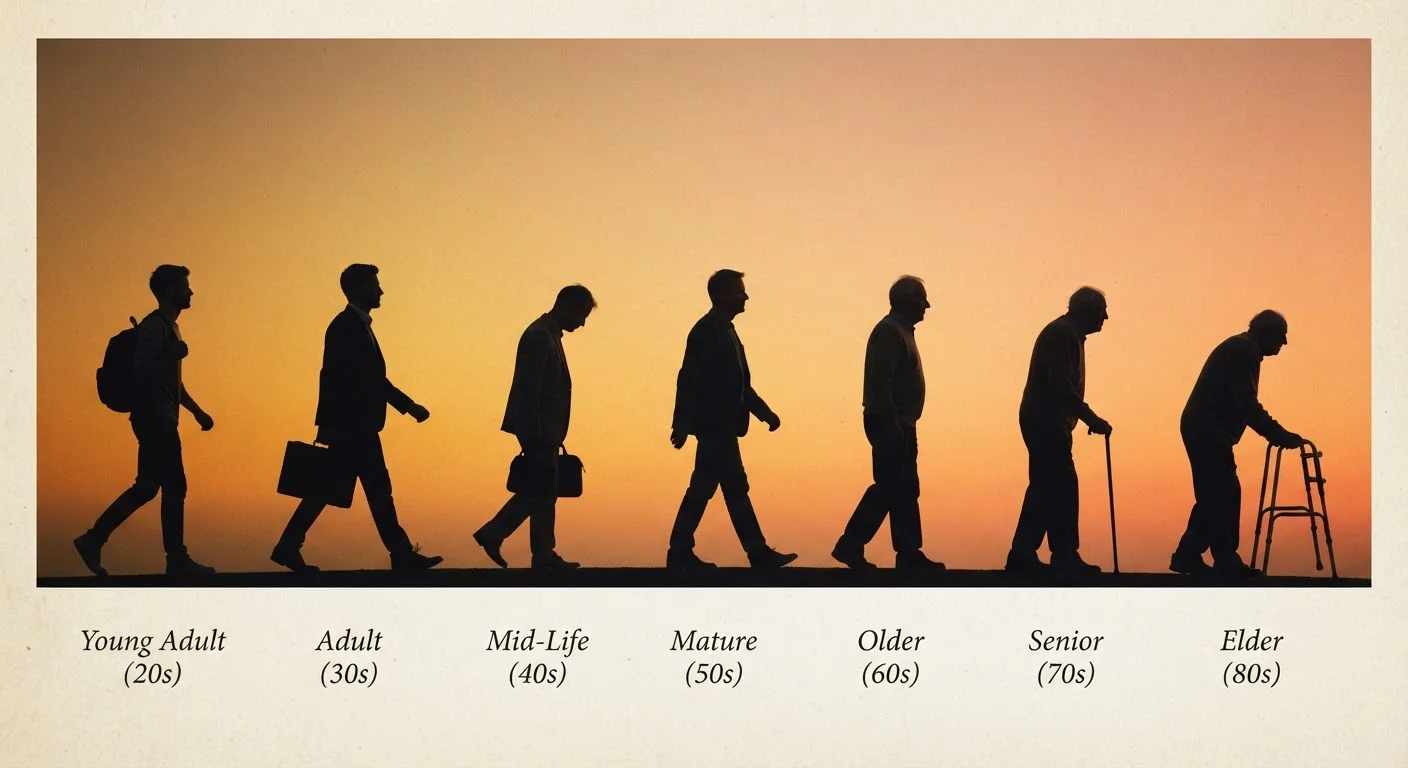
Testosterone doesn't crash overnight. It follows a slow, largely predictable trajectory across a man's lifespan — one that's worth understanding whether you're 25 or 65. If you're new to the subject, our practical starting point for hormonal health covers the foundational concepts. What follows here is a decade-by-decade breakdown of how testosterone typically shifts — and what those changes actually mean day to day.
| Peak testosterone age | Early-to-mid 20s (Established endocrinological consensus) |
| Average annual decline (post-30) | ~1–2% per year (American Urological Association guidelines) |
| Key binding protein | SHBG (Sex Hormone-Binding Globulin) (Increases with age, reducing free testosterone) |
| Clinical term for low testosterone | Hypogonadism (Endocrine Society clinical practice guidelines) |
| Testosterone measurement types | Total, Free, and Bioavailable (Standard hormone panel interpretation) |
| Conversion process in fat tissue | Aromatization (T → Estrogen) (Well-established biochemical mechanism) |
For a broader look at the endocrine system and the many hormones involved, see our comprehensive overview of men's hormonal health.
Your 20s: Peak Production
For most men, testosterone reaches its lifetime peak in the early-to-mid 20s. Muscle synthesis is efficient, recovery from exercise is faster, and libido tends to be at its highest. The hypothalamic-pituitary-gonadal (HPG) axis — the signaling system that governs hormone production — is operating at full capacity.
This decade is often taken for granted, but it sets a hormonal baseline that matters later. Chronic sleep deprivation, high-stress lifestyles, poor diet, and heavy alcohol use can suppress testosterone even during peak years. Understanding what testosterone actually does in the male body helps contextualize why these habits carry long-term consequences.
Your 30s and 40s: The Gradual Decline Begins
After age 30, total testosterone typically declines at roughly 1–2% per year on average, according to established endocrinological literature. This is a normal physiological process, not a disease. Most men won't notice dramatic shifts in their 30s, but subtle changes — slightly slower recovery, minor mood variability, a tendency to gain abdominal fat — may begin to emerge.
Body composition plays an important role here. Adipose (fat) tissue converts testosterone to estrogen via a process called aromatization. As muscle mass decreases and body fat increases, this conversion accelerates. Our article on how body composition shapes the endocrine system explores this relationship in depth.
Exercise choices matter during this window. Research suggests resistance training has a more direct influence on testosterone than cardio — a comparison explored in our piece on resistance training vs. cardio for male hormone levels. Men who maintain muscle mass and manage body fat tend to experience a slower hormonal decline.
Total Testosterone
The complete measure of testosterone in the bloodstream, including both bound and unbound fractions. It is the standard starting point for hormonal evaluation but does not reflect how much is biologically active.
Free Testosterone
The small fraction of testosterone not bound to proteins, making it directly available to tissues and cells. This is often a more clinically meaningful measure than total testosterone alone.
SHBG (Sex Hormone-Binding Globulin)
A protein produced by the liver that binds to testosterone and reduces its bioavailability. SHBG levels typically rise with age, which can lower effective free testosterone even when total levels appear normal.
Aromatization
A biochemical process by which testosterone is converted into estradiol (a form of estrogen) by the enzyme aromatase, particularly within adipose (fat) tissue. Increased body fat can accelerate this conversion.
HPG Axis
The hypothalamic-pituitary-gonadal axis — a hormonal feedback loop involving the brain and testes that regulates testosterone production. Disruptions at any point in this system can affect hormone levels.
Hypogonadism
A clinical condition in which the testes produce insufficient testosterone. It can be primary (originating in the testes) or secondary (originating in the brain's signaling system), and requires medical diagnosis.
Your 50s and 60s: Navigating Late-Life Hormonal Shifts
By the 50s, cumulative decline becomes more noticeable for many men. Fatigue, reduced motivation, changes in sleep quality, and shifts in sexual function are among the most commonly reported symptoms. It's worth noting that these experiences vary considerably between individuals — some men maintain relatively robust testosterone levels well into their 60s, while others experience more pronounced drops earlier.
The concept of "low testosterone" (clinically referred to as hypogonadism) requires proper clinical evaluation. Total testosterone alone doesn't tell the full story. Sex hormone-binding globulin (SHBG) rises with age, reducing the amount of bioavailable "free" testosterone — the fraction actually usable by tissues. Our guide on what blood tests can and cannot tell you about hormonal health explains these distinctions clearly.
The downstream effects extend well beyond libido. Bone density, cardiovascular markers, mood regulation, and cognitive function are all influenced by testosterone levels over time. For a fuller picture, see why low testosterone affects more than just sex drive. Any symptoms that concern you warrant a conversation with a qualified healthcare provider — self-diagnosis and self-treatment can cause real harm.
This article is for general informational and educational purposes only and does not constitute medical advice. Always consult a qualified healthcare professional for personal health concerns, symptoms, or before making any changes to your health management.