

| Standard testosterone reference range (adult men) | Approximately 300–1,000 ng/dL (Endocrine Society Clinical Practice Guidelines) |
| Free testosterone as share of total | Roughly 1–3% (General clinical reference) |
| Best time to draw testosterone | Morning (7–10 AM) when levels peak (Standard clinical recommendation) |
| Key hormones in a basic male panel | Total T, Free T, SHBG, LH, FSH, Estradiol (General endocrinology practice) |
| Conditions that elevate SHBG | Liver disease, hyperthyroidism, aging (General clinical reference) |
| Conditions that lower SHBG | Obesity, insulin resistance, hypothyroidism (General clinical reference) |
What a Standard Hormone Panel Actually Measures
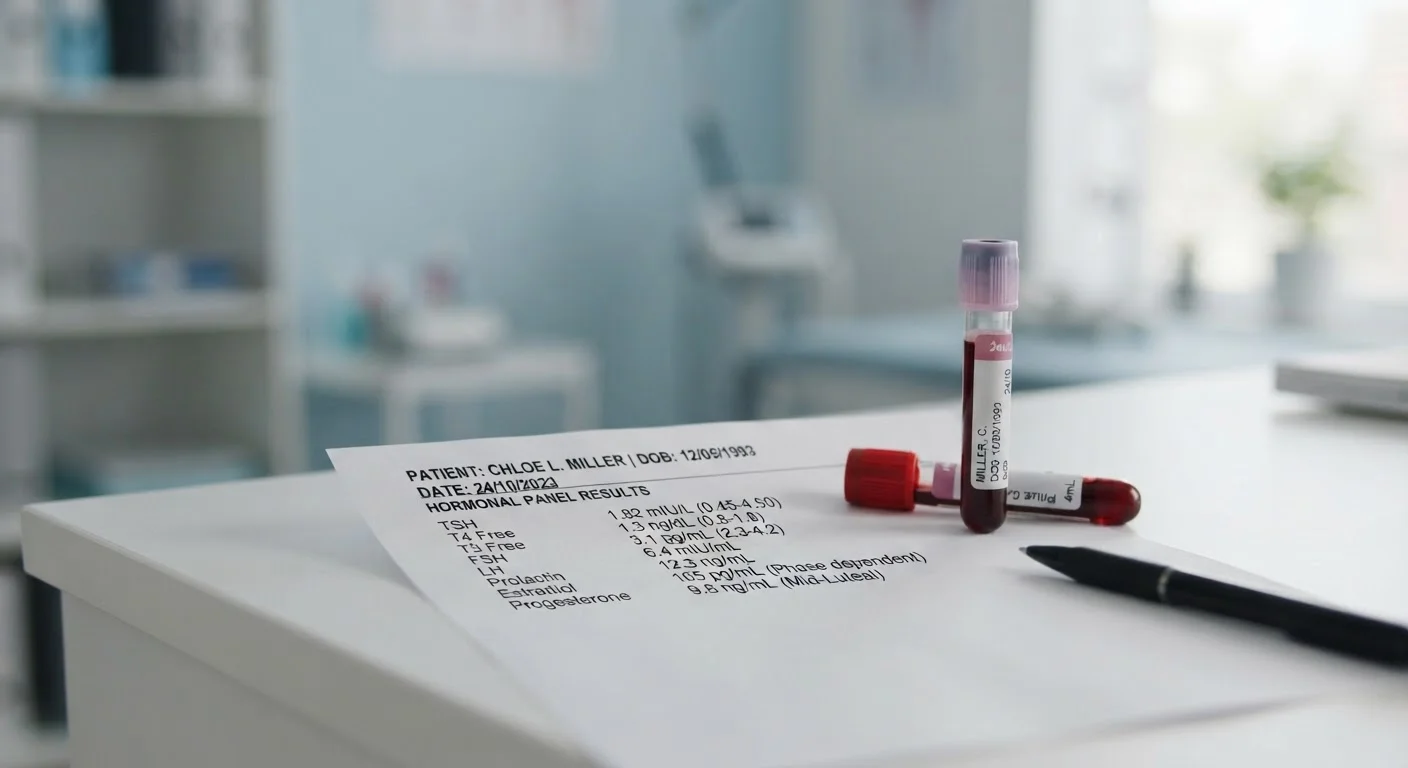
If you've been told to get your hormones checked, you'll likely encounter a handful of unfamiliar abbreviations on the lab slip. Understanding what each marker measures — and what it doesn't — is the first step toward using that information productively.
| Standard testosterone reference range (adult men) | Approximately 300–1,000 ng/dL (Endocrine Society Clinical Practice Guidelines) |
| Free testosterone as share of total | Roughly 1–3% (General clinical reference) |
| Best time to draw testosterone | Morning (7–10 AM) when levels peak (Standard clinical recommendation) |
| Key hormones in a basic male panel | Total T, Free T, SHBG, LH, FSH, Estradiol (General endocrinology practice) |
| Conditions that elevate SHBG | Liver disease, hyperthyroidism, aging (General clinical reference) |
| Conditions that lower SHBG | Obesity, insulin resistance, hypothyroidism (General clinical reference) |
Most clinicians start with total testosterone, which captures everything circulating in the blood. The problem is that much of it is chemically bound to proteins — primarily SHBG and albumin — and unavailable for your body to use. Free testosterone and bioavailable testosterone give a more functional picture, though they're measured less consistently across labs.
LH and FSH (follicle-stimulating hormone) help locate the source of any imbalance. If total testosterone is low and LH is also low or normal, the issue may lie in the brain's signaling rather than the testes themselves — a distinction that shapes any clinical response. Estradiol, a form of estrogen, is routinely included because men convert some testosterone into it, and both very high and very low levels can affect mood, bone density, and sexual function.
If you're new to thinking about hormones more broadly, our men's hormonal health primer provides a useful foundation before diving into panel results.
Total Testosterone
The combined measure of all testosterone circulating in the blood, including both protein-bound and free forms. It's the most commonly ordered hormone marker but doesn't tell the whole story on its own.
Free Testosterone
The small fraction of testosterone not bound to proteins, and therefore available for cells to use. Low free testosterone can cause symptoms even when total levels appear normal.
SHBG (Sex Hormone-Binding Globulin)
A protein produced mainly in the liver that binds to testosterone and renders it biologically inactive. High SHBG can reduce free testosterone even when total testosterone is in range.
LH (Luteinizing Hormone)
A pituitary hormone that signals the testes to produce testosterone. Measuring LH helps distinguish whether low testosterone originates in the testes or in the brain's signaling pathway.
Bioavailable Testosterone
Testosterone that is either free or loosely bound to albumin, making it accessible to tissues. Considered a more clinically relevant measure than total testosterone alone.
Reference Range
The statistical span of values observed in a healthy population, typically covering the middle 95%. A result within range doesn't automatically mean optimal, and one outside range doesn't automatically mean disease.
Where Blood Tests Fall Short
Lab values carry authority — numbers feel objective — but they have meaningful limitations that are worth understanding before attaching too much weight to a single result.
Results Should Be Interpreted in Clinical Context
A hormone panel is a snapshot, not a diagnosis. Factors like stress, sleep deprivation, recent illness, and even the time of day a sample is drawn can shift results meaningfully. Always review your results with a qualified clinician who knows your full medical history before drawing conclusions or considering any intervention.
Reference ranges are population statistics, not personal targets. A result at the low end of "normal" may still be insufficient for one individual, while another person functions well with the same number. Symptoms — energy, mood, libido, cognitive clarity — matter as much as where a value lands on a chart.
Single snapshots miss variability. Testosterone follows a daily rhythm, peaking in the morning and declining through the day. Illness, poor sleep, intense exercise in the preceding 24 hours, and acute stress can all suppress levels temporarily. Most guidelines recommend confirming any abnormal result with at least one repeat test drawn in the morning under consistent conditions.
SHBG complicates everything. Two men with identical total testosterone readings can have very different amounts of biologically active hormone if their SHBG levels differ. Obesity and insulin resistance tend to lower SHBG; aging and liver conditions can raise it. This is why free or bioavailable testosterone adds important context.
Symptoms don't always track with numbers. Some men report classic low-testosterone symptoms — fatigue, low drive, mood changes — with results in the mid-normal range. Others with borderline low levels report feeling fine. Blood tests inform clinical decisions; they don't replace the full picture. For a closer look at the physical and emotional signals worth discussing with a doctor, see recognizing signs that may warrant a hormone check.
~40%
Men with low T who have normal total testosterone
Research suggests a significant proportion of symptomatic men have normal total testosterone but low free testosterone, highlighting the limits of a single marker.
2–3×
Morning vs. evening testosterone variation
Testosterone levels can vary substantially within a single day, which is why timing and repeated testing matter for accurate interpretation.
Hormone levels also shift naturally with age. If you want to understand what declining testosterone across decades typically looks like — and what's considered a normal trajectory — our article on hormonal health through the decades provides a decade-by-decade breakdown.
Once you have results in hand and have reviewed them with your clinician, you may be interested in what lifestyle factors credible research actually supports. Our overview of natural approaches to supporting testosterone separates evidence-backed strategies from common overstatements.
This article provides general health information and is not a substitute for personalized medical advice. Always consult a qualified healthcare professional about your test results, symptoms, or any decisions regarding your health.