
Hormonal Health in Men: A Comprehensive Overview of the Endocrine System, Key Hormones, and Long-Term Balance

Key Takeaways
- The endocrine system is a network of glands that release hormones regulating nearly every bodily function.
- Testosterone is not the only important male hormone — cortisol, insulin, and thyroid hormones matter equally.
- Hormonal levels change gradually with age, but dramatic shifts often signal an underlying issue worth investigating.
- Chronic stress and poor sleep are among the most reliable disruptors of male hormonal balance.
- Lifestyle habits — diet, exercise, and alcohol intake — measurably influence hormone levels.
- Persistent symptoms such as fatigue, mood changes, or low libido warrant a clinical evaluation, not self-diagnosis.
How the Male Endocrine System Works
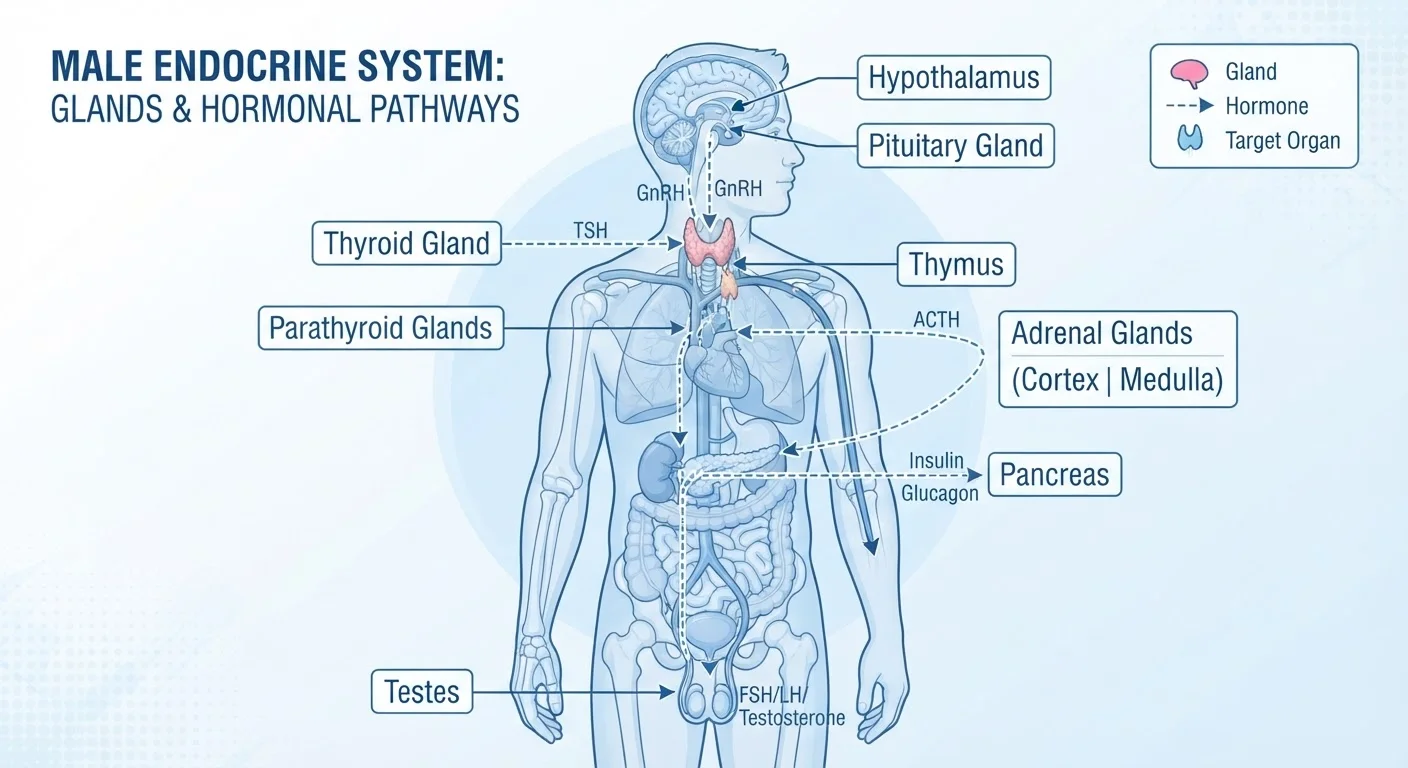
The endocrine system is the body's chemical messaging network. Rather than transmitting signals electrically like the nervous system, it releases hormones — molecules that travel through the bloodstream to target tissues and prompt specific biological responses. In men, this system orchestrates everything from metabolism and mood to muscle growth and sexual function.
Key glands include the hypothalamus and pituitary gland in the brain, the testes, adrenal glands, thyroid, and pancreas. These don't operate independently; they form feedback loops. The hypothalamus signals the pituitary, which in turn signals peripheral glands. When hormone levels reach a set point, that signal feeds back and dampens further release — a self-regulating mechanism called a negative feedback loop.
If you're new to this topic, our plain-language introduction to the male endocrine system offers an accessible starting point before diving deeper.
Key Hormones in Men and What They Regulate
Testosterone draws most of the cultural attention, but male hormonal health is far more multifaceted.
- Testosterone: Produced primarily in the testes under direction from luteinizing hormone (LH), testosterone governs libido, muscle mass, bone density, red blood cell production, and contributes to mood regulation. Normal ranges in adult men vary broadly — roughly 300–1,000 ng/dL — and individual variation is significant.
- Cortisol: Released by the adrenal glands in response to stress, cortisol is essential for managing inflammation and blood sugar. Chronically elevated cortisol, however, suppresses testosterone production and disrupts sleep architecture.
- Insulin: Produced by the pancreas, insulin regulates blood glucose. Insulin resistance — where cells stop responding effectively — is strongly associated with lower testosterone and increased estrogen conversion in men.
- Thyroid hormones (T3 and T4): These regulate metabolic rate, body temperature, and energy availability. Thyroid dysfunction affects mood, weight, and libido in ways that can closely mimic testosterone deficiency.
- Estrogen (estradiol): Men produce estrogen in small amounts via conversion of testosterone, primarily in fat tissue. Within a healthy range, estradiol supports bone density and cardiovascular function. Excess, often linked to obesity, can suppress testosterone signaling.
- DHEA and growth hormone: Both peak in early adulthood and decline steadily with age. They influence energy, body composition, and recovery capacity.
For information on micronutrients that support hormone-related physical function, see our reference on micronutrients linked to men's energy and muscle function.
~1–2%
Annual testosterone decline after age 30
Research published in endocrinology literature estimates testosterone falls roughly 1–2% per year in aging men, though individual variation is substantial.
15%
Testosterone reduction from one week of sleep restriction
A University of Chicago study found that restricting healthy young men to five hours of sleep per night for one week reduced daytime testosterone levels by 10–15%.
2–3x
Increased hypogonadism risk with obesity
Studies in the Journal of Clinical Endocrinology & Metabolism indicate obese men are two to three times more likely to have low testosterone than healthy-weight peers.
How Hormones Change with Age
Hormonal change in men is gradual rather than abrupt. Unlike the relatively defined hormonal transition women experience at menopause, men undergo a slower, more variable process sometimes called andropause or late-onset hypogonadism — though these terms remain clinically debated.
Testosterone levels generally begin declining around age 30–35, at an estimated rate of roughly 1–2% per year. By their 50s and 60s, many men have measurably lower levels than in their 20s, though the degree varies enormously between individuals. Factors including body composition, lifestyle, chronic illness, and genetics all influence the trajectory.
Growth hormone and DHEA show similarly gradual declines. Cortisol patterns can shift, and insulin sensitivity tends to decrease with age — partly due to reduced physical activity and changes in muscle mass.
Request both total and free testosterone when getting tested. Free testosterone — the unbound, biologically active fraction — can be low even when total testosterone appears normal, and that distinction changes the clinical picture.
Sex hormone-binding globulin (SHBG) binds testosterone, rendering it inactive. Measuring only total testosterone misses men whose SHBG is elevated, making free testosterone a more functionally meaningful marker.
Schedule testosterone blood draws in the morning, ideally between 7 and 10 a.m. Levels follow a diurnal rhythm and are at their daily peak during this window.
Testosterone secretion is highest in early morning and declines through the day. Afternoon draws can return values 15–25% lower, which may create a false impression of deficiency.
Importantly, lower hormone levels are not automatically pathological. What matters clinically is whether levels fall below a threshold associated with symptoms — a determination that requires professional assessment, not at-home assumption.
Stress, Sleep, and Hormonal Balance
Two of the most underappreciated regulators of male hormonal health are sleep and chronic stress — and they're deeply interconnected.
The majority of daily testosterone is produced during sleep, particularly during deep slow-wave and REM stages. Research has consistently shown that even one week of restricted sleep — in the range of five hours per night — can reduce testosterone levels in healthy young men by a clinically meaningful margin. Chronic sleep deprivation also elevates cortisol, which further suppresses gonadal hormone production.
Psychological stress activates the hypothalamic-pituitary-adrenal (HPA) axis, flooding the bloodstream with cortisol. When this activation is frequent or prolonged, the downstream effects include reduced testosterone synthesis, impaired immune function, and disrupted mood regulation. The relationship between hormonal imbalance and mental health runs in both directions — which our overview of men's mental wellness from stress to support covers in depth.
Prioritizing seven to nine hours of quality sleep per night and adopting structured approaches to stress — whether exercise, mindfulness, or therapy — aren't soft suggestions. They are evidence-supported interventions with measurable hormonal consequences.
Lifestyle Factors That Support or Disrupt Hormonal Health
Hormone levels are not purely genetic or inevitable. Daily habits exert a substantial influence — in both directions.
Exercise
Resistance training and high-intensity interval training are consistently associated with acute testosterone increases and improved insulin sensitivity. Endurance exercise in moderate volumes is beneficial, but extreme overtraining without adequate recovery can raise cortisol chronically and suppress reproductive hormones.
Diet and Body Composition
Excess adipose (fat) tissue — particularly visceral fat around the abdomen — contains aromatase, an enzyme that converts testosterone to estrogen. Maintaining a healthy body weight through balanced nutrition supports favorable hormone ratios. Severely restrictive diets, on the other hand, signal caloric scarcity to the body and can suppress testosterone production. For a detailed look at what dietary evidence actually supports, see nutrition and hormonal balance.
Alcohol and Other Disruptors
Regular alcohol consumption impairs testicular testosterone production and increases estrogen conversion. Endocrine-disrupting chemicals found in some plastics and personal care products have also attracted research interest, though establishing causality in everyday exposures remains complex. Our companion article on everyday habits that work against hormonal balance breaks these down with practical context.
Avoid Self-Diagnosing or Self-Treating
Over-the-counter testosterone boosters and unlicensed hormone products are not regulated the same way as prescription medications. Some contain undisclosed active ingredients; others may actually suppress natural production. Any consideration of hormone supplementation should involve a physician who can order appropriate testing and monitor outcomes.
When to Talk to a Doctor
Hormonal imbalance is a clinical diagnosis — not a self-assessed condition. Many symptoms associated with low testosterone (fatigue, reduced libido, mood changes, difficulty concentrating) overlap with depression, thyroid dysfunction, sleep disorders, and a range of other conditions. Treating for low testosterone without ruling out these alternatives can delay the correct diagnosis.
If you experience persistent fatigue, unexplained weight changes, mood disruption, reduced sexual function, or loss of muscle mass, schedule an appointment with your primary care physician. They can order a panel of blood tests — typically measuring total and free testosterone, LH, FSH, thyroid markers, and metabolic indicators — to build an accurate picture.
Depression in men often co-occurs with hormonal disruption and is frequently underdiagnosed. Our article on men and depression addresses how symptoms can present differently than expected and why that matters for getting appropriate support.
Treatment decisions — including whether hormone replacement or other interventions are appropriate — must be made with a qualified clinician who can weigh your full health picture. There is no universally correct hormone level; what constitutes balance is individual.
This article is for informational and educational purposes only and does not constitute medical advice. Always consult a qualified healthcare professional before making any decisions about your health or treatment.