

Key Takeaways
- Tracking your menstrual cycle can reveal patterns in energy, mood, sleep, and physical symptoms.
- You only need a notebook or free app to get started — consistency matters more than complexity.
- Cycle length and symptoms vary widely between individuals; your personal baseline is what counts.
- Several weeks of data are needed before meaningful patterns begin to emerge.
- Cycle tracking supports self-awareness and informed conversations with your healthcare provider.
What you will need
Why Cycle Tracking Builds Hormonal Awareness
The menstrual cycle is often described as a vital sign — a recurring window into the hormonal rhythms that influence everything from energy and mood to skin, digestion, and sleep. Yet most people have never been taught to observe it deliberately. Tracking moves cycle awareness from passive experience to active, interpretable data.
The four broad phases of the menstrual cycle — menstruation, the follicular phase, ovulation, and the luteal phase — are each characterized by shifting levels of estrogen, progesterone, luteinizing hormone (LH), and follicle-stimulating hormone (FSH). These hormonal changes don't just affect the reproductive system; they influence neurotransmitter activity, body temperature, immune function, and metabolism. Research consistently supports the idea that tracking these shifts can help individuals better understand their own bodies, though individual variation is significant and tracking is not a diagnostic tool.
If you're new to structured health observation, the broader principles in our guide to starting a symptom journal apply directly here and are worth reviewing before you begin. Cycle tracking is also closely related to symptom tracking more broadly — the same skills transfer.
Cycle Tracking Is Not Medical Diagnosis
The information you gather through cycle tracking is a tool for self-awareness, not a substitute for professional evaluation. If you notice concerning symptoms — such as very heavy bleeding, severe pain, or cycles that are consistently irregular — please consult a qualified healthcare provider rather than relying on self-interpretation alone.
What You'll Need to Get Started
One of the strengths of cycle tracking is how low the barrier to entry actually is. You don't need specialized equipment or a subscription to begin gathering useful information.
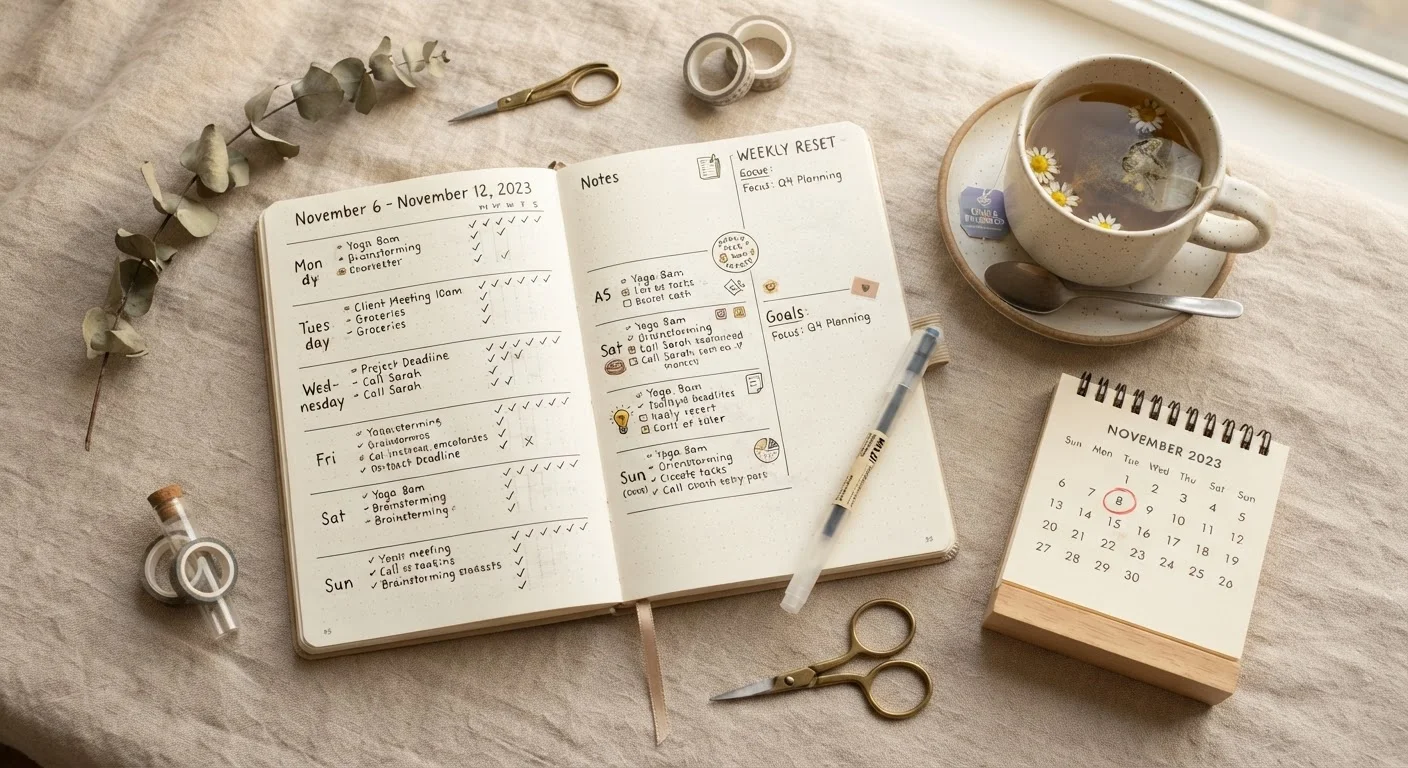
Dedicated journal or notebook
Provides a private, customizable space to log daily observations across multiple cycle phases.
Cycle tracking app
Automates date calculations and can visualize patterns across multiple cycles in chart form.
Basal body temperature (BBT) thermometer
Measures resting temperature each morning to help identify ovulation timing when charted over time.
What you will need
If you're interested in deeper ovulation data — for fertility awareness or simply curiosity — you may eventually want to explore additional methods. Our comparison of basal body temperature, cervical mucus, and ovulation predictor kits can help you decide whether to add those layers later.
Don't Rely on Tracking Alone for Contraception
Cycle tracking, on its own, is not a reliable method of contraception. Hormone levels and fertile windows vary significantly from cycle to cycle. If pregnancy prevention is your goal, speak with a healthcare provider about evidence-based options.
How to Track: Step-by-Step
The following steps will guide you from your very first logged day through to interpreting what you've collected. Work through them in order, and remember that the goal at this stage is consistency, not perfection.
Establish your starting point
Mark the first day of your next period as Day 1 of your cycle. This is the standard reference point used in cycle tracking. If you can't remember your last period date exactly, that's fine — simply begin from the next one. Note it in your journal or app the moment bleeding starts, even if it's light spotting.
Choose what to track each day
Decide on a consistent set of daily observations. Useful categories include:
- Physical: bleeding intensity (light/medium/heavy/none), cramps, bloating, breast tenderness, headaches, skin changes
- Energy and sleep: overall energy level, sleep quality, fatigue
- Mood and cognition: general mood, irritability, focus, anxiety
- Cervical mucus (optional): consistency and appearance — for a detailed guide, see what cervical mucus can tell you about your cycle
Use simple shorthand (numbers 1–5, single words) to keep entries quick and sustainable.
Log at the same time every day
Consistency in timing reduces variability in your data. Morning is a natural anchor point — particularly if you're also measuring basal body temperature, which must be taken immediately after waking. If mornings don't suit you, end-of-day logging works just as well. Pair tracking with an existing habit, such as brushing your teeth, to make it easier to remember.
Track through at least two to three full cycles
One cycle gives you a snapshot; two to three cycles begin to reveal genuine patterns. Cycle length, symptom timing, and mood shifts can vary considerably from month to month due to stress, illness, travel, or sleep disruption. The more cycles you document, the more reliably you can distinguish your typical baseline from a true anomaly.
Review and look for patterns
At the end of each cycle, spend a few minutes reviewing your entries. Look for clusters: Do headaches consistently appear on days 25–28? Does your energy peak around the middle of your cycle? Is sleep reliably disrupted in the week before your period? These are the kinds of recurring signals that make cycle data genuinely useful. Highlight or annotate anything that appears in at least two consecutive cycles.
Bring your records to healthcare appointments
A few cycles of consistent tracking gives your provider meaningful, specific information that a verbal summary often can't. Bring your journal or export a summary from your app. Concrete data — such as cycle length over three months, symptom timing, and intensity — can support more productive clinical conversations, especially if you're experiencing concerns like irregular cycles, mood shifts, or unexplained fatigue. For guidance on symptoms that may warrant follow-up, see physical and emotional signs that may warrant a hormone check.
Start Small and Build From There
If daily logging feels overwhelming, start with just three data points: cycle day, energy level (low/medium/high), and one physical note. Even minimal, consistent tracking over two to three cycles will begin to show patterns you hadn't noticed before.
As you grow more comfortable with the basics, you might also explore how hormonal patterns relate to sleep — building a sustainable sleep routine around your menstrual cycle offers practical guidance on that connection. And if you're curious about popular nutritional approaches that claim to support hormonal balance, our evidence review of seed cycling offers an honest assessment of what research does and doesn't support.
This article is for informational purposes only and is not a substitute for professional medical advice, diagnosis, or treatment. Always consult a qualified healthcare provider with questions about your health or before making changes to your care.