

Key Takeaways
- PCOS is a complex endocrine disorder, not simply a reproductive or ovarian condition.
- Elevated androgens and disrupted LH/FSH ratios are central hormonal features of PCOS.
- Insulin resistance is present in many — though not all — people with PCOS and worsens symptoms.
- PCOS affects mood, metabolism, skin, and long-term cardiometabolic health, not just fertility.
- Dietary and lifestyle patterns can support hormonal balance, though they are not cures.
- A qualified healthcare provider should guide diagnosis and any treatment decisions.
What Is PCOS, Really?
Polycystic ovary syndrome (PCOS) is one of the most common hormonal conditions affecting women of reproductive age, estimated to affect roughly 8–13% of women globally according to the World Health Organization. Despite its name, PCOS is not defined solely by the presence of cysts on the ovaries. It is a systemic endocrine disorder with far-reaching effects on metabolism, mood, and long-term health.
Diagnosis is typically made using the Rotterdam criteria, which requires at least two of three features: irregular or absent ovulation, elevated androgen levels (clinically or biochemically), and polycystic ovarian morphology on ultrasound. Because no single feature is required, PCOS presents very differently from one person to the next.
This variability is part of why PCOS is so frequently misunderstood — both by those living with it and in broader public conversation. For a closer look at what the evidence actually supports, see our article on separating PCOS myth from medical evidence.
The Hormonal Drivers Behind PCOS
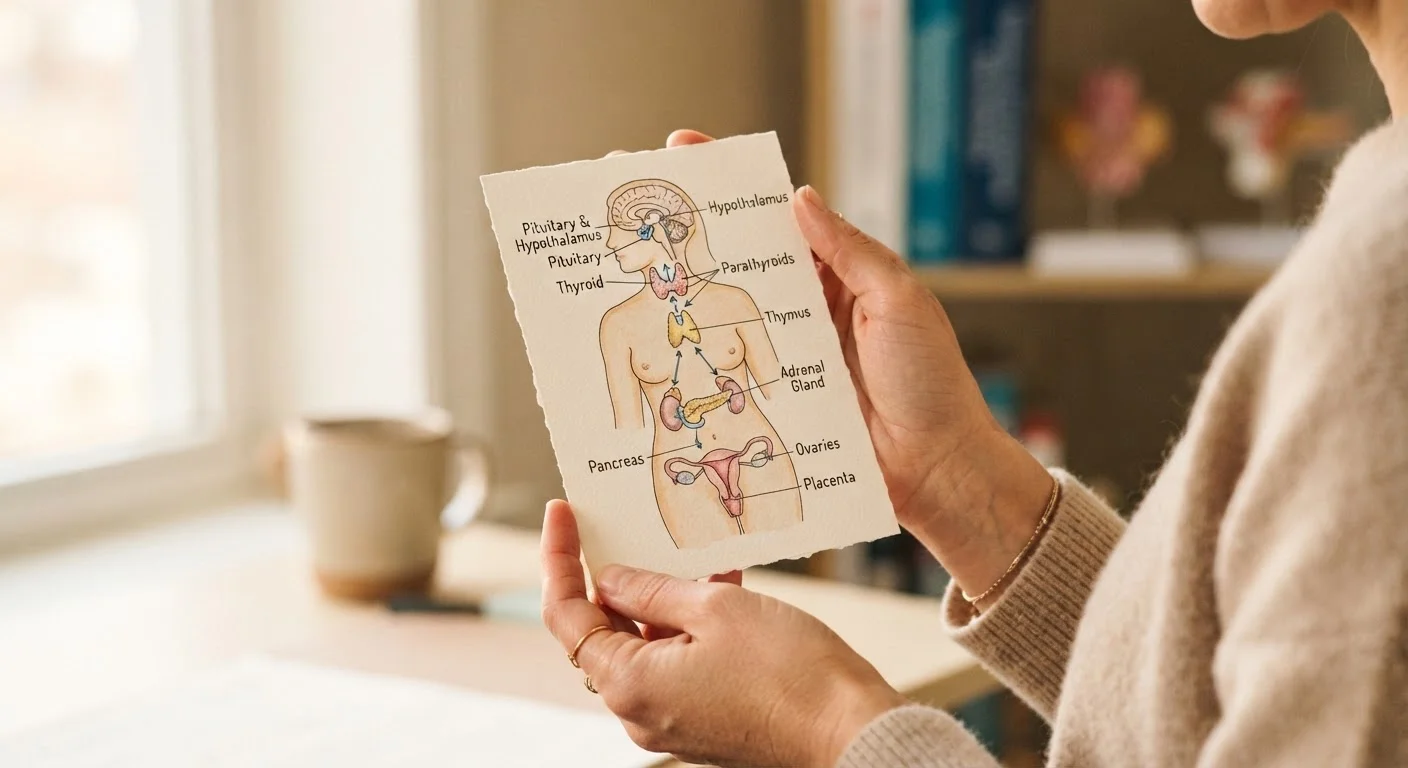
At its core, PCOS involves a disruption in the communication between the brain, the pituitary gland, and the ovaries — what endocrinologists call the hypothalamic-pituitary-ovarian (HPO) axis.
In a typical cycle, the pituitary releases follicle-stimulating hormone (FSH) and luteinising hormone (LH) in a carefully timed ratio that allows a follicle to mature and ovulation to occur. In many people with PCOS, LH secretion is elevated relative to FSH. This imbalance drives the ovaries to overproduce androgens — hormones such as testosterone and androstenedione — rather than completing the maturation process that leads to ovulation.
These elevated androgens are responsible for several hallmark PCOS symptoms, including:
- Hirsutism (unwanted facial or body hair growth)
- Acne, particularly along the jawline and chin
- Thinning scalp hair (androgenic alopecia)
- Irregular or infrequent menstrual cycles
When reviewing your androgen levels with a doctor, ask for a full panel including free testosterone and SHBG — not just total testosterone. Total testosterone alone can miss clinically meaningful androgen excess.
Free testosterone, which reflects biologically active hormone, is often more informative than total testosterone in PCOS evaluation, particularly when SHBG is suppressed.
Track your cycle length and variability for at least three months before any appointment. Even a simple app log gives your provider far more useful data than memory alone.
Cycle irregularity is a key diagnostic criterion for PCOS, and documented patterns help clinicians distinguish PCOS from other causes of cycle disruption.
It is worth noting that androgens are present and necessary in all women — PCOS involves an excess relative to the individual's baseline, not the complete presence of something foreign. Understanding this nuance helps demystify why symptoms vary so widely.
Insulin Resistance and Its Hormonal Ripple Effect
Research consistently shows that insulin resistance is present in a significant proportion of people with PCOS — including those who are not overweight. When cells become less responsive to insulin, the pancreas compensates by producing more of it. These elevated insulin levels then act directly on the ovaries, further stimulating androgen production and compounding the hormonal imbalance already present.
8–13%
Women of reproductive age estimated to have PCOS
According to the World Health Organization, PCOS is one of the most common hormonal conditions globally.
~70%
People with PCOS who may have insulin resistance
Research published in endocrinology literature suggests insulin resistance is prevalent across both lean and overweight PCOS phenotypes.
Up to 50%
People with PCOS who remain undiagnosed
The WHO notes that many cases go unrecognised, partly due to the wide variation in how PCOS presents.
Chronically elevated insulin also reduces levels of sex hormone-binding globulin (SHBG), a protein that normally binds to testosterone and keeps it inactive. Lower SHBG means more free (biologically active) testosterone circulates in the bloodstream, intensifying androgen-related symptoms even when total testosterone levels appear only mildly elevated on a standard blood test.
The relationship between diet, insulin sensitivity, and hormonal balance is explored in depth in our complementary article on nutrition and hormonal balance.
How PCOS Affects Overall Wellbeing
PCOS extends well beyond the reproductive system. Because the condition involves disrupted insulin signalling and androgen excess, its effects are systemic:
- Metabolic health
- People with PCOS have a higher risk of developing type 2 diabetes and metabolic syndrome. Regular monitoring of blood glucose and lipid profiles is generally recommended by healthcare providers.
- Mental health
- Rates of anxiety, depression, and disordered eating are meaningfully elevated in people with PCOS. Research suggests this is partly biological — driven by hormonal and inflammatory factors — and not simply a response to symptom burden.
- Thyroid interactions
- Thyroid dysfunction is more common in women with PCOS, and thyroid hormones themselves influence menstrual regularity and ovulation. Our article on thyroid function and women's hormonal health explains these intersections clearly.
- Gut-hormone connection
- Emerging research points to a role for the gut microbiome in oestrogen metabolism and inflammation — two factors relevant to PCOS. See our guide on gut health and hormones for the current evidence.
Lifestyle Factors That Support Hormonal Balance
While no lifestyle change can cure PCOS, evidence supports that certain approaches may help moderate the hormonal disruptions involved — particularly those related to insulin resistance.
- Dietary patterns: Anti-inflammatory and lower-glycaemic dietary approaches are associated with improved insulin sensitivity in some research. No single diet is universally prescribed, and individual responses vary considerably.
- Regular movement: Both aerobic exercise and resistance training have been shown to improve insulin sensitivity and support hormonal regulation. The type and intensity that suits a person best will vary.
- Sleep quality: Poor sleep worsens insulin resistance and elevates cortisol, which can further disrupt the HPO axis. Prioritising consistent, restorative sleep is a frequently undervalued factor in hormonal health.
- Stress management: Chronic psychological stress elevates cortisol, which in turn affects LH pulsatility and insulin signalling — both already disrupted in PCOS. Mind-body practices such as yoga and meditation may offer some support, though evidence is still emerging.
For broader context on how hormonal systems differ across sexes, our overview of hormonal health in men illustrates how the same endocrine principles apply differently depending on biology.
When to Seek Professional Guidance
PCOS is a clinical diagnosis that requires proper evaluation — blood tests, often an ultrasound, and a thorough symptom history. Self-diagnosis based on symptoms alone can miss other conditions that present similarly, such as thyroid disorders, hyperprolactinaemia, or non-classical congenital adrenal hyperplasia.
If you are experiencing irregular cycles, unexplained weight changes, persistent acne, or excessive hair growth, a conversation with your doctor or a specialist endocrinologist or gynaecologist is the right next step. Similarly, if you have been diagnosed with PCOS and are planning a pregnancy, managing symptoms that affect your quality of life, or concerned about long-term metabolic risk, personalised medical guidance is essential.
It can also be worth questioning information that oversimplifies PCOS — for instance, the idea that hormonal symptoms are simply normal variation or that a single supplement will rebalance everything. Our article on common misconceptions about hormonal health addresses several of these persistent myths.
This article is for general informational and educational purposes only and does not constitute medical advice. If you have concerns about your hormonal health or suspect you may have PCOS, please consult a qualified healthcare professional for personalised evaluation and care.