

Key Takeaways
- No single food controls hormones, but consistent dietary patterns show meaningful associations in research.
- Fiber, healthy fats, and blood sugar stability are among the most evidence-supported nutritional factors for hormonal health.
- Many popular 'hormone-balancing' diets are backed by limited evidence; scrutiny is warranted.
- Chronic inflammation and gut microbiome health both intersect meaningfully with hormonal regulation.
- Always consult a healthcare provider before making significant dietary changes for hormonal concerns.
Why Nutrition and Hormones Are Linked — But It's Complicated
Hormones don't operate in isolation. They're manufactured from nutrients, regulated by metabolic signals, and influenced by the gut — which means what you eat can plausibly affect how hormones behave. But 'plausibly' is doing a lot of work in that sentence.
The research on nutrition and hormonal health is genuinely promising in some areas and genuinely thin in others. Much of it involves observational studies, which can reveal associations but can't confirm cause and effect. Understanding that distinction matters, especially as social media continues to promote highly specific 'hormone-balancing' protocols with more confidence than the evidence allows.
For a grounding perspective on what hormonal imbalance actually means clinically, see what hormonal imbalance actually means. This article focuses on what dietary patterns the research credibly supports — and where claims outrun the science.
What 'Hormonal Balance' Actually Means
Hormonal balance isn't a fixed state — hormone levels naturally fluctuate across the menstrual cycle, with age, and in response to stress, sleep, and illness. When researchers and clinicians discuss nutrition's role, they're typically referring to supporting the conditions in which hormone systems function well — not targeting specific hormone levels through food. Oversimplified claims about 'balancing' hormones with individual foods should be viewed skeptically.
The Evidence-Supported Nutritional Practices
Several dietary factors have enough research weight behind them to be worth discussing with nuance. These are patterns and principles — not prescriptions.
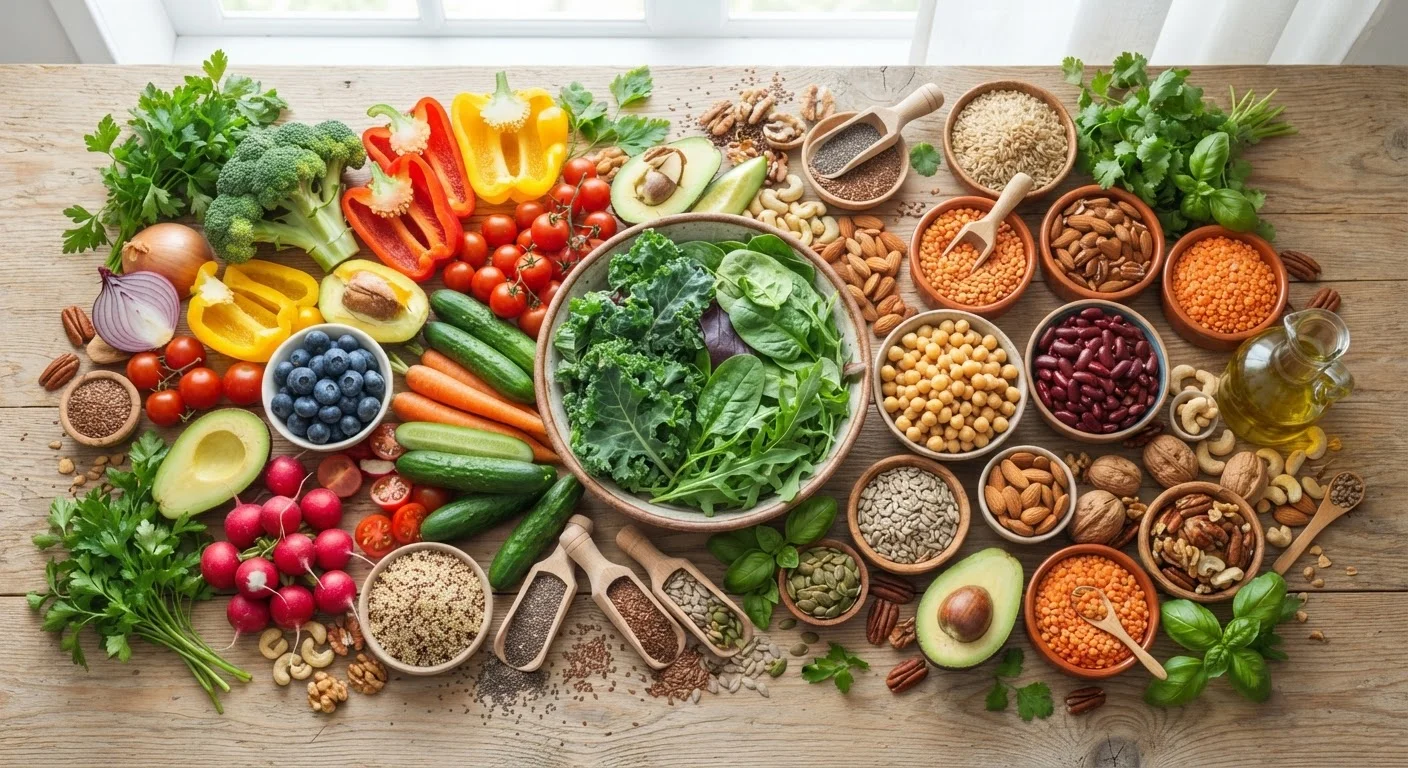
Prioritize dietary fiber from varied whole-food sources across the week
Fiber supports the gut microbiome, which plays a documented role in estrogen metabolism through what researchers call the estrobolome — gut bacteria that help regulate circulating estrogen levels. Adequate fiber also moderates blood sugar, which influences insulin and downstream androgens. For more detail, see the gut-hormone connection.
Support blood sugar stability through balanced meals rather than relying on restrictive diets
Insulin is itself a hormone, and chronically elevated insulin levels are associated with conditions like PCOS and disrupted androgen balance. Research consistently supports lower-glycemic dietary patterns — prioritizing whole grains, protein, and fiber at meals — over spiking and crashing patterns driven by refined carbohydrates. See also protein at breakfast and blood sugar research.
Include omega-3 fatty acids and other anti-inflammatory fats as part of a regular eating pattern
Chronic low-grade inflammation can affect hormonal signaling pathways, including those governing cortisol and reproductive hormones. Omega-3 fatty acids, found in fatty fish, walnuts, flaxseeds, and chia seeds, are among the best-studied anti-inflammatory dietary components with potential relevance to hormonal health.
Don't overlook micronutrient adequacy — particularly zinc, magnesium, vitamin D, and iodine
Several micronutrients are directly involved in hormone synthesis or receptor function. Zinc plays a role in progesterone production and immune regulation. Magnesium is involved in cortisol and insulin pathways. Vitamin D functions more like a hormone than a vitamin. Iodine is essential for thyroid hormone production, which in turn affects reproductive hormone regulation. See thyroid function and women's hormonal health for more context.
Limit ultra-processed foods and added sugars as a general dietary pattern
Ultra-processed foods are associated with increased inflammatory markers and disrupted insulin signaling in epidemiological research. Some processed food additives and food-contact chemicals are also under ongoing research scrutiny for potential endocrine-disrupting effects, though this evidence is still developing. Reducing ultra-processed food intake has broad nutritional benefits beyond hormone health.
What Remains Contested or Overstated
The wellness industry has enthusiastically adopted hormone-focused nutrition, sometimes outpacing the science. Certain claims deserve particular scrutiny.
Seed cycling — rotating seeds like flax and pumpkin across menstrual cycle phases — is widely shared online, but has virtually no controlled trial evidence in humans. Flaxseeds do contain lignans (plant compounds with weak estrogenic activity), but whether timed rotation affects cycle hormones hasn't been demonstrated in research.
Extreme carbohydrate restriction is sometimes promoted for hormonal conditions like PCOS. While lower-glycemic eating has credible support, very low-carb diets carry potential risks for hormonal axes, including effects on thyroid and cortisol, particularly in women. The evidence here is mixed. You can explore more at PCOS: separating myth from medical evidence.
For a broader look at diet claims that don't always hold up, common nutrition myths that shape how we eat is worth reading alongside this.
Putting It Into Practice
The evidence doesn't point to a single 'hormonal diet.' It points toward consistent, sustainable patterns: adequate fiber, minimally processed whole foods, stable blood sugar, and sufficient intake of key micronutrients. These are also the pillars of the Mediterranean dietary pattern, which has among the strongest overall evidence bases. See what the evidence actually says about the Mediterranean diet for a balanced review.
If you're experiencing symptoms you think may be hormonal — irregular cycles, persistent fatigue, significant mood changes — nutrition is one tool, not a cure. Understanding hormonal imbalance symptoms and when to seek help outlines when professional review is the right step.
This article is for general informational purposes only and does not constitute medical advice. Always consult a qualified healthcare professional before making significant dietary changes, particularly if you have a diagnosed health condition.