

Key Takeaways
- The gut microbiome influences estrogen metabolism through a community of bacteria called the estrobolome.
- An imbalanced gut (dysbiosis) may contribute to estrogen-related symptoms like PMS, irregular cycles, or mood shifts.
- The gut-brain axis connects digestive health to mood and stress hormone regulation.
- Diet, fiber intake, and fermented foods are among the most researched tools for supporting microbiome diversity.
- This is an active research area — findings are promising but not yet fully conclusive.
- Always consult a healthcare provider before making significant changes based on hormonal concerns.
The Gut-Hormone Connection
Your gut microbiome — the trillions of bacteria, fungi, and microorganisms living in your digestive tract — does more than aid digestion. It actively interacts with your hormonal system, influencing how certain hormones, including estrogen, are processed and circulated in your body. This two-way communication between the gut and the endocrine system means that digestive health and hormonal health are deeply intertwined.
A specialized subset of gut bacteria known as the estrobolome produces enzymes (notably beta-glucuronidase) that regulate the reactivation and elimination of estrogen through the intestinal tract, directly affecting circulating estrogen levels.
What Is the Estrobolome — and Why Does It Matter?
Most of us learn about hormones in one context and gut health in another. But they are not separate systems — they are in constant dialogue. At the center of this conversation is a collection of gut bacteria collectively called the estrobolome: microbes that produce an enzyme called beta-glucuronidase, which plays a direct role in how your body processes and recirculates estrogen.
Here's the simplified version: after the liver metabolizes estrogen, it is sent to the intestines for elimination. The estrobolome can deconjugate (reactivate) a portion of that estrogen, allowing it to re-enter the bloodstream. When the estrobolome is diverse and balanced, this recycling process appears to stay within a healthy range. When it's disrupted — a state called dysbiosis — estrogen metabolism may tip in ways that could affect hormonal balance.
Research into the estrobolome is still developing, and much of what we know comes from early-stage or observational studies. But the framework is compelling enough that it has become a meaningful area of focus in women's health research. For a broader look at how diet intersects with this, see our overview of foods linked to estrogen metabolism.
~90%
Of the body's serotonin produced in the gut
Research estimates that approximately 90% of serotonin — a key neurotransmitter involved in mood regulation — is synthesized in the gastrointestinal tract.
~38 trillion
Microbial cells in the average human body
A widely referenced estimate published in <cite>Cell</cite> (Sender et al., 2016) puts the number of microbial cells in the human body at roughly the same order of magnitude as human cells.
30+
Plant types per week linked to microbiome diversity
The American Gut Project and related research associate consuming 30 or more different plant food types per week with significantly greater gut microbiome diversity.
The Gut-Brain Axis: Mood, Stress, and Your Cycle
The gut-hormone connection extends beyond estrogen. Through a sophisticated communication network called the gut-brain axis, the digestive system and brain are in near-constant contact via the vagus nerve, immune signaling, and neurotransmitter production. Roughly 90% of the body's serotonin — a key mood-regulating chemical — is produced in the gut.
This matters for women especially because hormonal fluctuations across the menstrual cycle can affect gut motility (how quickly food moves through the intestines), gut sensitivity, and even microbiome composition. Some women notice more digestive symptoms — bloating, changes in bowel habits — in the days before menstruation, which may partly reflect these cyclical hormonal shifts acting on the gut.
At the same time, gut dysbiosis can influence cortisol production and the hypothalamic-pituitary-adrenal (HPA) axis, which governs the stress response. Chronic stress and a disrupted microbiome can reinforce each other in a feedback loop that affects overall hormonal balance. Many widely repeated ideas about women's hormones don't account for this complexity — which is part of why so many women feel dismissed when they report cyclical symptoms.
“The gut microbiome is not a passive bystander in hormonal health — it actively participates in estrogen metabolism, neurotransmitter production, and immune regulation. Understanding this relationship is one of the more important frontiers in women's health research.”
— Raphael Kellman, Integrative medicine physician and author writing on microbiome health
What Supports a Healthy Gut Microbiome?
While research on the gut-hormone axis is still maturing, there is solid evidence for what supports microbiome diversity more broadly. These are not hormone-specific interventions — they are general wellness foundations with plausible downstream hormonal benefits.
- Dietary fiber: Fiber from vegetables, legumes, fruits, and whole grains feeds beneficial gut bacteria. Studies consistently associate higher fiber intake with greater microbiome diversity.
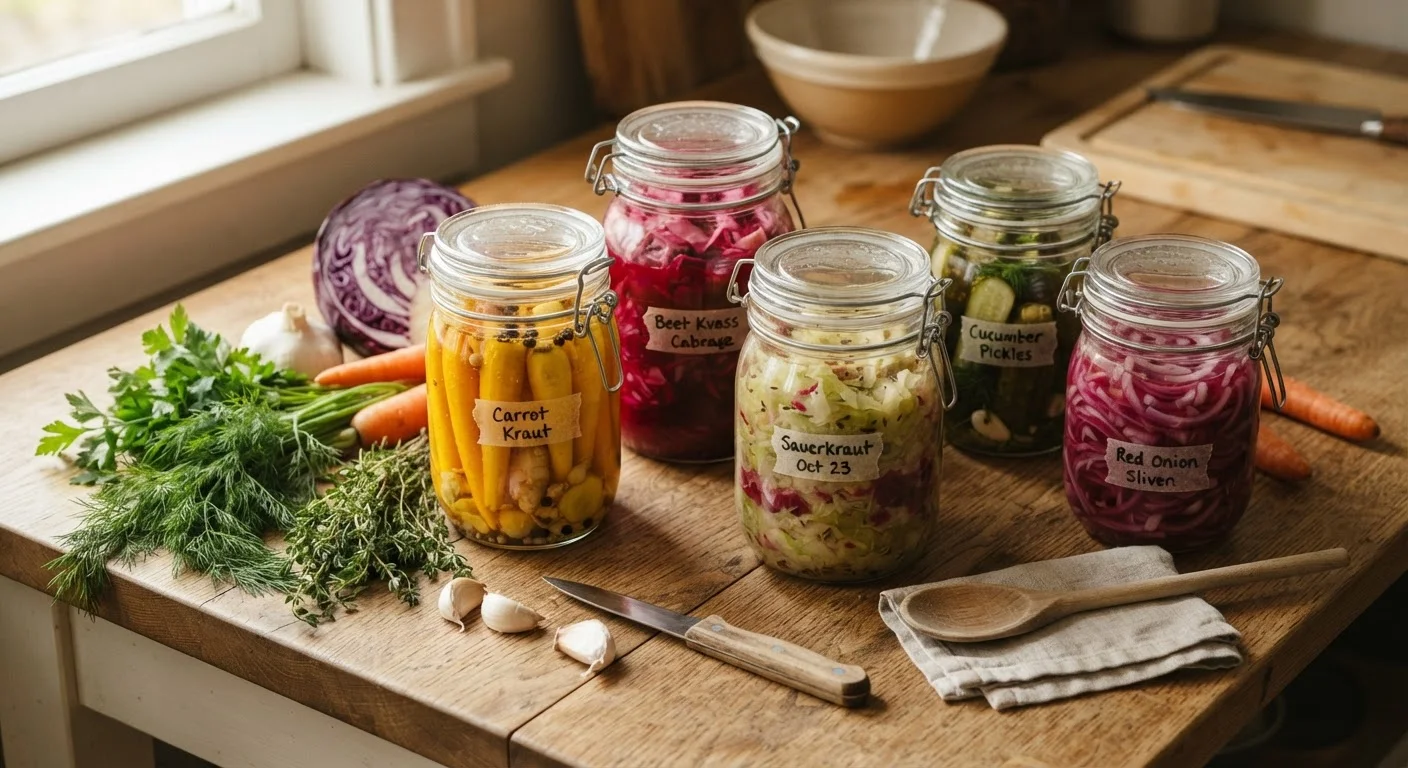
- Fermented foods: Plain yogurt, kefir, kimchi, and sauerkraut introduce live cultures that may enhance microbial richness. A 2021 study published in Cell found that a high-fermented-food diet increased microbiome diversity in healthy adults.
- Dietary variety: Eating a wide range of plant foods — often cited as 30 or more different plant types per week in research contexts — is associated with a more diverse microbiome.
- Limiting ultra-processed foods: Diets high in ultra-processed foods are linked to reduced microbial diversity in observational research.
- Stress management and sleep: Both chronic stress and poor sleep are associated with gut dysbiosis, reinforcing the gut-brain axis relationship.
Our article on nutrition and hormonal balance explores the dietary evidence in more depth, including what remains contested.
This article is for informational purposes only and is not a substitute for professional medical advice, diagnosis, or treatment. If you have concerns about your hormonal health or digestive symptoms, please speak with a qualified healthcare provider.