

Key Takeaways
- Wellness tracking tools — from apps to paper journals — can surface genuine health patterns worth discussing with your doctor.
- Obsessive or perfectionistic logging can heighten health anxiety rather than reduce it.
- The most sustainable tracking practice is one that informs, not one that controls your day.
- Your emotional response to tracking data is itself useful information about whether the habit is helping.
- Taking planned breaks from tracking is a legitimate and often healthy strategy.
Reveals patterns invisible to daily memory
Consistent logging makes it possible to notice correlations — between sleep and mood, or cycle phase and energy — that are nearly impossible to detect through recall alone.
Strengthens conversations with healthcare providers
Documented data gives clinicians something concrete to work with, often reducing the time needed to identify triggers or confirm a suspected pattern.
Builds a sense of body literacy over time
Regular self-observation, done without judgment, can deepen a woman's understanding of her own baseline and what genuinely deviates from it.
Supports accountability for sustainable habits
Tracking sleep, movement, or hydration — even loosely — can gently reinforce consistency without requiring willpower alone.
Can amplify health anxiety through over-monitoring
Repeatedly checking metrics like heart rate or sleep scores can make minor, normal fluctuations feel significant and worrying — a pattern well-documented in health psychology research.
Perfectionistic logging creates its own stress
When missing a day of entries feels like failure, the tracking habit itself becomes a source of pressure rather than a support tool.
Data can be misread without clinical context
Consumer wearables and apps are not diagnostic devices; acting on their outputs as though they are can lead to unnecessary worry or misguided decisions.
Adds cognitive load to already busy days
Sustained daily logging requires mental bandwidth that may not always be available, and the obligation can crowd out the intuitive body awareness it was meant to support.
Privacy exposure with digital health apps
Many wellness apps collect sensitive health data under privacy policies that permit broad sharing; users often have limited visibility into how that data is used or stored.
Our Verdict
Wellness tracking is a genuinely useful tool when it helps you notice patterns, communicate more clearly with healthcare providers, and make small informed adjustments to daily habits. It becomes counterproductive when it creates anxiety, rigid rule-following, or a sense that your worth is tied to your numbers. The right level of tracking is the level that leaves you feeling more empowered — not more watched.
Best for women who want to build self-awareness around recurring symptoms or cycle patterns and are able to engage with data without it becoming a source of stress or obsession.
What Wellness Tracking Actually Covers
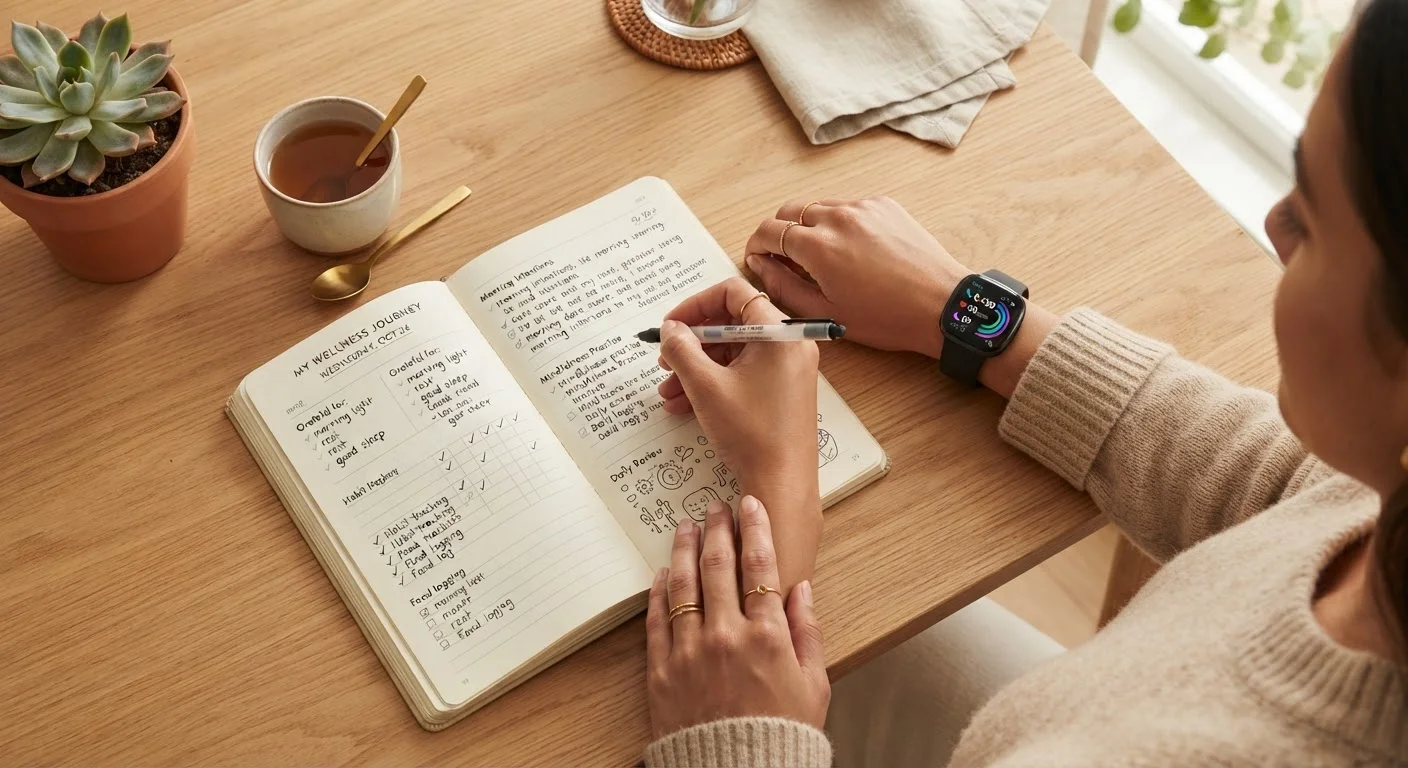
Wellness tracking is a broad umbrella. It includes wearables that monitor heart rate variability and sleep stages, period and cycle apps, symptom journals (paper or digital), mood logs, nutrition diaries, and step counters. What they share is the intent to turn daily bodily experience into legible data — something you can look back on, spot patterns in, and potentially act on.
Symptom trackers explained covers the fundamentals well: at their core, these tools are about creating a record that your memory alone can't reliably maintain. That's a genuinely useful function. But the tool and the habit around it aren't the same thing, and it's the habit that determines whether tracking helps or harms.
Tracking Is a Tool, Not a Treatment
No wellness app, wearable, or symptom journal can diagnose a condition, predict a health outcome, or replace clinical evaluation. These tools can support self-awareness and improve the quality of information you bring to a healthcare appointment — but the interpretation of that data should involve a qualified professional, especially when symptoms are new, worsening, or concerning. If you're unsure whether tracking is appropriate for a specific health concern, that's a good question to raise directly with your doctor.
The Real Benefits of Consistent Tracking
When tracking works, it works because it externalises information that would otherwise be lost to the fog of daily life. Most of us are poor judges of our own patterns in real time — we underestimate how often a headache recurs, overestimate how much sleep we're getting, or miss the connection between a stressful week and a flare-up of physical symptoms.
Reveals patterns invisible to daily memory
Consistent logging makes it possible to notice correlations — between sleep and mood, or cycle phase and energy — that are nearly impossible to detect through recall alone.
Strengthens conversations with healthcare providers
Documented data gives clinicians something concrete to work with, often reducing the time needed to identify triggers or confirm a suspected pattern.
Builds a sense of body literacy over time
Regular self-observation, done without judgment, can deepen a woman's understanding of her own baseline and what genuinely deviates from it.
Supports accountability for sustainable habits
Tracking sleep, movement, or hydration — even loosely — can gently reinforce consistency without requiring willpower alone.
Healthcare providers also benefit. Arriving at an appointment with several weeks of logged data — energy levels, cycle irregularities, digestive symptoms — shifts the conversation from reconstructed memory to actual evidence. That can shorten diagnostic timelines and lead to more targeted care. For women managing hormonal conditions, autoimmune issues, or chronic pain, this specificity is often the difference between being taken seriously and being dismissed.
Where Tracking Can Start to Work Against You
The same qualities that make tracking useful — its precision, its persistence, its visibility — can become liabilities. Research into health anxiety suggests that repeated body monitoring can increase, rather than decrease, worry about symptoms. When every number becomes something to optimise, and every deviation from a baseline triggers alarm, the tool has stopped serving your wellbeing.
Can amplify health anxiety through over-monitoring
Repeatedly checking metrics like heart rate or sleep scores can make minor, normal fluctuations feel significant and worrying — a pattern well-documented in health psychology research.
Perfectionistic logging creates its own stress
When missing a day of entries feels like failure, the tracking habit itself becomes a source of pressure rather than a support tool.
Data can be misread without clinical context
Consumer wearables and apps are not diagnostic devices; acting on their outputs as though they are can lead to unnecessary worry or misguided decisions.
Adds cognitive load to already busy days
Sustained daily logging requires mental bandwidth that may not always be available, and the obligation can crowd out the intuitive body awareness it was meant to support.
Privacy exposure with digital health apps
Many wellness apps collect sensitive health data under privacy policies that permit broad sharing; users often have limited visibility into how that data is used or stored.
There's also a subtler cost: the mental load. Logging consistently requires attention, and attention is finite. For busy women already managing competing demands, adding a daily data-entry obligation can feel like one more thing to fail at. When symptom tracking becomes counterproductive explores this tension in detail — particularly the way perfectionism around logging can quietly replicate the stress you were trying to manage.
~1 in 5
Wearable users report increased health anxiety
A review published in PLOS ONE found that a notable subset of consumer wearable users reported heightened worry about their health as a result of monitoring their data.
30%+
Wearable owners stop using devices within months
Industry research has consistently found that a significant proportion of fitness tracker owners abandon their devices within the first few months, often citing the burden of engagement.
Finding a Tracking Approach That Fits
The format matters more than most people expect. A paper diary versus a digital app isn't just an aesthetic choice — it affects how often you engage with the data, how much privacy you feel, and whether the practice feels like self-care or surveillance. Some women find handwriting a symptom journal grounding; others find it tedious in a way that kills the habit within a week.
A few principles tend to hold across formats:
- Track with a purpose. Knowing what question you're trying to answer — "Does my energy dip before my period?" or "Are my headaches related to sleep?" — keeps the habit focused rather than sprawling.
- Set a minimum viable log. Two or three data points per day is enough to surface patterns. Comprehensive logging is only necessary when a clinician has specifically requested it.
- Schedule review, not just recording. Weekly pattern review is more informative than daily number-checking, and far less anxiety-provoking.
- Plan breaks. A deliberate week off from tracking is a legitimate reset, not a failure. Notice how you feel without it — that response is data too.
For a broader perspective on how tracking fits into long-term health habits, symptom tracking from start to ongoing practice offers a useful framework. And if you'd like to reflect on your own relationship with wellness habits, wellness self-assessment quizzes can be a low-pressure starting point.
This article is for general informational purposes only and does not constitute medical advice. If you have concerns about your health or any symptoms you are experiencing, please consult a qualified healthcare professional.