

Key Takeaways
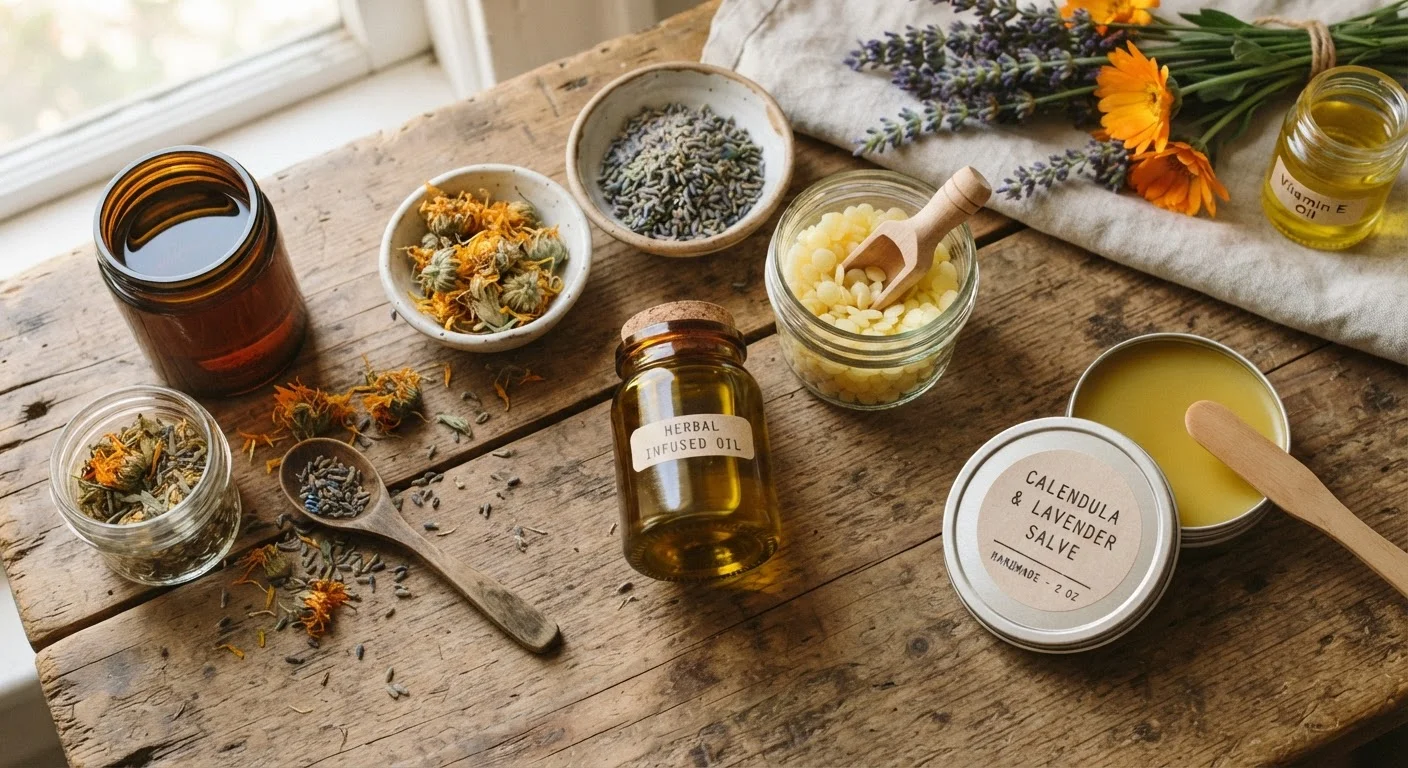
- A herbal salve is made from three core components: an infused oil, beeswax, and optional botanical additives.
- The oil-to-beeswax ratio controls salve consistency — roughly 4:1 by weight produces a firm but workable texture.
- Calendula and comfrey are among the most studied botanicals for topical soothing; evidence is promising but not conclusive.
- Always patch test any homemade topical on a small area of skin before broader use.
- Homemade salves are for minor, intact skin concerns only — not for wounds, rashes, or conditions requiring medical care.
Start here
What Is an Herbal Salve?
Next
Choosing Your Carrier Oil
Then
Making an Infused Oil
Build on it
Beeswax: The Binding Agent
Explore botanicals
Botanicals Worth Knowing
Before you apply
Safety, Patch Testing, and Storage
What Is an Herbal Salve?
An herbal salve is a semi-solid topical preparation made by combining a plant-infused oil with beeswax. When warmed together and poured into a container, the mixture sets into a smooth, spreadable texture that can be applied to skin. Unlike creams or lotions, salves contain no water — this makes them naturally resistant to microbial growth and gives them a longer shelf life without preservatives.
Salves belong to a broad family of plant-based external applications. For a deeper look at how they fit within the wider world of natural topicals, see the complete guide to natural topical remedies. Salves are intended for external use on minor, intact skin only — they are not a substitute for medical treatment.
Carrier oil
A plant-derived oil used as the base of a salve or topical preparation. It 'carries' botanical compounds to the skin and makes up the bulk of the product.
Infused oil
A carrier oil in which dried plant material has been soaked to transfer fat-soluble plant compounds into the oil over time.
Beeswax
A natural wax produced by honeybees, used to solidify liquid oils into salves or balms and to create a protective barrier on the skin surface.
Occlusive
A substance that forms a physical barrier on the skin to slow moisture loss. Beeswax is an occlusive ingredient.
Patch test
A safety check where a small amount of a product is applied to a limited area of skin and observed for 24 hours to detect allergic or irritant reactions before wider use.
Pyrrolizidine alkaloids
Naturally occurring plant compounds found in comfrey and some other herbs. In large quantities they can be toxic to the liver; topical exposure is considered lower risk than ingestion, but caution is still warranted.
Choosing Your Carrier Oil
The carrier oil is the foundation of your salve, making up the majority of the final product. It delivers the botanical constituents to the skin and contributes its own fatty-acid profile. Common beginner choices include:
- Olive oil: Widely available, stable, rich in oleic acid, and a traditional base for herbal preparations.
- Sweet almond oil: Lighter texture, absorbs relatively quickly, and well-tolerated by most skin types.
- Fractionated coconut oil: Remains liquid at room temperature, has a long shelf life, and is odor-neutral.
- Sunflower oil: Affordable, light, and high in linoleic acid — useful for dry or irritated skin.
Avoid oils with very short shelf lives (such as flaxseed or hemp seed oil) for your first batch — rancidity will degrade the salve quickly. Check that your oil is food-grade or cosmetic-grade and cold-pressed where possible.
Making an Infused Oil
An infused oil is created by soaking dried plant material in a carrier oil so that fat-soluble compounds transfer from the herb into the oil. Two main methods are used:
- Cold (folk) method: Fill a clean jar with dried herb, cover completely with oil, seal, and leave in a warm, sunny spot for 4–6 weeks. Shake daily. Strain well through cheesecloth before use.
- Heat method: Combine herb and oil in a double boiler or slow cooker on the lowest setting (ideally 100–120°F / 38–49°C) for 4–8 hours. Higher temperatures can degrade sensitive plant compounds and risk scorching.
Always use dried herbs — fresh plant material introduces moisture, which can cause mold growth in your oil. Ensuring your herbs are fully dry before infusing is one of the most important quality steps you can take.
Drying Herbs Before Infusing
Spread freshly harvested herbs in a single layer on a clean screen or rack in a warm, well-ventilated spot away from direct sunlight. Most leafy herbs are adequately dry within 1–2 weeks. The herb should crumble easily when rubbed between your fingers — any flexibility suggests remaining moisture that could introduce mold into your oil.
Beeswax: The Binding Agent
Beeswax solidifies the infused oil into a spreadable salve and creates an occlusive layer on skin that helps reduce moisture loss. It is available as pellets (easiest to measure) or blocks. Look for cosmetic-grade or food-grade beeswax.
The standard starting ratio is 1 part beeswax to 4 parts infused oil by weight. To test consistency before pouring your full batch, place a small spoonful on a cold plate — if it sets too soft, melt again and add a little more beeswax; if too hard, add more oil. This test saves wasted product.
For a vegan alternative, candelilla wax works but is significantly harder — start at roughly half the amount and adjust from there. Carnauba wax is another option, though it can produce a grainier texture if not handled carefully.
Botanicals Worth Knowing
The choice of herb defines the intended use of your salve. Here are well-documented beginner botanicals and what the available evidence suggests:
- Calendula (Calendula officinalis)
- Calendula-infused oil is one of the most widely used ingredients in topical herbal preparations. Several small clinical studies suggest anti-inflammatory and wound-supportive properties, though large trials are limited. It is generally well-tolerated. See the evidence overview for calendula and related botanicals.
- Comfrey (Symphytum officinale)
- Traditionally used for bruises and muscle soreness. Some human trials have found comfrey root preparations helpful for minor musculoskeletal discomfort when applied topically. However, comfrey contains pyrrolizidine alkaloids — use only on intact skin, for limited durations, and avoid in pregnancy.
- Lavender (Lavandula angustifolia)
- Commonly added for its scent and mild antiseptic properties. Research on its topical effects is preliminary. It is among the better-tolerated botanicals but can still cause sensitization in some individuals.
Explore the broader landscape of plant-based remedies through our herbal remedies hub and the full-spectrum guide to herbal medicine.
Safety, Patch Testing, and Storage
Before applying any homemade salve broadly, patch test: apply a small amount to the inner forearm, cover loosely, and wait 24 hours. Redness, itching, or swelling means discontinue use. Review our homemade topical remedy safety checklist before your first batch.
Salves Are Not for Open or Infected Skin
Never apply a homemade salve to open wounds, infected skin, deep cuts, or rashes of unknown cause. Occlusive preparations can trap bacteria and worsen infection risk. Any skin concern that is worsening, spreading, or accompanied by fever warrants prompt evaluation by a healthcare professional, not a home remedy.
If your salve will include essential oils, observe proper dilution — typically no more than 1–2% of total volume. For detailed guidance, see applying essential oils safely.
Store finished salves in clean, dark glass or metal tins with tight-fitting lids. Label with the date and ingredients. Most olive-oil-based salves remain stable for up to 12 months; lighter oils may shorten this window. Discard any batch that smells rancid, shows discoloration, or develops any visible contamination.
This article is for general informational and educational purposes only and does not constitute medical advice. Always consult a qualified healthcare professional before using any topical preparation if you have a skin condition, allergy, or health concern.