

| Comedogenic rating concern | Coconut oil rates high; jojoba rates very low (Cosmetic dermatology literature, general consensus) |
| Jojoba classification | Liquid wax, not a true oil |
| Rosehip trial finding | Improved post-surgical scar appearance vs. no treatment (Biological Research, small controlled trial) |
| Argan oil elasticity study | Improved skin elasticity in postmenopausal women over 60 days (Clinical, Cosmetic and Investigational Dermatology) |
| Hemp seed omega ratio | Approximately 3:1 omega-6 to omega-3 (Nutritional and botanical literature) |
| Coconut oil antimicrobial target | Shown to reduce S. aureus colonization in atopic dermatitis (Published clinical research, dermatology journals) |
What Carrier Oils Actually Are (and Why It Matters)
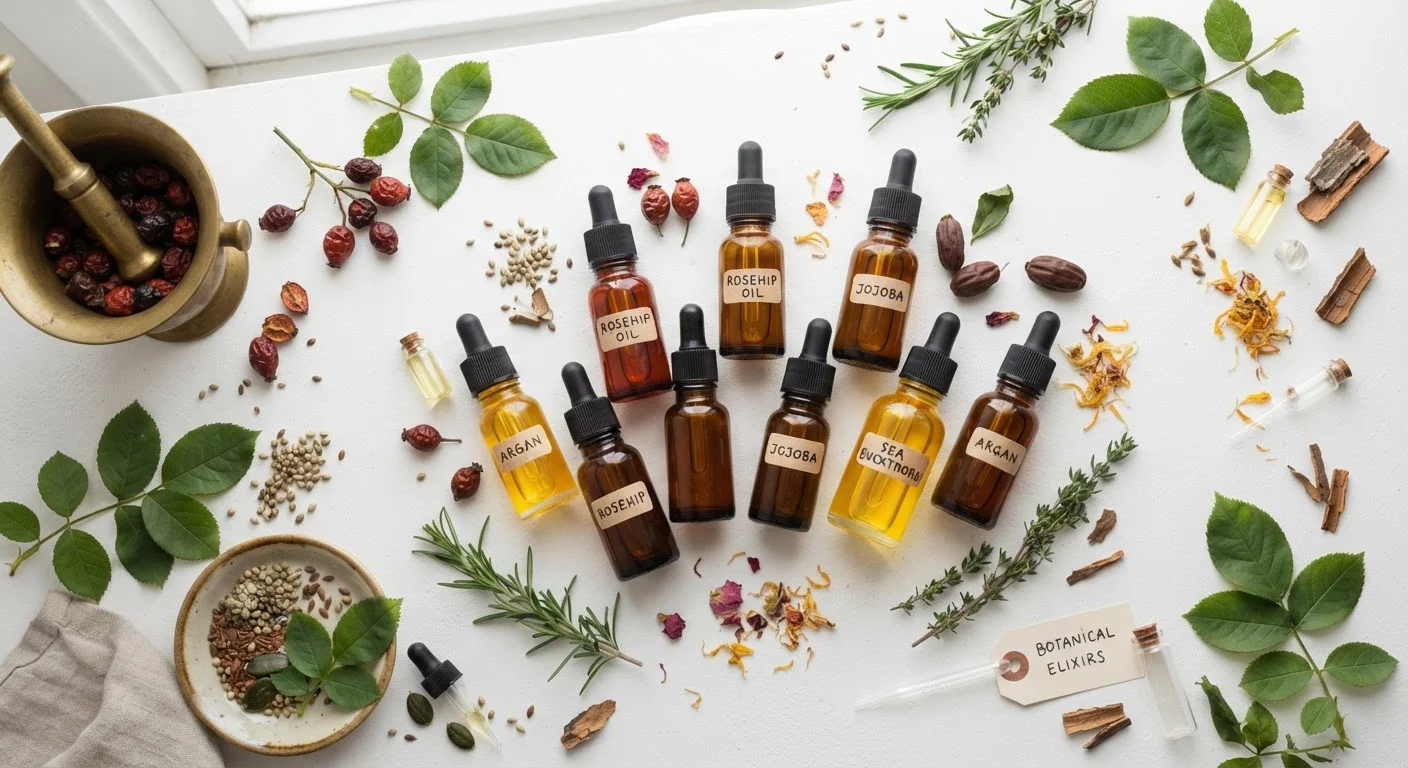
Carrier oils are plant-derived lipids pressed from seeds, nuts, or fruit kernels. They're called "carriers" because they're often used to dilute essential oils before skin application — but their own chemistry does meaningful work on skin independent of anything added to them. Each oil carries a distinct fatty acid profile, which directly influences how it feels, penetrates, and behaves on different skin types.
Understanding these differences helps you choose more intentionally rather than treating all plant oils as interchangeable. For a broader look at how oils fit into topical home remedies, see our complete guide to natural topical remedies.
| Comedogenic rating concern | Coconut oil rates high; jojoba rates very low (Cosmetic dermatology literature, general consensus) |
| Jojoba classification | Liquid wax, not a true oil |
| Rosehip trial finding | Improved post-surgical scar appearance vs. no treatment (Biological Research, small controlled trial) |
| Argan oil elasticity study | Improved skin elasticity in postmenopausal women over 60 days (Clinical, Cosmetic and Investigational Dermatology) |
| Hemp seed omega ratio | Approximately 3:1 omega-6 to omega-3 (Nutritional and botanical literature) |
| Coconut oil antimicrobial target | Shown to reduce S. aureus colonization in atopic dermatitis (Published clinical research, dermatology journals) |
Key Carrier Oils and What the Evidence Shows
Below is a breakdown of commonly used carrier oils, their dominant fatty acids, and what research or traditional practice says about their effects on skin.
Jojoba Oil
Technically a liquid wax rather than a true oil, jojoba closely mimics skin's own sebum. It's largely non-comedogenic — meaning it's less likely to clog pores — which makes it a practical choice for oily or acne-prone skin. Laboratory studies suggest jojoba has mild anti-inflammatory properties, though large-scale clinical trials in humans remain limited.
Rosehip Seed Oil
Rich in linoleic acid (an omega-6 fatty acid) and naturally occurring tretinoin precursors, rosehip oil has been studied for its role in scar and hyperpigmentation reduction. A small controlled trial published in the journal Biological Research found topical rosehip oil improved the appearance of post-surgical scars compared to no treatment, though the sample size was modest.
Sweet Almond Oil
High in oleic acid and emollient in texture, sweet almond oil absorbs moderately and is commonly used to soften dry or rough skin. It carries a mild occlusive effect — forming a light barrier that slows moisture loss. It is derived from tree nuts, so individuals with tree nut allergies should exercise caution and consult a healthcare provider before use.
Argan Oil
Argan oil is approximately 80% unsaturated fatty acids, primarily oleic and linoleic acids, alongside tocopherols (vitamin E). Research published in Clinical, Cosmetic and Investigational Dermatology found postmenopausal women using argan oil showed improvements in skin elasticity over 60 days. Results are promising but limited to specific populations.
Hemp Seed Oil
Notable for a near-ideal 3:1 ratio of omega-6 to omega-3 fatty acids, hemp seed oil is lightweight and generally well-tolerated. Some preliminary research suggests it may help with inflammatory skin conditions like eczema, though robust clinical evidence is still developing. Hemp seed oil contains negligible cannabinoids and does not produce psychoactive effects.
Coconut Oil
Coconut oil is predominantly lauric acid, a saturated medium-chain fatty acid with documented antimicrobial properties. Studies have found it effective in reducing Staphylococcus aureus colonization in atopic dermatitis patients. However, its comedogenic rating is relatively high, which may trigger breakouts in acne-prone individuals — a tradeoff worth considering.
Carrier oil
A plant-derived lipid pressed from seeds, nuts, or kernels, used on skin directly or to dilute essential oils. Each has its own fatty acid profile that determines skin feel and function.
Comedogenic
Describes substances that have the potential to clog pores, potentially contributing to blackheads or acne. Oils are rated on a scale from 0 (non-comedogenic) to 5 (highly comedogenic).
Linoleic acid
An omega-6 polyunsaturated fatty acid found in high concentrations in oils like rosehip and hemp seed. It supports skin barrier function and is often recommended for acne-prone or sensitive skin.
Oleic acid
A monounsaturated omega-9 fatty acid prevalent in argan and sweet almond oils. It has good skin penetration and is particularly beneficial for dry skin types.
Occlusive
A substance that forms a barrier on the skin surface to reduce transepidermal water loss (TEWL). Heavier oils with higher saturated fat content tend to have stronger occlusive properties.
Oxidation (oil)
A chemical process in which exposure to air, heat, or light causes oils to break down, producing compounds that can irritate skin. Rancid smell is the most common sign an oil has oxidized.
Choosing, Using, and Combining Carrier Oils Safely
Matching an oil to your skin type is a practical starting point. Dry or mature skin often benefits from richer, more occlusive oils like sweet almond or argan. Oily or combination skin tends to tolerate lighter, more easily absorbed oils like jojoba or hemp seed. Patch testing any new oil on a small area of skin before broader application remains a sensible precaution, particularly for sensitive skin or known allergies.
When using carrier oils as a base for essential oils — including popular topicals like tea tree — proper dilution is important for safety. For a research-grounded look at one of the most widely used topical essential oils, see what the evidence says about tea tree oil on skin. If you're interested in moving beyond straight oils into salves and herbal preparations, our beginner's guide to herbal salves covers formulation basics.
Storage matters: most carrier oils are susceptible to oxidation and should be stored in dark glass containers away from heat and light. Oils that smell rancid should be discarded rather than used on skin, as oxidized lipids can cause irritation.
This article is for general informational purposes only and does not constitute medical advice. If you have a skin condition, allergy, or are pregnant, nursing, or managing a chronic health issue, consult a qualified healthcare professional before using any new topical preparation.