

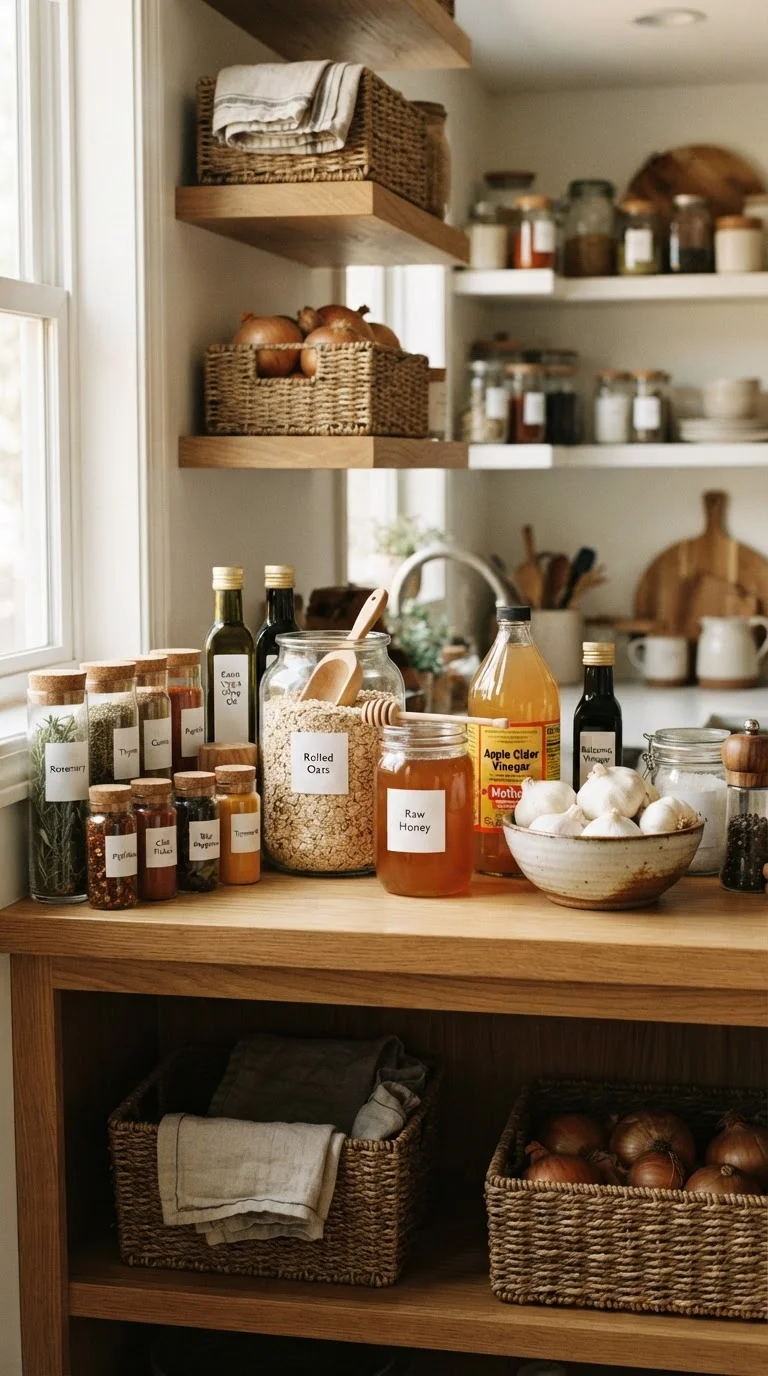
Key Takeaways
- A wellness-oriented pantry builds on ordinary ingredients, not expensive specialty products.
- Several common spices and whole foods have documented anti-inflammatory or antimicrobial properties.
- Food-based remedies complement — but do not replace — conventional medical care.
- Safe preparation and realistic expectations matter as much as ingredient choice.
- Consult a healthcare provider before using any pantry remedy alongside medication.
Why Kitchen Staples Deserve a Second Look
Most discussions about natural wellness veer quickly toward niche supplements and hard-to-source botanicals. The result is a shopping list that feels like a project. But a growing body of research supports something simpler: many of the foods and spices already sitting in your kitchen have documented biological activity worth understanding.
This isn't about replacing medical care with home remedies. It's about recognizing that the gap between "food" and "functional food" is smaller than most people assume, and that building a pantry with minor health support in mind doesn't require any dramatic overhaul. For a broader look at how common pantry items map to specific minor complaints, see A Room-by-Room Look at Pantry Staples with Documented Wellness Uses.
The Core Staples Worth Stocking
These are foods with both culinary value and enough studied biological activity to justify a spot on your shelf:
- Raw honey: Contains hydrogen peroxide, defensin-1, and low water activity — properties that contribute to its documented antibacterial effects. A small 2011 review in Asian Pacific Journal of Tropical Biomedicine confirmed antimicrobial activity across multiple honey types. Most relevant for minor wound care or soothing a sore throat, not as a systemic treatment.
- Apple cider vinegar: Traditionally used for digestive support. Some small studies suggest modest effects on postmeal blood glucose, though evidence remains preliminary and findings are inconsistent. Useful as a condiment; not a substitute for metabolic care.
- Oats: Beta-glucan, the soluble fiber in oats, has one of the stronger evidence bases among food components. The FDA allows a qualified health claim linking oat beta-glucan to reduced LDL cholesterol risk. This is a meaningful distinction — it's food with real nutritional support, not folklore.
- Garlic: Allicin, released when raw garlic is crushed, has demonstrated antimicrobial and mild cardiovascular effects in laboratory and human studies. Effects are modest and dose-dependent. Regular culinary use is the most practical application.
~70%
Adults using some form of complementary health approach
National Health Interview Survey data from the CDC indicates a majority of U.S. adults incorporate some complementary or integrative practice alongside conventional care.
3g/day
Oat beta-glucan dose linked to cholesterol benefit
The FDA's qualified health claim for oat beta-glucan and cardiovascular risk is based on a daily intake of at least 3 grams of soluble fiber from oats.
250+
Active compounds identified in ginger rhizome
Phytochemical analyses have identified over 250 distinct compounds in ginger, including gingerols and shogaols, which are the focus of most anti-nausea and anti-inflammatory research.
For deeper context on how these and similar ingredients work, Kitchen Remedies for Minor Ailments: A Complete Reference Glossary provides a structured lookup by ingredient and condition.
Spices That Earn Their Shelf Space
Spices represent some of the most studied functional ingredients in any kitchen. Key ones to prioritize:
- Turmeric
- Curcumin, its primary active compound, has demonstrated anti-inflammatory effects in numerous in vitro and animal studies. Human trials show more modest and inconsistent results, partly due to curcumin's poor bioavailability. Pairing turmeric with black pepper (piperine) may improve absorption — a detail supported by pharmacokinetic research.
- Ginger
- Among the better-studied spices for nausea. Multiple clinical reviews, including one published in Obstetrics & Gynecology, found ginger effective for nausea and vomiting of pregnancy, with a favorable safety profile. Also shows anti-inflammatory effects that may support muscle soreness after exercise, though evidence is still developing.
- Cinnamon
- Frequently cited for blood sugar regulation. Evidence is mixed — some trials show modest reductions in fasting glucose, others find no significant effect. Cassia cinnamon (the common supermarket variety) contains coumarin, which in large amounts may affect liver function. Culinary quantities are generally considered safe.
When cooking with turmeric, add a pinch of black pepper to the same dish. Piperine in black pepper has been shown in pharmacokinetic studies to increase curcumin absorption by up to 20-fold.
Curcumin's poor bioavailability is the primary reason human trials show weaker effects than laboratory studies; this simple pairing addresses that mechanistic limitation.
Crush garlic and let it rest for 10 minutes before cooking. Allicin formation requires the enzyme alliinase to act on alliin — heat deactivates that enzyme quickly, so giving crushed garlic time to react first preserves more of the compound.
Research on garlic's antimicrobial and cardiovascular effects is largely tied to allicin and its derivatives; preparation method directly affects how much is available.
For a broader reference on herbs with similar profiles, The Everyday Herb Cabinet covers traditional uses, active compounds, and safety notes in a quick-reference format.
How to Use These Staples Responsibly
Knowing an ingredient has studied properties isn't the same as knowing how to use it safely. A few principles apply across the board:
- Culinary doses differ from therapeutic doses. Most studies showing notable effects use standardized extracts at concentrations far above what you'd consume in a meal. This doesn't make food-based use worthless — but it does mean expectations should be proportionate.
- Interactions matter. Garlic, ginger, and turmeric may influence blood clotting and interact with anticoagulant medications. If you're on any regular medication, check before significantly increasing intake. Using Kitchen Remedies Alongside Conventional Care is a practical starting point for understanding where conflicts can arise.
- Preparation affects potency. Raw garlic releases more allicin than cooked garlic. Boiling ginger degrades some of its volatile compounds. How you use an ingredient shapes what, if anything, it delivers. See Preparing Kitchen Remedies Safely for a responsible framework.
This article is for general informational purposes and does not constitute medical advice. Always consult a qualified healthcare professional before making changes related to your health, especially if you are pregnant, nursing, managing a chronic condition, or taking medications.
Building the Habit: Simple Principles to Follow
A wellness-oriented pantry is ultimately a thinking habit as much as a shopping one. Three principles keep it grounded:
- Prioritize versatility over novelty. An ingredient that serves both culinary and minor wellness purposes earns its place. One that sits unused because it only fits a specific preparation rarely does.
- Let evidence guide emphasis, not marketing. Oat beta-glucan and ginger for nausea have meaningfully stronger research bases than many trendy additions. Anchor your pantry to what's studied.
- Keep it sustainable. The most effective pantry is one you actually use. Five well-understood staples used consistently outperform twenty items rotated through on impulse.
Everyday wellness isn't built in a single shopping trip. It's shaped by small, consistent choices — including what you reach for when you cook. For readers focused on daily habits more broadly, Everyday Women's Wellness: A Practical Foundation for Lasting Wellbeing offers a comprehensive, evidence-grounded framework that extends well beyond the pantry.