

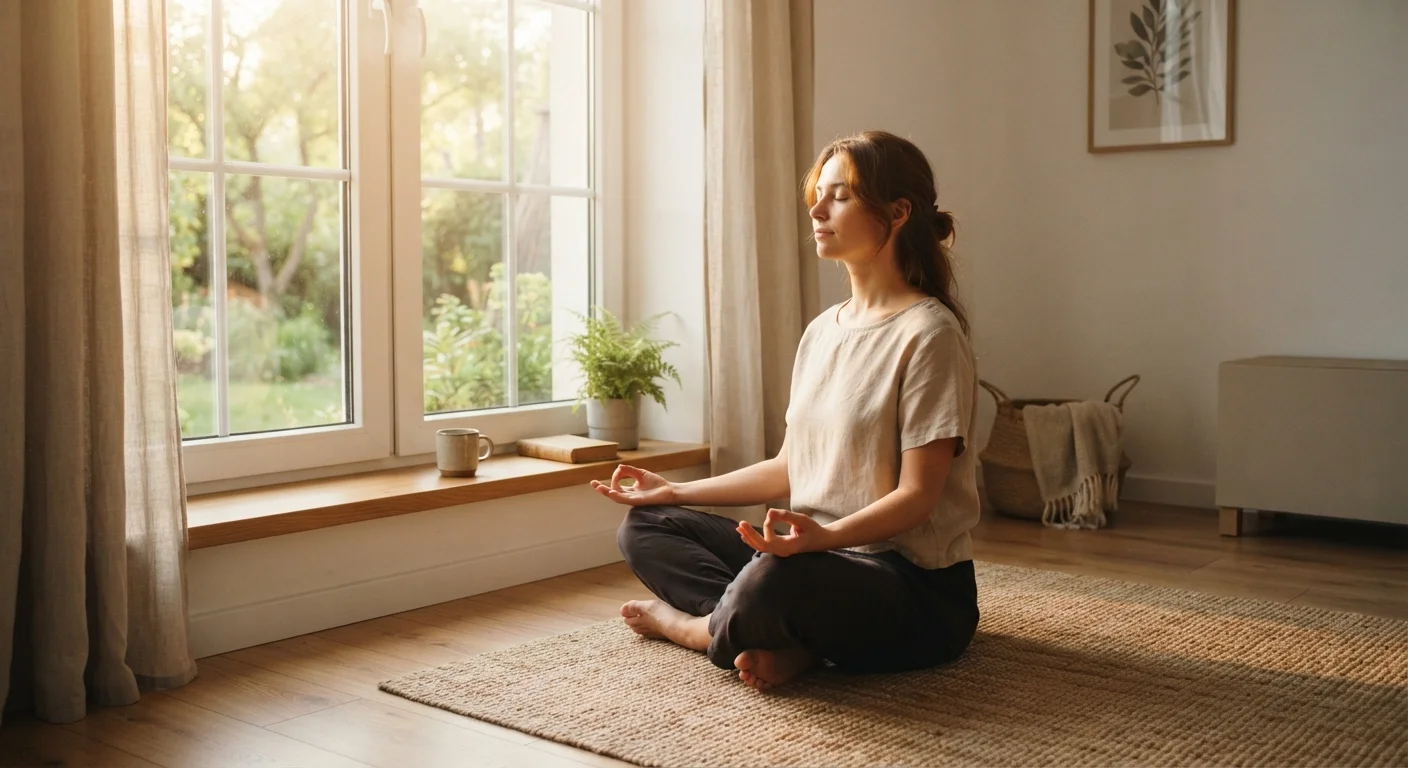
Key Takeaways
- You only need five minutes a day and a quiet spot to start meditating.
- A wandering mind is normal — noticing it is the practice, not a failure.
- Each day this week introduces one small, manageable skill to build upon.
- Consistency across seven days matters far more than session length.
- Meditation is general wellness support, not a substitute for professional mental health care.
Start here
What to Expect in Your First Week
Ground yourself
Key Concepts Before You Begin
Practice
Days 1–3: Building Your Foundation
Go deeper
Days 4–7: Deepening and Exploring
Keep going
What Comes After Day 7
What to Expect in Your First Week
Most people approach their first week of meditation with two competing feelings: curiosity and skepticism. Both are completely reasonable. Meditation has a strong evidence base for supporting stress regulation and attentional focus, yet it can feel surprisingly awkward when you actually sit down to try it. That tension is normal, and this guide is designed to work with it rather than paper over it.
The structure here is simple: each day introduces one small, concrete skill. You will not be asked to clear your mind — that is a myth about what meditation requires. Instead, you will practice noticing: noticing your breath, your body, your wandering thoughts, and your ability to return attention gently. Seven days is enough time to get a genuine feel for the practice without overwhelming your schedule.
Keep Your Setup Boringly Simple
Resist the urge to buy anything or rearrange your space before you begin. A chair in any room, a phone timer, and a quiet-ish two minutes between tasks is genuinely enough. Elaborate setups often become procrastination in disguise. Get the first session done in whatever conditions you have right now.
Key Concepts Before You Begin
Mindfulness
Paying deliberate, non-judgmental attention to what is happening right now — in your body, thoughts, or surroundings — without trying to change it.
Anchor
A stable focus point — most often the breath — that you return to each time your attention wanders during meditation.
Open monitoring
A style of meditation where you let awareness rest broadly on whatever arises — sounds, thoughts, sensations — rather than fixing it on a single object.
Cognitive defusion
A technique from behavioral psychology where you observe thoughts as passing mental events rather than facts or commands, reducing their emotional pull.
Body scan
A practice of moving attention slowly through different regions of the body to notice physical sensations without trying to judge or fix them.
Understanding a few foundational ideas before Day 1 will save you frustration and set realistic expectations for the week ahead.
Days 1–3: Building Your Foundation
Day 1 — Anchor to the Breath
Set a five-minute timer. Sit in any comfortable position — chair, floor, couch — with your back reasonably upright. Close your eyes or soften your gaze downward. Simply notice the physical sensation of breathing: the rise of your chest, the air at your nostrils, the brief pause between exhale and inhale. When your mind wanders (it will, within seconds), gently return attention to the breath. That returning is the practice.
Day 2 — Name Your Distractions
Same five-minute setup. This time, when a thought or sound pulls your attention, silently label it: thinking, planning, noise. Then return to the breath. Labeling reduces the emotional grip of distractions and is a technique rooted in cognitive defusion research. You are not fighting thoughts — you are observing them.
Day 3 — Add a Body Scan
Extend to seven minutes. After two minutes with the breath, slowly move your attention through your body from head to feet, pausing briefly at each area. Notice tension, warmth, or neutrality — without trying to change anything. A brief body scan helps many people shift from mental chatter to physical presence, a skill useful well beyond meditation.
Days 4–7: Deepening and Exploring
Day 4 — Sit with Discomfort
By Day 4, restlessness is common. Today, when you feel the urge to stop early, stay for one more minute. Notice the restlessness as a sensation rather than a command. This single exercise builds the tolerance that makes longer future sessions possible.
Day 5 — Open Awareness
Instead of fixing attention on the breath, allow your awareness to rest openly — sounds, sensations, and thoughts can all arise and pass without you chasing any of them. This is sometimes called open monitoring. It feels less structured, which is the point: you are practicing flexible attention rather than narrow focus.
Day 6 — Reflect on the Week
Sit for eight to ten minutes. Spend the first half with the breath, the second half in open awareness. Afterward, take two minutes to jot a few words about how the week felt — not to judge yourself, but to notice any patterns. Did mornings feel easier? Did your mind quiet even briefly? Reflection reinforces learning.
Day 7 — Practice Without a Timer
Set an intention rather than a countdown: sit until it feels complete. For most beginners this lands around five to twelve minutes. The goal is to notice what you find settling, which will inform how you build a habit beyond this week.
Progress Looks Different for Everyone
Some people feel noticeably calmer by Day 3; others reach Day 7 still feeling fidgety and unconvinced. Both experiences are valid and common. Research on mindfulness generally looks at multi-week interventions, so a single week is a starting point, not an endpoint. Be patient with your own timeline.
What Comes After Day 7
Completing seven days means you have experienced the core elements of a basic mindfulness practice — breath awareness, body scanning, labeling, open awareness, and sitting with discomfort. The logical next step is figuring out what makes the habit sustainable beyond this initial week.
If you found any days particularly difficult, it is worth understanding why. Timing, environment, and unrealistic expectations are among the most common culprits — and they are all addressable. Explore our guide to what makes meditation harder to sustain for a closer look at those patterns before they quietly derail your progress.
When you are ready to lock in a real routine, building a consistent meditation routine offers practical habit-science principles for anchoring daily practice to your existing schedule. And if you are curious whether movement-based calm might complement sitting meditation, our beginner's guide to yoga for stress relief is a natural companion read.
This article is for general informational and educational purposes only and does not constitute medical advice. If you are experiencing significant anxiety, depression, or other mental health concerns, please consult a qualified healthcare professional before beginning or modifying any wellness practice.