

Key Takeaways
- Physical health quizzes focus on measurable behaviors like sleep duration, movement frequency, and energy levels.
- Mental health quizzes probe emotional patterns, stress responses, and cognitive functioning over recent timeframes.
- Social health quizzes assess relationship quality, sense of belonging, and communication satisfaction.
- No single quiz captures the full picture — cross-dimensional tools offer richer, more actionable awareness.
- Quiz results are self-reported snapshots, not clinical diagnoses; always consult a professional for personal health decisions.
Our Verdict
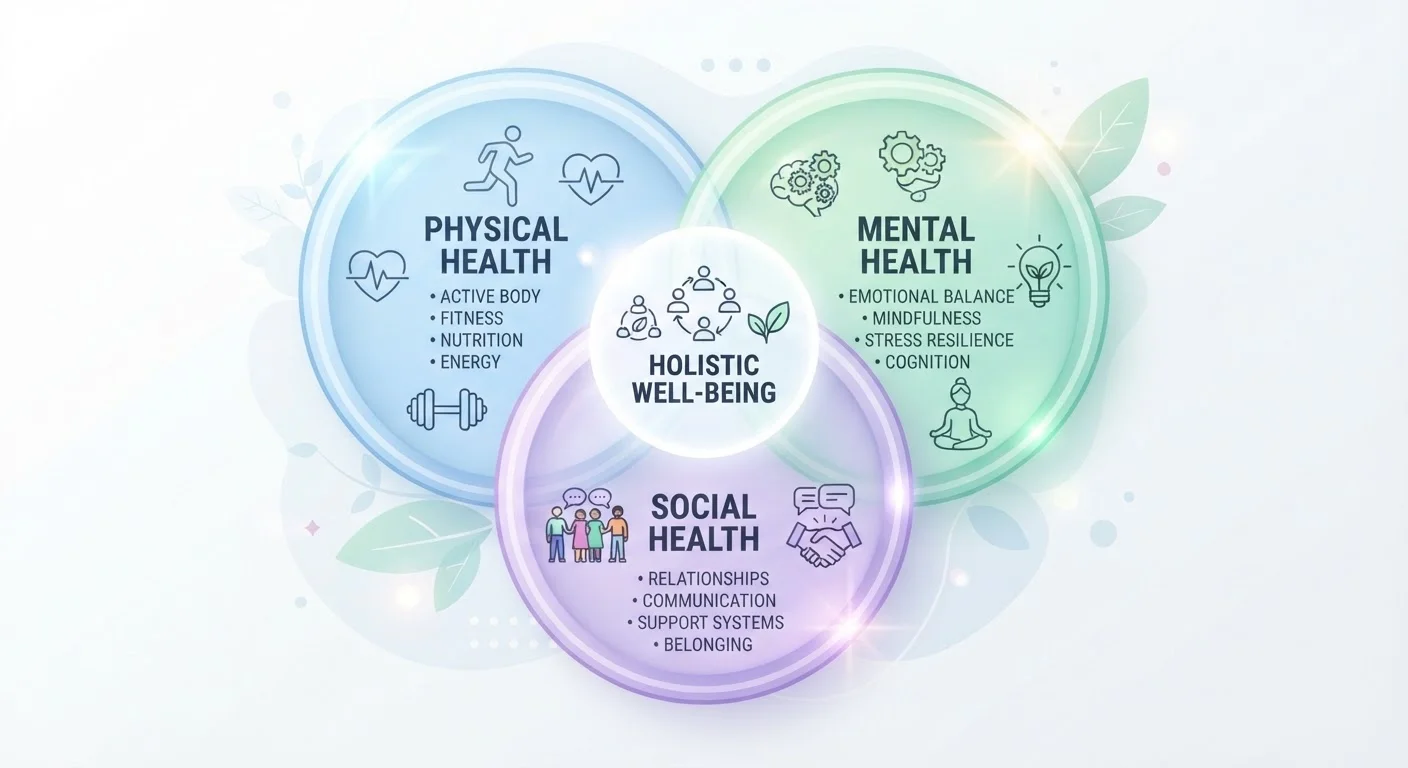
Physical, mental, and social wellness quizzes each serve a distinct purpose and use different question types, reference timeframes, and scoring logic. The most useful self-assessment approach combines all three dimensions rather than treating them in isolation, since these areas of health consistently influence one another.
| Best for | Recommended |
|---|---|
| Tracking concrete lifestyle habits and body-based patterns | Physical health quizzes |
| Gaining awareness of mood, stress, or emotional regulation challenges | Mental health quizzes |
| Exploring relationship satisfaction and sense of community connection | Social health quizzes |
| Building a holistic picture of overall wellbeing | Multi-domain wellness quizzes |
Why Health Dimension Matters for Quiz Design
Not all wellness quizzes are built the same — and that's intentional. Each dimension of health requires a distinct set of constructs, and effective quiz design reflects those differences. A question that works well for assessing cardiovascular habits would be entirely misplaced in a social connectedness assessment.
Understanding how quiz structure varies by health domain helps you interpret your results more accurately and choose the right tool for your actual concern. For a broader look at what these tools are actually capable of measuring, see what wellness quizzes actually measure.
| Physical Health Quizzes | Mental Health Quizzes | Social Health Quizzes | |
|---|---|---|---|
| Primary focus | Behaviors and body signals | Emotional and cognitive states | Relationship quality and belonging |
| Question style | Frequency-based, concrete | Likert-scale symptom ratings | Satisfaction and perception ratings |
| Typical reference window | Past 1–2 weeks | Past 2 weeks | General or recent experience |
| Clinical standardization | Moderate | High (validated tools) | Lower, more varied |
| Score interpretation | Habit frequency totals | Severity thresholds | Satisfaction continuum |
| Actionability | High — maps to specific habits | Moderate — guides professional referral | Moderate — prompts reflection |
Physical Health Quizzes: Behavior and Body Signals
Physical health quizzes concentrate on observable, reportable behaviors — the things you do (or don't do) with your body on a regular basis. Common domains include sleep quantity and quality, physical activity frequency, nutritional habits, hydration, and energy levels throughout the day.
Questions in this category are typically concrete and frequency-based: How many days per week do you exercise for at least 30 minutes? or How often do you wake feeling rested? The reference window is usually the past week or two, making these scores sensitive to recent routine changes.
Scoring tends to be straightforward — higher frequency of health-supporting behaviors yields a higher score. Because these items map closely to habits, physical wellness results often translate most directly into specific, actionable next steps. Each core domain — sleep, stress, movement, nutrition — tests distinct habit clusters worth understanding individually.
Mental Health Quizzes: Patterns, Not Just Moments
Mental health quizzes operate differently. Rather than counting behaviors, they probe internal states — how you've been feeling, thinking, and coping over a defined period. Validated instruments like the PHQ-9 (Patient Health Questionnaire) and GAD-7 (Generalized Anxiety Disorder scale) ask about the frequency of mood symptoms over the past two weeks, a window chosen because it captures meaningful patterns without being overly influenced by a single bad day.
Questions here are often Likert-scale items: How often have you felt little interest or pleasure in doing things? Scoring thresholds indicate severity ranges rather than simple pass/fail outcomes. Importantly, informal wellness quizzes in this space vary widely in rigor — for a clear breakdown of that distinction, see validated health questionnaires vs. informal wellness quizzes.
Use Mental Health Scores as a Conversation Starter
If a mental health quiz flags moderate or high concern in any category, treat that result as a prompt to speak with a healthcare provider — not as a diagnosis. Clinically validated tools like the PHQ-9 are designed to support professional assessment, not replace it. A score alone cannot account for your full context, history, or circumstances.
Mental health quiz scores can shift meaningfully over short periods. Why the same quiz gives different results two weeks apart explains the factors behind those changes.
Social Health Quizzes: Connection and Context
Social health is the most qualitative of the three dimensions, and its quizzes reflect that complexity. Rather than frequencies or symptom severity, social wellness assessments explore relationship quality, perceived support, sense of belonging, and satisfaction with communication in close relationships.
Sample questions might include: Do you have people you can turn to during difficult times? or How satisfied are you with the depth of your friendships? Responses are inherently subjective and context-dependent — a person with few close relationships may still score high if those relationships are deeply fulfilling.
Social health quizzes are less standardized clinically than mental health tools, making it especially important to understand their limitations. A well-rounded self-assessment should cover social domains alongside physical and mental ones for the most useful picture.
For a comprehensive framework tying all of these domains together, the complete guide to wellness quizzes as a health awareness tool is a useful reference.
This article is for general informational purposes only and does not constitute medical advice. For personal health concerns, please consult a qualified healthcare professional.