

Key Takeaways
- The menstrual cycle has four phases: menstrual, follicular, ovulatory, and luteal.
- Cycle length varies naturally — anywhere from 21 to 35 days is generally considered within a normal range.
- Hormones like estrogen, progesterone, FSH, and LH each play distinct roles across the cycle.
- Changes in flow, cycle length, or symptoms can sometimes signal underlying health considerations worth discussing with a provider.
- Tracking your cycle over several months can help you recognize your own normal patterns.
The Menstrual Cycle
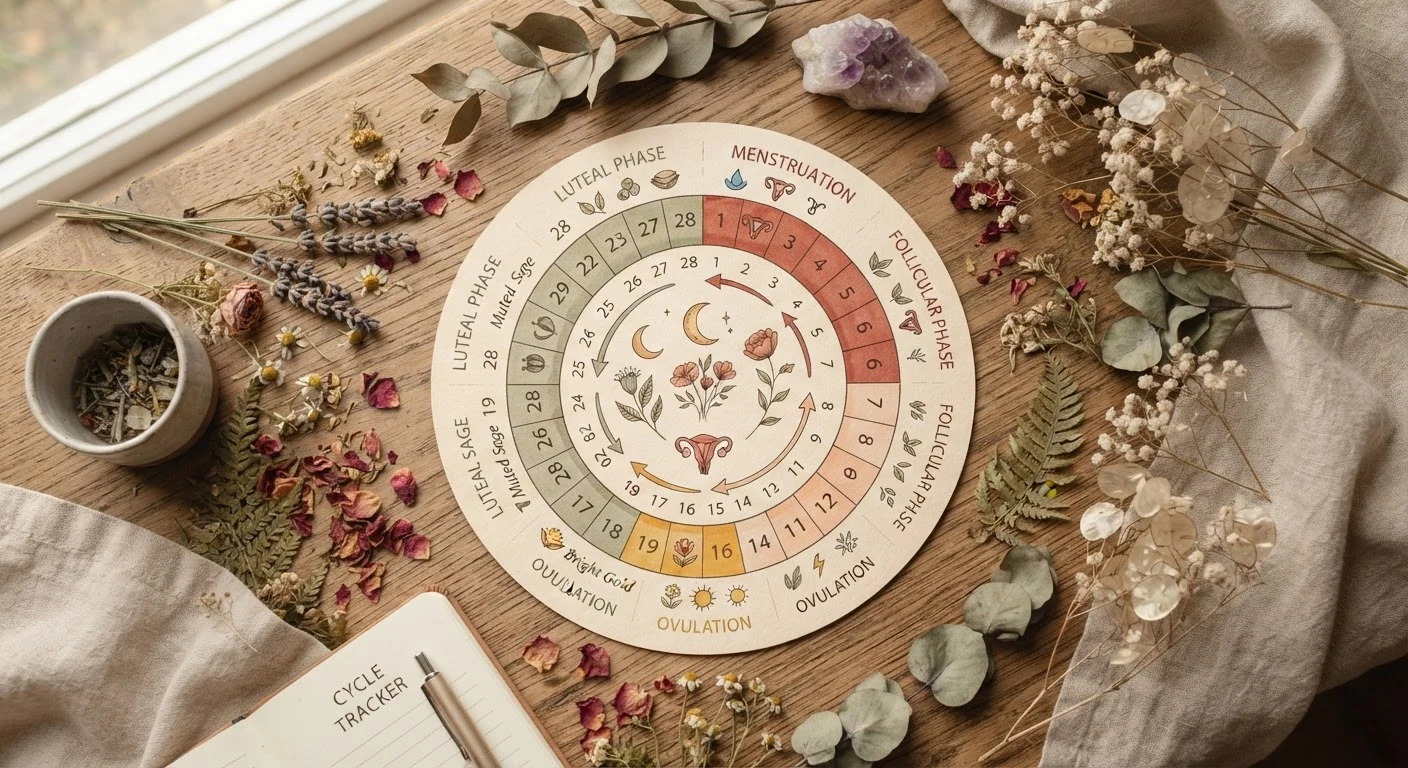
The menstrual cycle is a monthly hormonal process that prepares the body for a potential pregnancy. It spans from the first day of one period to the first day of the next, typically lasting between 21 and 35 days. The cycle is divided into four distinct phases, each governed by shifting levels of key reproductive hormones.
The cycle is regulated primarily by the hypothalamic-pituitary-ovarian (HPO) axis, a feedback loop involving the brain and ovaries that coordinates the release of estrogen, progesterone, follicle-stimulating hormone (FSH), and luteinizing hormone (LH).
Phase 1: The Menstrual Phase
The cycle begins on day one of your period. During the menstrual phase, the uterine lining (endometrium) that built up in the previous cycle sheds — because no fertilized egg implanted. This shedding produces menstrual bleeding, which typically lasts between 3 and 7 days.
Estrogen and progesterone are at their lowest during this phase, which is why many people experience fatigue, cramping, or low mood in the early days of their period. Prostaglandins — hormone-like compounds that trigger uterine contractions — are the main drivers of menstrual cramps. Flow is considered typical when it requires pad or tampon changes every 2–4 hours.
Cycle Length vs. Period Length
It's easy to confuse cycle length with period length. Your cycle length is measured from the first day of one period to the first day of the next — it includes all four phases. Your period length refers only to the days of active bleeding, which is just one part of the larger cycle.
Phase 2: The Follicular Phase
Overlapping with menstruation and extending to ovulation, the follicular phase is when the pituitary gland releases FSH (follicle-stimulating hormone). FSH signals the ovaries to develop a group of follicles, each containing an egg. Usually, one follicle becomes dominant and matures fully.
As follicles grow, they produce increasing amounts of estrogen, which gradually rebuilds the uterine lining in preparation for a potential pregnancy. Rising estrogen also tends to correspond with improved energy, sharper focus, and elevated mood — many people notice feeling their best during this phase. The follicular phase can vary considerably in length, which is the primary reason cycles differ from person to person.
For a deeper look at what's happening hormonally each month, see The Female Hormonal Cycle: What's Actually Happening Each Month.
Phase 3: The Ovulatory Phase
Ovulation is the cycle's pivotal event. A sharp surge in LH (luteinizing hormone) — triggered by peak estrogen levels — causes the dominant follicle to rupture and release a mature egg. This egg travels down the fallopian tube, where it can be fertilized for approximately 12–24 hours.
Physically, some people notice a mild one-sided pelvic ache known as mittelschmerz (German for "middle pain"), increased libido, or changes in cervical mucus, which becomes clearer and more elastic around ovulation. Cervical mucus shifts are one of the most observable markers of this phase. Ovulation typically occurs around day 14 in a textbook 28-day cycle, but later or earlier ovulation is entirely normal.
21–35 days
Normal menstrual cycle length range
According to the American College of Obstetricians and Gynecologists, a typical cycle can range widely around the commonly cited 28-day average.
~12–14 days
Typical luteal phase length
Research suggests the luteal phase is relatively consistent across individuals, while the follicular phase drives most cycle-to-cycle variation.
3–7 days
Normal duration of menstrual bleeding
Most clinical guidelines consider bleeding within this range typical, though individual variation exists.
Phase 4: The Luteal Phase
After ovulation, the ruptured follicle transforms into the corpus luteum, a temporary structure that secretes progesterone — and some estrogen. Progesterone thickens and stabilizes the uterine lining in anticipation of a fertilized egg implanting.
If pregnancy doesn't occur, the corpus luteum breaks down after about 10–14 days, progesterone drops sharply, and menstruation begins — restarting the cycle. This progesterone decline is linked to premenstrual symptoms (PMS) like bloating, breast tenderness, mood changes, and sleep disruption. The luteal phase is relatively consistent in length (usually 12–14 days) compared to the more variable follicular phase.
Sleep quality often shifts during the luteal phase due to progesterone's effect on body temperature and sleep architecture. Building a sleep routine around your cycle can help you work with these hormonal rhythms rather than against them.
What Counts as 'Normal' — and When to Check In
A wide range of cycle experiences fall within the normal spectrum. Cycle length between 21 and 35 days, bleeding lasting 3–7 days, and some degree of premenstrual symptoms are all common. That said, certain changes are worth flagging with a healthcare provider:
- Cycles consistently shorter than 21 days or longer than 35 days
- Periods that are extremely heavy (soaking through protection hourly) or last longer than 7 days
- Severe pain that significantly disrupts daily functioning
- Missed periods unrelated to pregnancy or known causes like intense exercise or significant weight change
- Sudden changes in your typical pattern
Conditions such as polycystic ovary syndrome (PCOS), endometriosis, thyroid dysfunction, and others can alter cycle regularity and flow. Getting to know your own patterns over time is one of the most practical forms of body literacy. Tracking your cycle is a good starting point for noticing meaningful patterns.
You can also explore the broader context of hormonal health through the Hormonal Health hub, which covers cycle-related wellness topics in depth.
This article is for general informational purposes only and is not a substitute for professional medical advice, diagnosis, or treatment. If you have concerns about your menstrual cycle or reproductive health, please consult a qualified healthcare provider.