

Key Takeaways
- Certain foods contain compounds that may influence how the body processes and eliminates estrogen.
- Cruciferous vegetables, fiber, and fermented foods are among the most studied dietary factors in estrogen metabolism.
- Diet is one piece of the hormonal health puzzle — consult a healthcare provider for personalized guidance.
- Emerging research is promising, but many mechanisms are still being actively studied.
Why Estrogen Metabolism Matters
Estrogen doesn't simply do its job and disappear. After it circulates through the body, it undergoes a multi-step metabolic process — primarily in the liver and gut — before being eliminated. How well that process runs can influence hormonal balance, cycle regularity, and overall well-being.
When estrogen metabolism is sluggish or imbalanced, certain metabolites may recirculate rather than be excreted, which has drawn the attention of researchers studying hormonal health. While genetics and liver function play key roles, there's growing evidence that dietary patterns can influence this process meaningfully. This article offers a nutritional overview of foods associated with supporting estrogen metabolism — not as a prescription, but as a starting point for informed, empowered choices.
It's worth noting that hormonal health is never just one variable. Chronic stress, for example, can significantly affect how estrogen behaves in the body — something explored in depth in our article on cortisol and estrogen.
A Note on Phytoestrogens
Phytoestrogens — plant compounds that loosely mimic estrogen — are found in soy, flaxseeds, and some legumes. Their effects in the body are much weaker than endogenous estrogen, and current research does not support the idea that moderate consumption from whole food sources is harmful for most healthy adults. However, if you have a hormone-sensitive condition, speak with your healthcare provider before making significant changes to your intake of phytoestrogen-rich foods.
Foods Linked to Healthier Estrogen Metabolism
Cruciferous Vegetables
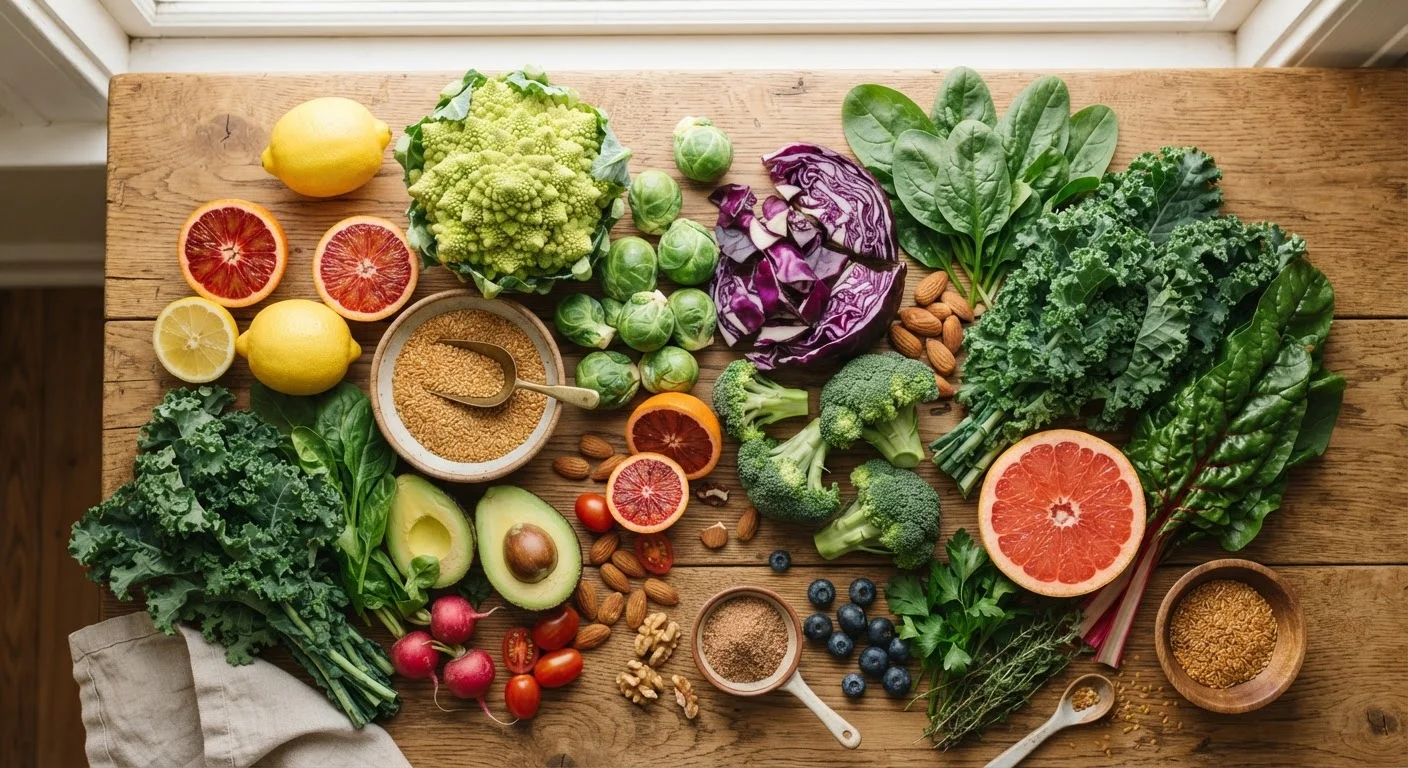
Broccoli, cauliflower, Brussels sprouts, kale, and cabbage contain a compound called indole-3-carbinol (I3C), which converts to diindolylmethane (DIM) during digestion. Research suggests DIM may support the liver's ability to process estrogen along a more favorable metabolic pathway, favoring less potent estrogen metabolites. While human trials are ongoing, population-level studies have consistently associated higher cruciferous vegetable intake with hormonal health markers. Aim for a variety of these vegetables throughout the week, prepared in whatever way makes them most enjoyable to eat.
DIM from cruciferous vegetables may support how the liver processes and clears estrogen.
Flaxseeds
Flaxseeds are one of the richest dietary sources of lignans — a type of phytoestrogen that can bind to estrogen receptors with much weaker activity than the body's own estrogen. Research indicates that lignans may modulate estrogen activity and support its excretion. Importantly, flaxseeds also provide substantial soluble fiber, which plays a separate but complementary role in estrogen clearance via the gut. Ground flaxseed is more bioavailable than whole seeds and can be stirred into oatmeal, yogurt, or smoothies easily.
Flaxseeds offer both lignans and fiber — two distinct mechanisms that may support estrogen balance.
High-Fiber Foods
The gut plays a critical role in estrogen metabolism. After the liver conjugates estrogen for excretion, it enters the digestive tract — but an enzyme produced by certain gut bacteria, called beta-glucuronidase, can deconjugate estrogen and allow it to be reabsorbed. A high-fiber diet supports a microbiome environment where this enzyme is less active, promoting estrogen excretion rather than recirculation. Legumes, oats, apples, pears, and a wide variety of vegetables all contribute meaningful dietary fiber. Gradual increases in fiber intake are easier on the digestive system.
Dietary fiber helps the gut excrete estrogen rather than allowing it to recirculate.
Fermented Foods
The gut microbiome — the vast community of microorganisms in your digestive tract — is increasingly recognized as a key player in estrogen regulation. A subset of gut bacteria collectively referred to as the «estrobolome» produce enzymes that influence estrogen metabolism. Fermented foods like yogurt with live cultures, kefir, kimchi, sauerkraut, and miso introduce beneficial bacteria that may help maintain a diverse, balanced microbiome. While this area of research is still evolving, the general case for fermented foods in gut health is well supported.
A healthy gut microbiome, supported by fermented foods, is central to how estrogen is regulated.
Liver-Supporting Foods
Since the liver is the primary site of estrogen metabolism, foods that support liver function are naturally relevant here. Bitter leafy greens like dandelion and arugula, as well as beets and artichokes, have traditional and some emerging scientific support for promoting bile flow and liver detoxification pathways. Adequate protein intake is also essential, as amino acids are required for the Phase II liver detoxification reactions that tag estrogen for excretion. A balanced, whole-food diet that avoids excess alcohol is among the most evidence-backed ways to support healthy liver function.
Liver-supportive foods and adequate protein help drive the detoxification steps that clear estrogen.
Antioxidant-Rich Fruits and Vegetables
Oxidative stress can impair liver enzyme activity, potentially slowing estrogen metabolism. Foods rich in antioxidants — including berries, citrus fruits, bell peppers, and dark leafy greens — help reduce oxidative load and support the enzymatic processes involved in hormonal metabolism. Vitamin C, found abundantly in many of these foods, is also involved in adrenal health, which indirectly connects to the broader hormonal picture. A colorful plate is one of the simplest and most evidence-consistent dietary strategies for overall health, including hormonal well-being.
Antioxidant-rich foods may protect the liver enzymes that drive healthy estrogen clearance.
Small, Consistent Changes Add Up
You don't need to overhaul your entire diet at once. Even adding one or two servings of cruciferous vegetables per week, swapping refined grains for whole grains, or incorporating a daily tablespoon of ground flaxseed can contribute meaningfully over time. Focus on progress, not perfection — sustainable habits are the ones that actually support long-term hormonal health.
Putting It All Together
No single food will transform your hormonal health overnight, but consistent dietary patterns can meaningfully shape how your body processes estrogen over time. A diet rich in fiber, phytonutrients, and fermented foods — while limiting ultra-processed options — provides the nutritional scaffolding that supports the liver and gut in doing their jobs well.
Estrogen metabolism is just one dimension of hormonal balance. If you're also thinking about progesterone, our overview of natural approaches to supporting progesterone levels covers complementary lifestyle strategies. And for a broader look at the evidence connecting diet and hormones, see our piece on nutrition and hormonal balance.
This article is for informational purposes only and does not constitute medical advice. Individual hormonal health is complex and highly personal. Please consult a qualified healthcare provider before making significant dietary changes, especially if you have a diagnosed hormonal condition or are on medication.