
Adaptogenic Herbs and Women's Wellness: Ashwagandha, Rhodiola, and Maca Compared

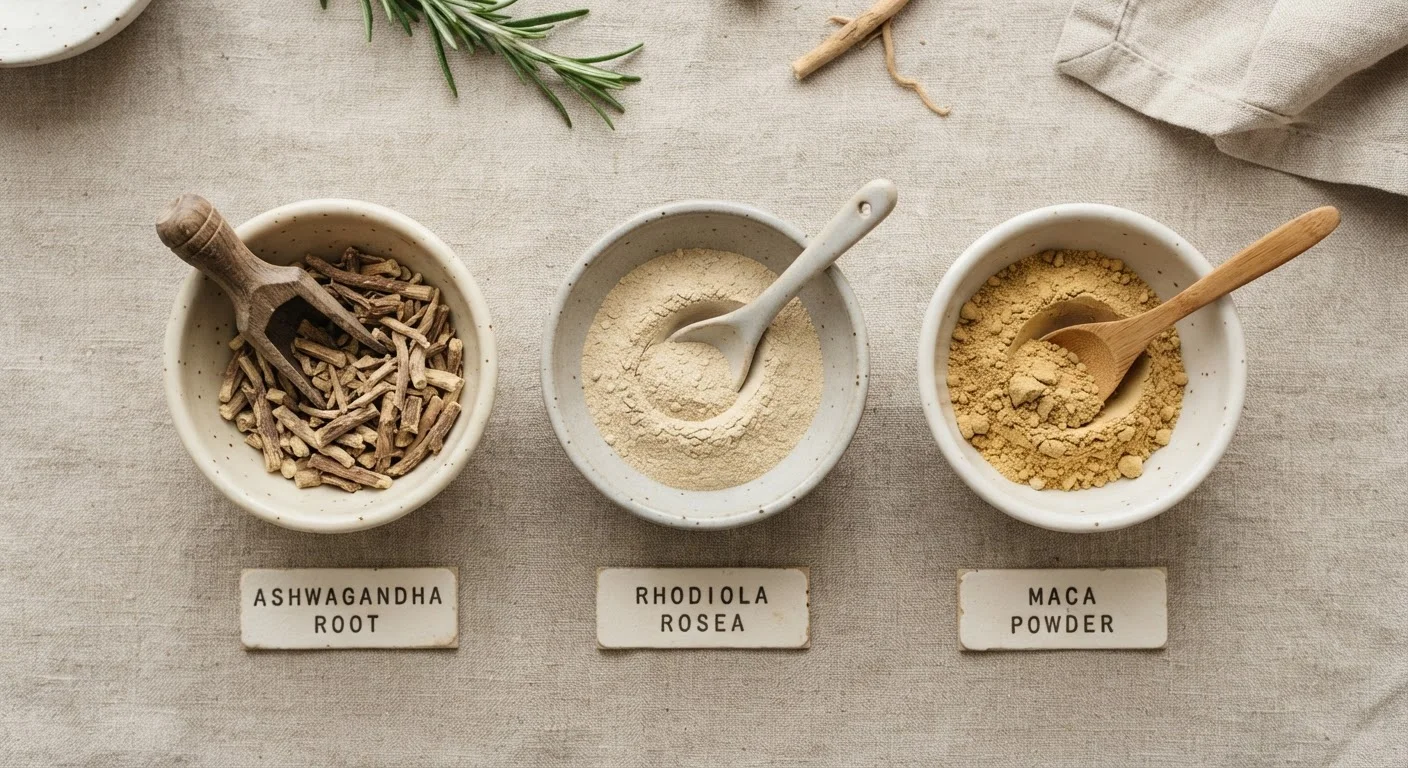
Key Takeaways
- Ashwagandha has the strongest clinical evidence for reducing perceived stress and supporting cortisol balance.
- Rhodiola shows consistent support for mental fatigue and endurance, but studies are smaller in scale.
- Maca is most studied for libido and menopausal symptom relief, not general stress adaptation.
- None of these herbs replace medical treatment; always consult a healthcare provider before starting any supplement.
- Evidence quality varies widely — most trials are short-term and involve small participant groups.
Our Verdict
All three adaptogens have credible, if limited, evidence behind them — but they address different aspects of wellness. Ashwagandha leads for stress and cortisol concerns, rhodiola stands out for mental fatigue and physical stamina, and maca is most relevant for reproductive and menopausal support. No single herb is universally superior; the right fit depends on your specific goals and health picture.
| Best for | Recommended |
|---|---|
| Women managing chronic stress or high cortisol | Ashwagandha |
| Those experiencing mental fatigue or burnout | Rhodiola |
| Women navigating perimenopause or low libido | Maca |
| Those wanting the most studied adaptogen overall | Ashwagandha |
What Adaptogens Actually Are
The term adaptogen refers to a class of herbs traditionally believed to help the body resist physical and psychological stress. While the concept has roots in Soviet-era pharmacology, modern researchers have revisited several of these plants with clinical trials — with mixed but sometimes promising results.
Not all adaptogens are equally studied. For a broader look at which herbs have meaningful research behind them, see our guide to herbs with credible evidence. Among women specifically, three names come up most consistently: ashwagandha (Withania somnifera), rhodiola (Rhodiola rosea), and maca (Lepidium meyenii). They share a wellness reputation but have quite different evidence profiles — and knowing the difference matters.
| Ashwagandha | Rhodiola | Maca | |
|---|---|---|---|
| Primary evidence focus | Stress, cortisol, sleep | Mental fatigue, endurance | Libido, menopausal symptoms |
| Evidence strength | Moderate (multiple RCTs) | Moderate (EMA reviewed) | Low-moderate (small trials) |
| Hormonal effects in women | Emerging, early-stage data | Minimal direct evidence | No direct hormonal alteration seen |
| Stimulating vs. calming | Generally calming/grounding | Stimulating effect noted | Neutral/nutritive |
| Safety considerations | Avoid in pregnancy, thyroid Rx | Caution with bipolar disorder | Generally well tolerated |
| Typical study duration | 8–12 weeks | 4–12 weeks | 6–16 weeks |
Ashwagandha: Stress and Cortisol Support
Of the three, ashwagandha has the most robust clinical research for stress-related outcomes. Multiple randomized, placebo-controlled trials — including a well-cited study published in the Journal of the American Nutraceutical Association — have found that standardized ashwagandha root extract may meaningfully reduce self-reported stress scores and serum cortisol levels compared to placebo.
For women, there is also emerging evidence suggesting potential benefits for thyroid function in subclinical hypothyroidism and for sleep quality — both areas that can be disrupted by chronic stress. Research on female hormonal health specifically, including effects on testosterone and DHEA-S in women, is still early-stage.
Look for Standardized Extracts
When evaluating ashwagandha products, clinical trials typically use extracts standardized to a specific percentage of withanolides (the active compounds). Products without standardization may vary significantly in potency. Ask your healthcare provider or a registered dietitian for guidance on what to look for on a supplement label.
Important caveats: most trials run 8–12 weeks, use standardized extracts (typically 300–600 mg), and involve relatively small samples. Long-term safety data in women — particularly for those who are pregnant or managing thyroid conditions — is limited. A healthcare provider's input is essential before use.
Rhodiola: Mental Fatigue and Endurance
Rhodiola's evidence base centers more on cognitive performance under stress than on hormonal effects. Several European trials, including research reviewed by the European Medicines Agency, suggest it may reduce symptoms of stress-related fatigue and support sustained mental effort — useful for women managing demanding work and caregiving simultaneously.
Its active compounds, particularly rosavins and salidroside, appear to influence monoamine neurotransmitters and may support HPA axis regulation — the same stress-response pathway implicated in burnout. For a deeper comparison of how rhodiola and ashwagandha differ mechanistically, see our ashwagandha vs. rhodiola breakdown.
Rhodiola is generally considered stimulating rather than sedating — making it a different fit than ashwagandha for someone whose stress manifests primarily as poor sleep or anxiety.
Maca: Reproductive and Menopausal Relevance
Maca is nutritionally dense — a Peruvian root vegetable rich in amino acids, minerals, and plant sterols — but its adaptogenic classification is looser than the other two. Its most studied applications in women relate to sexual function and menopausal symptoms. Small trials have found self-reported improvements in libido and reductions in common menopausal complaints like hot flashes and mood changes, though effect sizes are modest.
Notably, maca does not appear to directly alter estrogen or progesterone levels, which distinguishes it from phytoestrogenic herbs. This makes it theoretically relevant for women who want to avoid hormonal influence — but the mechanism behind its observed effects remains unclear. For a focused look at how all three herbs compare specifically on hormonal health, see our companion piece adaptogens and hormonal health.
Evidence quality for maca is generally weaker than for ashwagandha — trials tend to be shorter and less rigorously controlled.
~60%
Stress reduction in ashwagandha trials
A randomized controlled trial published in Medicine found participants reported roughly 60% reductions in stress scores after 60 days of standardized ashwagandha extract.
~40%
Women reporting menopausal relief with maca
A small pilot trial in Gynecological Endocrinology found approximately 40% of participants reported reduced menopausal discomfort scores after two months of maca use.
~20
Published human trials on rhodiola rosea
A 2012 systematic review estimated fewer than 20 adequately controlled human trials had examined rhodiola, highlighting the relatively thin evidence base.
Choosing the Right Fit for Your Routine
These herbs are not interchangeable, and none are a substitute for addressing the root causes of stress, fatigue, or hormonal changes through lifestyle, medical care, and professional support. For a grounded overview of what adaptogens can and cannot realistically deliver, our article on adaptogens and stress research is worth reading alongside this one.
When considering any adaptogen:
- Look for products with transparent ingredient sourcing and standardized extract ratios.
- Start with one herb at a time so you can assess your individual response.
- Be particularly cautious if you are pregnant, breastfeeding, managing a thyroid condition, or taking medications — herb-drug interactions are possible.
- Give any approach at least 6–8 weeks before drawing conclusions, as effects tend to be gradual.
This article is for general informational purposes only and does not constitute medical advice. Always consult a qualified healthcare provider before adding any supplement to your routine, especially if you have an existing health condition or take prescription medications.