

Key Takeaways
- Topical means applied to the skin or surface tissue, not taken internally.
- Common topical formats include oils, compresses, poultices, salves, and herbal washes.
- Skin absorption varies by compound, carrier, skin condition, and application site.
- Even external applications carry real risks including allergic reactions and irritation.
- Dilution and patch testing are essential safety steps before full topical use.
- Topical remedies complement but do not replace professional medical care.
Topical (in natural remedies)
In natural health contexts, 'topical' refers to any remedy applied directly to the surface of the skin or mucous membranes — rather than swallowed, inhaled, or injected. Common topical forms include oils, salves, poultices, compresses, and creams. The goal is to deliver active plant compounds where they are needed locally, without routing them through the digestive system.
Topical application does not guarantee that a substance stays confined to the skin; some compounds — particularly those in essential oils — can cross the dermal barrier and reach systemic circulation in small amounts.
The Core Distinction: External vs. Internal Routes
When a remedy label or guide describes something as topical, it means the preparation is intended to be placed on the body's outer surface — most commonly the skin, but sometimes the inner lip, gum tissue, or other accessible mucous membranes. This is the defining contrast with oral remedies (swallowed and absorbed through the gut), inhaled remedies (drawn into the airways), or anything administered by injection.
The route of administration matters because it changes how — and how much — an active compound reaches its target. A topical application aims to concentrate activity at or near the application site. Rubbing diluted arnica gel onto a bruised muscle, for example, is intended to work locally rather than flooding the entire body with the compound via digestion.
For readers navigating the world of herbal remedies, this distinction is foundational. The same plant can behave very differently depending on whether it is taken as a tea, swallowed as a capsule, or applied as an oil — and the evidence for each route is usually separate.
Common Topical Formats in Natural Health
Natural topical remedies come in several practical forms, each suited to different situations:
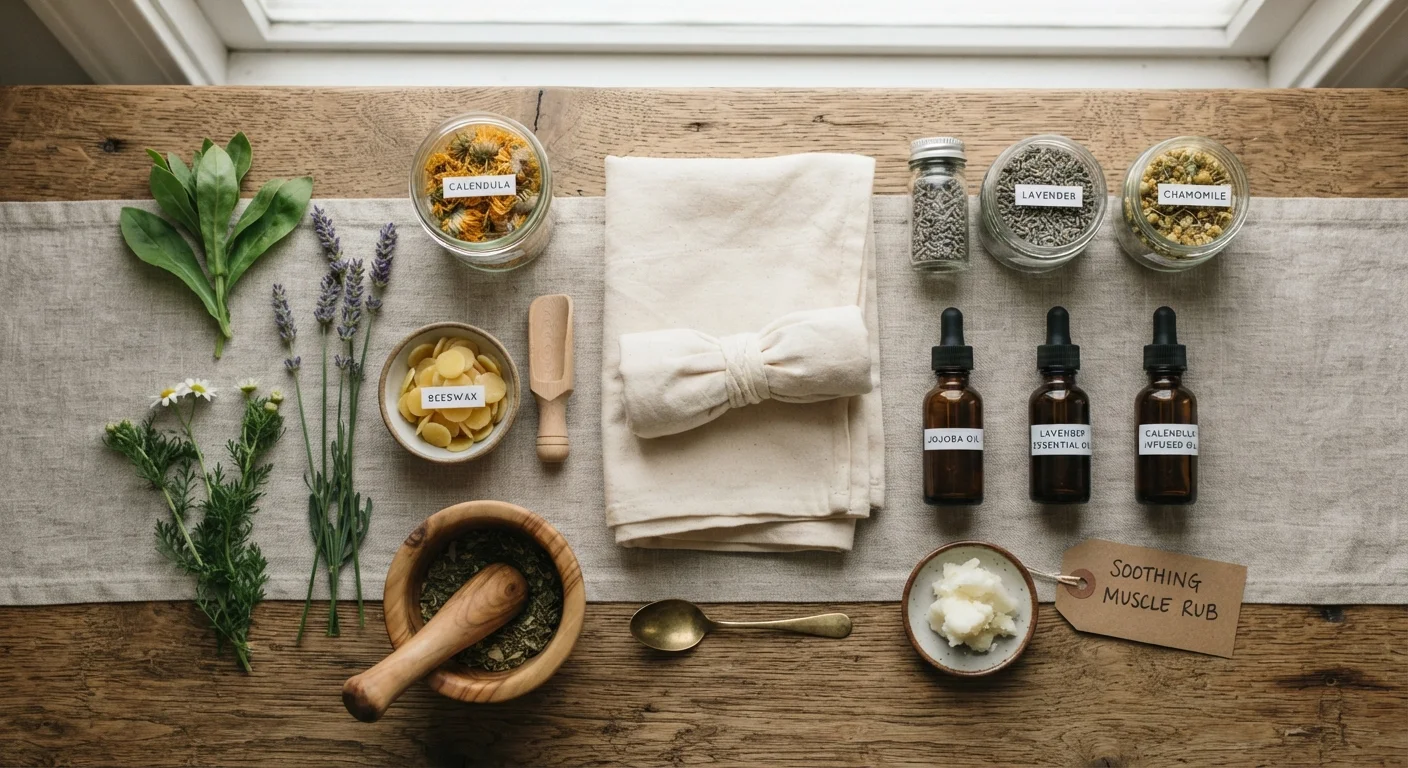
- Carrier oil blends: Plant-based oils such as jojoba, sweet almond, or coconut oil used to dilute potent essential oils before skin contact.
- Essential oil dilutions: Concentrated aromatic plant extracts — always diluted — applied to skin for localized effects. Lavender and peppermint are among the most researched.
- Poultices: Mashed or moistened plant material (fresh or dried) applied directly to skin and sometimes held in place with cloth. Traditional in many cultures for bruising and inflammation.
- Compresses: Cloths soaked in herbal infusions or diluted preparations and pressed against the skin — either warm or cool depending on the goal.
- Salves and balms: Semisolid preparations made with waxes and infused oils, designed to stay on the skin longer and create a mild protective barrier.
- Gels and washes: Water-based preparations such as aloe vera gel or diluted herbal teas applied and left to absorb or rinsed away.
~20%
Adults using topical complementary preparations
National survey data consistently find roughly 1 in 5 American adults uses some form of topical complementary or alternative preparation in a given year, according to NCCIH-reported figures.
~500+
Plant species used in topical traditional medicine
Ethnobotanical reviews estimate hundreds of plant species have documented traditional topical uses across cultures, though only a fraction have been evaluated in controlled human trials.
Understanding the format helps set realistic expectations. A compress cools and soothes surface tissue; a salve stays put and slowly releases compounds. Neither replaces the other.
How Skin Absorption Actually Works
One common misconception is that the skin acts as a perfect barrier — blocking everything applied to it. In reality, the outermost skin layer (the stratum corneum) is selective rather than impermeable. Small, lipid-soluble molecules can cross it more readily than large, water-soluble ones.
Several factors influence how much of a topical compound actually reaches deeper tissue:
- Molecular size and solubility: Smaller, fat-soluble molecules penetrate more easily.
- Application site: Thinner skin areas (inner wrist, temples, behind the ears) absorb more than thicker areas like the soles of the feet.
- Skin integrity: Broken, inflamed, or compromised skin absorbs far more than intact skin — which is why applying remedies to open wounds carries extra risk.
- Occlusion: Covering the area with a bandage or wrap after application increases absorption.
Patch Test Before Full Application
Before applying any new topical preparation to a larger area, test a small diluted amount on the inner forearm and wait 24 hours. Redness, itching, or swelling signals a reaction and means the preparation is not appropriate for your skin. This simple step catches most sensitization responses before they cause significant discomfort.
This is why topical does not automatically mean low-risk or without systemic effect. Some essential oil compounds, for instance, have been detected in blood after skin application in research settings. The amounts are typically small, but they are not zero.
What the Evidence Says — and Where the Gaps Are
Research on topical natural remedies varies considerably in quality. A handful of plant-based preparations have reasonably robust clinical evidence for specific external uses. Aloe vera gel has well-documented wound-soothing and moisturizing properties supported by multiple trials. Topical arnica preparations have shown modest benefit for bruising and muscle soreness in several studies, though effect sizes are generally small. Menthol-based applications produce a well-understood counter-irritant effect that can temporarily reduce perceived muscle discomfort.
Many other popular topicals — including some widely used essential oils — rely primarily on traditional use and in-vitro (lab dish) studies. Lab findings do not always translate into meaningful effects on living human skin at safe concentrations. This gap between promising laboratory data and proven human benefit is important to hold in mind.
For a detailed look at the muscle-specific evidence, see natural topical treatments for muscle soreness. And if you are building your own preparations at home, reviewing the homemade topical remedy safety checklist before you start is a practical first step.
Safety Considerations You Should Know First
Topical natural remedies are not inherently safe simply because they are plant-based or applied externally. Several important safety principles apply across the board:
- Patch test first: Apply a small, diluted amount to inner forearm skin and wait 24 hours before broader use. This catches sensitization or allergic reactions before they affect a larger area.
- Always dilute essential oils: Undiluted application of essential oils is a common cause of contact burns and chemical sensitization. Standard dilution rates vary by oil and population — consult a qualified aromatherapist or herbalist for specific guidance.
- Mind the application site: Avoid eyes, mucous membranes, and broken skin unless a preparation is explicitly formulated for those areas.
- Special populations require extra caution: Pregnant individuals, young children, and people with chronic skin conditions should consult a healthcare professional before using topical herbal preparations.
It is also worth knowing that well-intentioned topical remedies can sometimes make skin conditions worse rather than better. Learn the patterns and warning signs to avoid delaying appropriate care. For a broader grounding in ingredients and application methods, the complete guide to natural topical remedies covers the full landscape in depth.
This article is for informational purposes only and does not constitute medical advice. Always consult a qualified healthcare professional before starting any new remedy, particularly if you have existing health conditions, are pregnant, or are taking medication.