

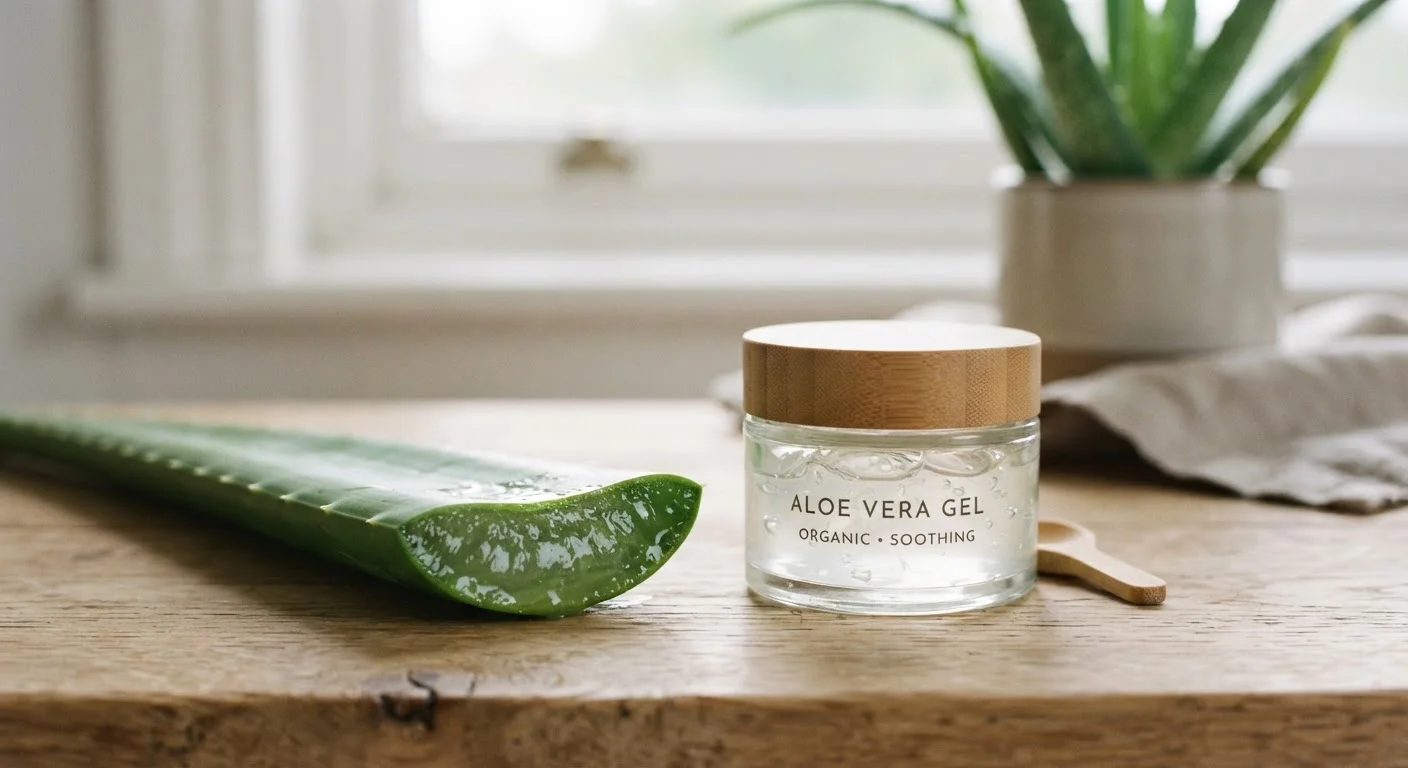
Key Takeaways
- Fresh aloe gel contains a broader range of active compounds that can degrade quickly after extraction.
- Commercial processing — including heat, filtration, and preservatives — alters aloe's bioactive profile.
- Acemannan, aloe's primary polysaccharide, is often reduced during industrial processing.
- Packaged gels vary widely in aloe concentration; some products contain very little actual aloe.
- For minor topical use, both forms can be effective — the difference matters more for specific applications.
- Always consult a healthcare professional before using aloe on broken skin, wounds, or for internal purposes.
Option A
Fresh Aloe Vera Leaf Gel
The unprocessed, direct-from-plant option.
Best for: Best for those who want minimal processing and have reliable access to a healthy aloe plant.
Option B
Packaged Aloe Vera Gel
The convenient, shelf-stable commercial form.
Best for: Best for consistent everyday use when freshness or plant access isn't practical.
If you want maximum retention of naturally occurring bioactive compounds
Fresh Aloe Vera Leaf Gel
Freshly extracted gel retains acemannan, enzymes, and antioxidants before oxidation and heat exposure can degrade them.
If you need a reliable, consistent product for daily topical use
Packaged Aloe Vera Gel
Commercial gels offer standardized application, longer shelf life, and predictable texture — useful for routine skincare.
If you are applying aloe to sensitive or compromised skin
Fresh Aloe Vera Leaf Gel
Fresh gel avoids added preservatives, fragrances, or thickeners that may irritate sensitive skin types.
If convenience and availability are your primary concerns
Packaged Aloe Vera Gel
Packaged products are ready to use without the preparation steps required when working with a raw leaf.
What Aloe Vera Gel Actually Contains
The clear inner gel of an aloe vera leaf is a complex mixture — not just water. It contains polysaccharides (primarily acemannan), glycoproteins, anthraquinones, vitamins C and E, zinc, and various enzymes. Of these, acemannan has attracted the most research attention for its potential anti-inflammatory and wound-supportive properties when applied topically.
These compounds are not equally stable. Enzymes denature with heat. Polysaccharides can break down under certain processing conditions. Antioxidants oxidize rapidly when the gel is exposed to air. Understanding this instability is the key to understanding what changes between a leaf and a packaged product.
| Criterion | Fresh Aloe Leaf Gel | Packaged Aloe Gel |
|---|---|---|
| Acemannan content | Higher (unprocessed) | Reduced by heat/filtration |
| Enzyme activity | Intact at extraction | Reduced or eliminated |
| Shelf life | Hours to a few days | 1–3 years (unopened) |
| Additives | None | Preservatives, thickeners common |
| Aloin risk | Present — requires careful prep | Typically removed during processing |
| Concentration consistency | Varies by plant maturity | Varies by brand/formulation |
| Convenience | Requires plant access and prep | Ready to use |
How Processing Affects Aloe's Active Compounds
Commercial aloe gel production typically involves harvesting, rinsing, and mechanically extracting the inner leaf fillet, followed by filtration, pasteurization or cold stabilization, and the addition of preservatives and thickeners. Each stage carries trade-offs.
Heat treatment — even mild pasteurization — can reduce enzyme activity and degrade heat-sensitive polysaccharides. Research published in peer-reviewed food science literature has consistently shown that acemannan content drops during thermal processing, though the degree depends on temperature and duration.
Filtration removes the pulp, which also strips some beneficial compounds that are bound to the fiber matrix. Preservatives such as citric acid and sodium benzoate are added for shelf stability but do not themselves restore lost bioactives.
~50%
Acemannan reduction after pasteurization
Studies in food processing research suggest acemannan content can fall by roughly half or more after standard thermal treatment, though results vary by method.
~1%
Minimum aloe content in many labeled products
Independent testing by consumer advocacy groups has found some "aloe" products contain concentrations as low as 1% or less of actual aloe vera content.
4 hours
Estimated window before significant oxidation
Cosmetic scientists generally recommend using freshly extracted aloe gel within a few hours at room temperature to preserve maximum bioactive integrity.
One further variable: not all packaged gels are equally concentrated. Regulations in the US do not require a minimum aloe content for products labeled as "aloe gel," meaning some products contain mostly water with trace aloe extract. Consumers have no reliable way to assess concentration without third-party certification or independent testing.
This is a comparable dynamic to how processing affects other natural ingredients. If you're curious how similar trade-offs play out with another kitchen staple, our piece on raw vs. processed honey explores the same tension between convenience and compound retention.
Fresh Leaf Gel: Benefits and Practical Limits
Extracting gel directly from a leaf captures aloe in its most bioactive state — provided the plant is mature, healthy, and handled correctly. The gel should be used within a few hours of extraction or stored refrigerated in an airtight container for no more than a few days. Oxidation begins almost immediately once the leaf is cut.
One practical concern is aloin, a yellow-orange latex found in the layer just beneath the leaf's green skin. Aloin is a potent laxative and a known skin irritant in some individuals. When harvesting fresh gel, this layer should be carefully avoided or the inner fillet thoroughly rinsed. This step requires attention and comfort with the plant — it's not a significant barrier, but it is a real one.
For topical applications — soothing minor sunburn, moisturizing dry skin, or applying a cooling compress — fresh gel performs well for most users. The sensory experience is also distinct: fresher, thinner, and less sticky than most commercial products.
This article is for informational purposes only and is not a substitute for professional medical advice. Always consult a qualified healthcare professional for personal health concerns, especially before applying aloe to broken skin, open wounds, or if you are pregnant, nursing, or managing a chronic health condition.