

Key Takeaways
- Water temperature and steeping time directly control how much beneficial compounds are extracted.
- Delicate aerial parts (flowers, leaves) need lower heat; roots and bark tolerate full boiling water.
- Covering your cup while steeping prevents volatile aromatic compounds from escaping with steam.
- Herb-to-water ratio matters — most home preparations use too little herb to reach studied amounts.
- Some herbs interact with medications; consult a healthcare professional before regular use.
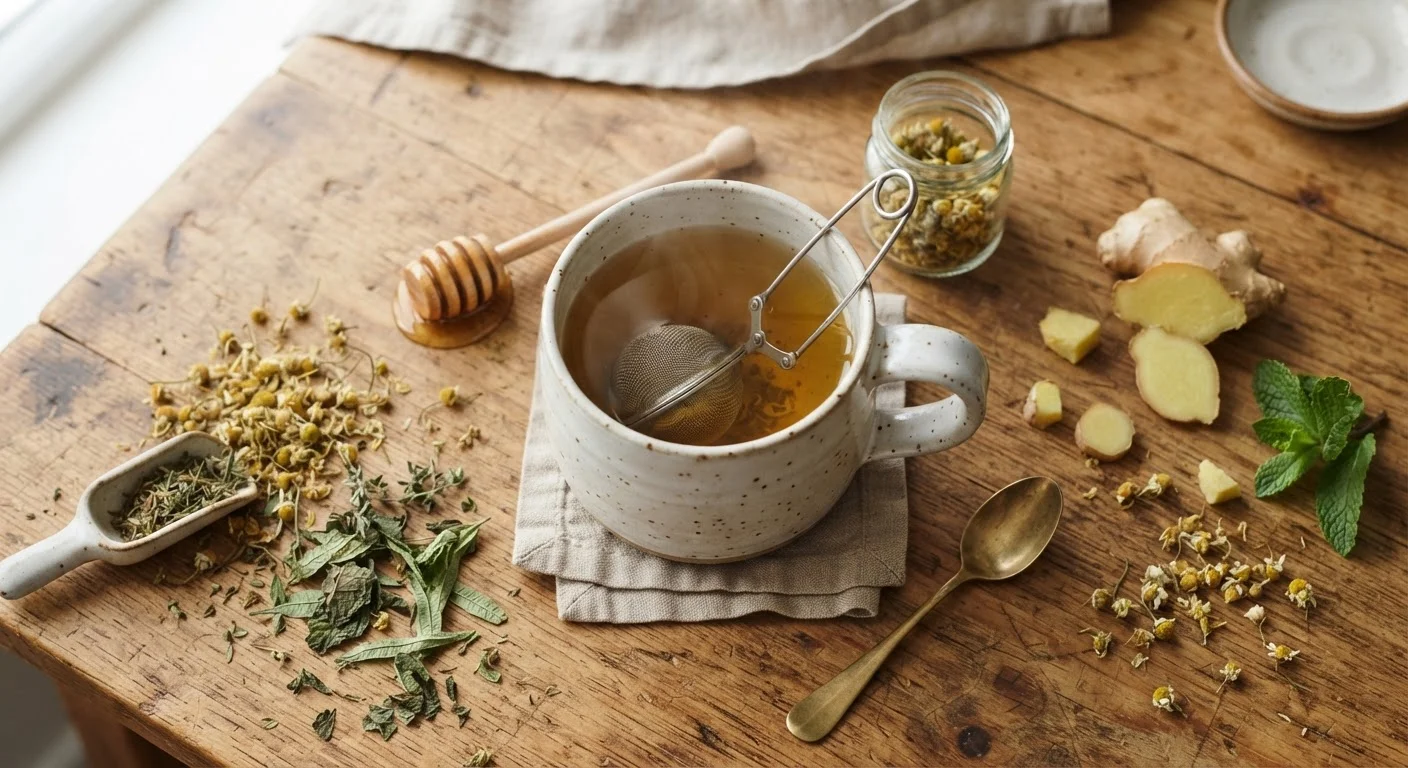
What you will need
Why Preparation Method Changes What Ends Up in Your Cup
An herbal tea is only as effective as what actually gets extracted into the water. The bioactive compounds in herbs — polyphenols, volatile oils, glycosides, alkaloids — vary widely in their solubility and heat sensitivity. Treating every herb identically regardless of plant part or chemistry is the most common reason home-brewed teas underdeliver.
Water acts as a selective solvent. Lower temperatures preserve fragile volatile oils but may leave behind compounds that require heat to release. Higher temperatures and longer steep times drive out more water-soluble constituents from dense plant material — but can also degrade heat-labile compounds or produce excessive tannins, which create bitterness and may reduce absorption of certain nutrients.
It's worth understanding that even an optimally prepared herbal tea may contain different concentrations of active compounds than what appears in clinical research. Studies often use standardized extracts with known quantities of specific constituents. A homemade infusion, while valuable and broadly safe for most herbs, has inherent variability. For a clear-eyed look at what the evidence actually supports for specific herbs, Herbs with Meaningful Evidence Behind Them is a useful companion resource.
Herbal Tea Is Not a Medical Treatment
The guidance here is general educational information, not medical advice. Herbs can interact with prescription medications and may be contraindicated in pregnancy, for children, or alongside certain health conditions. Always consult a qualified healthcare professional before using herbal preparations for any health purpose, especially if you take medication or have an existing diagnosis.
Putting It All Together: Getting Consistent Results
The steps in this guide give you a repeatable framework. The key variables — herb quantity, water temperature, steep duration, and vessel coverage — interact with each other. Changing one without adjusting the others produces unpredictable results.
Cover Your Cup While Steeping
Placing a small saucer or lid over your mug traps steam and returns condensation — along with the volatile oils carried in it — back into your tea. This is especially important for aromatic herbs like peppermint, lemon balm, and chamomile, where a significant portion of the beneficial compounds are found in those oils.
Keep a simple log when you start working with a new herb: note the amount used, temperature, steep time, and your subjective impression of the result. Over a few preparations you'll dial in a ratio that works for your palate and your goals.
Don't Assume 'Natural' Means Safe for Everyone
Several well-studied herbs — including valerian, licorice root, and St. John's Wort — have documented drug interactions or contraindications. If you are pregnant, breastfeeding, or managing a chronic condition, get professional guidance before adding any herbal tea to your routine. Allergic reactions, though uncommon, can occur, particularly with herbs in the Asteraceae family such as chamomile or echinacea.
For a broader grounding in how herbal preparations fit into a wellness approach, the full-spectrum overview at Herbal Medicine: A Full-Spectrum Guide covers history, safety, and the state of modern research in one place.
This article is for informational purposes only and does not constitute medical advice. Consult a qualified healthcare professional before using herbal preparations, particularly if you are pregnant, breastfeeding, managing a health condition, or taking any medication.