

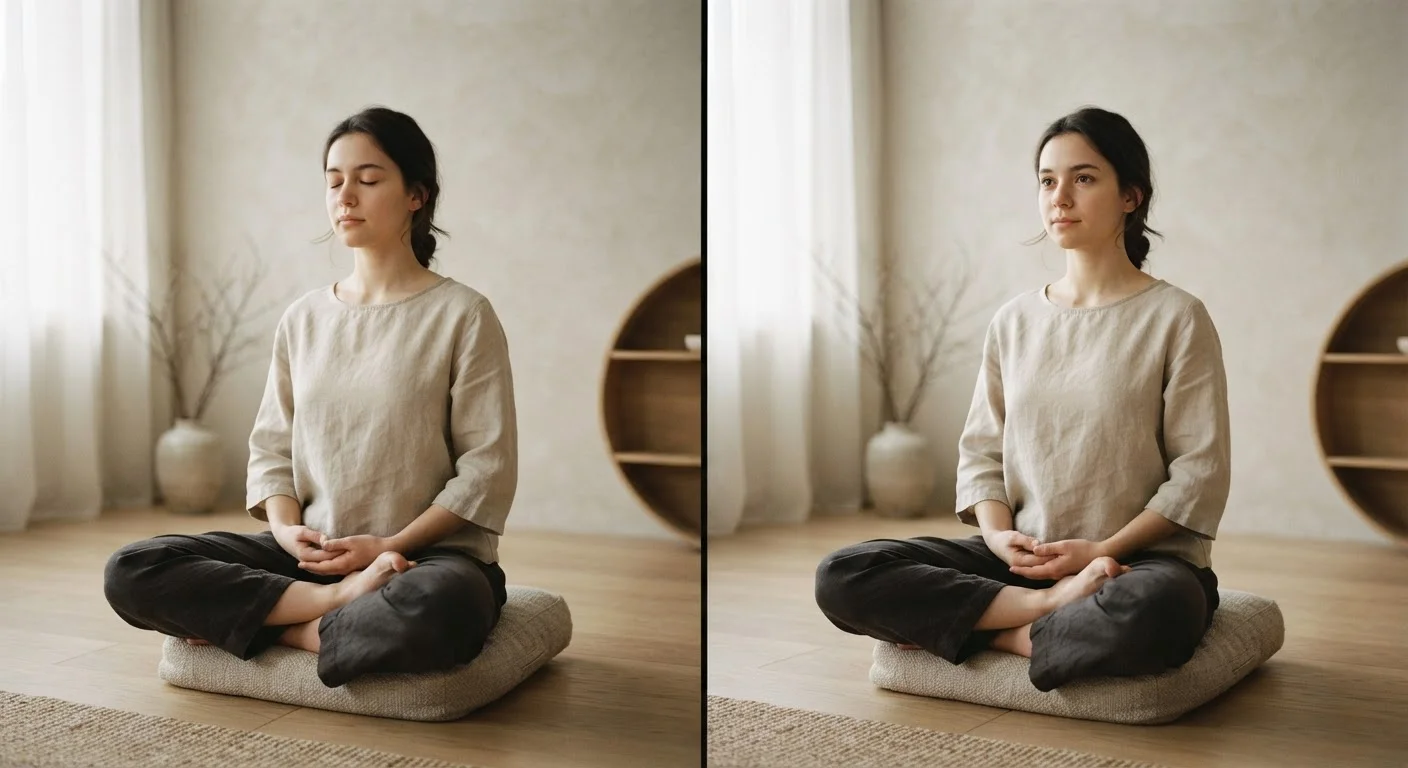
Key Takeaways
- Closed-eye meditation tends to reduce external distractions, making it easier for beginners to focus inward.
- Open-eye meditation supports alertness and is common in Zen and certain mindfulness traditions.
- Neither approach is objectively superior — your ideal style depends on your goals and tendencies.
- Sleepiness during closed-eye practice is a common signal to try a softer open-eye approach.
- Experimenting briefly with both styles is the most reliable way to find your fit.
Our Verdict
Both open-eye and closed-eye meditation are legitimate, well-established approaches with distinct advantages. Closed-eye practice typically suits those new to meditation or seeking deep internal focus, while open-eye practice benefits practitioners prone to drowsiness or those following Zen-influenced traditions. Most experienced meditators find value in both and shift between them as needs change.
| Best for | Recommended |
|---|---|
| Beginners building initial focus skills | Closed-Eye Meditation |
| Those who frequently feel sleepy during practice | Open-Eye Meditation |
| Practitioners following Zen or Tibetan traditions | Open-Eye Meditation |
| Anyone needing deep stress relief or body-scan practice | Closed-Eye Meditation |
Why Eye Position Even Matters
When most people picture meditation, they imagine someone sitting with eyes gently shut. But walk into a Zen center or a Tibetan Buddhist retreat and you'll see practitioners meditating with their eyes partially or fully open. Both are intentional choices — not accidents or preferences for their own sake.
Eye position influences how much sensory information reaches the brain, which in turn affects alertness, distraction levels, and the quality of inner focus. Understanding why each approach exists — and what it does — helps you make a more informed choice rather than defaulting to whatever you've seen most often. For a broader grounding in what meditation actually involves, see what meditation actually is.
Closed-Eye Meditation: Turning Attention Inward
Closing the eyes reduces visual input significantly, making it easier to redirect attention toward breath, bodily sensation, or a mental anchor like a phrase or image. This is why most beginner-facing instruction defaults to closed-eye practice — there is simply less competing for your attention.
Closed-eye meditation is common in breath awareness practices, body-scan sessions, and many guided formats. It tends to facilitate a relaxed, inward orientation and can make it easier to notice subtle internal states like muscle tension or shallow breathing.
Try a Hybrid Approach First
If you're unsure where to start, begin each session with eyes closed for the first two to three minutes to settle the mind, then experiment with a soft downward gaze. This gradual transition lets you compare both states within a single sitting and identify which feels more sustainable for your attention and energy levels.
Common drawback: The reduced stimulation that makes closed-eye practice calming can also make it soporific. Many practitioners report drifting toward sleep, particularly in the early weeks. If this sounds familiar, open-eye practice may be worth exploring.
Open-Eye Meditation: Staying Present in the World
Open-eye meditation keeps the practitioner visually connected to their environment, which tends to maintain a higher level of alertness. The gaze is typically soft and slightly downward — unfocused rather than fixed — allowing the visual field to be present without becoming an active object of analysis.
This approach is central to Zen (zazen) and many Tibetan Buddhist practices. It reflects a philosophical point: that meditation is not an escape from the world but a training in being fully present within it. Practically, it also discourages sleepiness and can help those who find total sensory withdrawal disorienting.
| Closed-Eye Meditation | Open-Eye Meditation | |
|---|---|---|
| Alertness level | Lower — relaxed, inward | Higher — present, outward |
| Drowsiness risk | Higher, especially for beginners | Lower due to visual stimulation |
| Ease for beginners | Generally easier to start | Can feel unfamiliar at first |
| Common traditions | Mindfulness, body scan, guided | Zen (zazen), Tibetan Buddhism |
| Best environment | Quiet, low-distraction space | Neutral visual backdrop helpful |
| Ideal for | Deep inward focus, stress relief | Alertness, presence, wakefulness |
Open-eye practice pairs naturally with walking meditation or gentle movement. If you're exploring how movement-based approaches differ from seated stillness, yoga nidra and seated meditation offers a useful point of comparison.
How to Experiment Safely with Each Approach
The most practical way to find your preferred style is a structured two-week experiment. Spend the first week meditating with eyes closed for five to ten minutes daily, noting your experience: Was focus manageable? Did drowsiness arise? Did thoughts settle? Spend the following week trying a soft downward gaze, adjusting the angle until the approach feels stable rather than effortful.
- For open-eye practice: Find a neutral spot on the floor about two to three feet ahead of you. Soften your gaze so the spot registers without sharp focus.
- For closed-eye practice: Sit upright rather than reclined to reduce sleepiness. If drowsiness persists, open the eyes slightly.
- Hybrid option: Some practitioners use closed eyes for the first few minutes and transition to a soft gaze if alertness drops.
Neither style requires a tradition, a teacher, or prior experience to try safely. For a broader look at how different meditation styles compare, the meditation styles glossary is a helpful reference. If you're also weighing breath-focused versus guided sessions, breath awareness vs. guided meditation breaks that decision down clearly.
This article is for general informational purposes only and does not constitute medical or psychological advice. If you have concerns about anxiety, sleep, or mental health, please consult a qualified healthcare professional.