

| Typical age of menarche (US) | 12–13 years (American Academy of Pediatrics) |
| Average age of menopause (US) | Around 51 years (North American Menopause Society) |
| Normal menstrual cycle range | 21–35 days (ACOG (American College of Obstetricians and Gynecologists)) |
| Perimenopause duration | 4–8 years on average (North American Menopause Society) |
| Peak bone density age (women) | Late 20s to early 30s (National Institutes of Health, Office of Dietary Supplements) |
| Ovarian reserve decline begins | Gradual from late 20s onward (ACOG) |
Why Reproductive Health Shifts Over a Lifetime
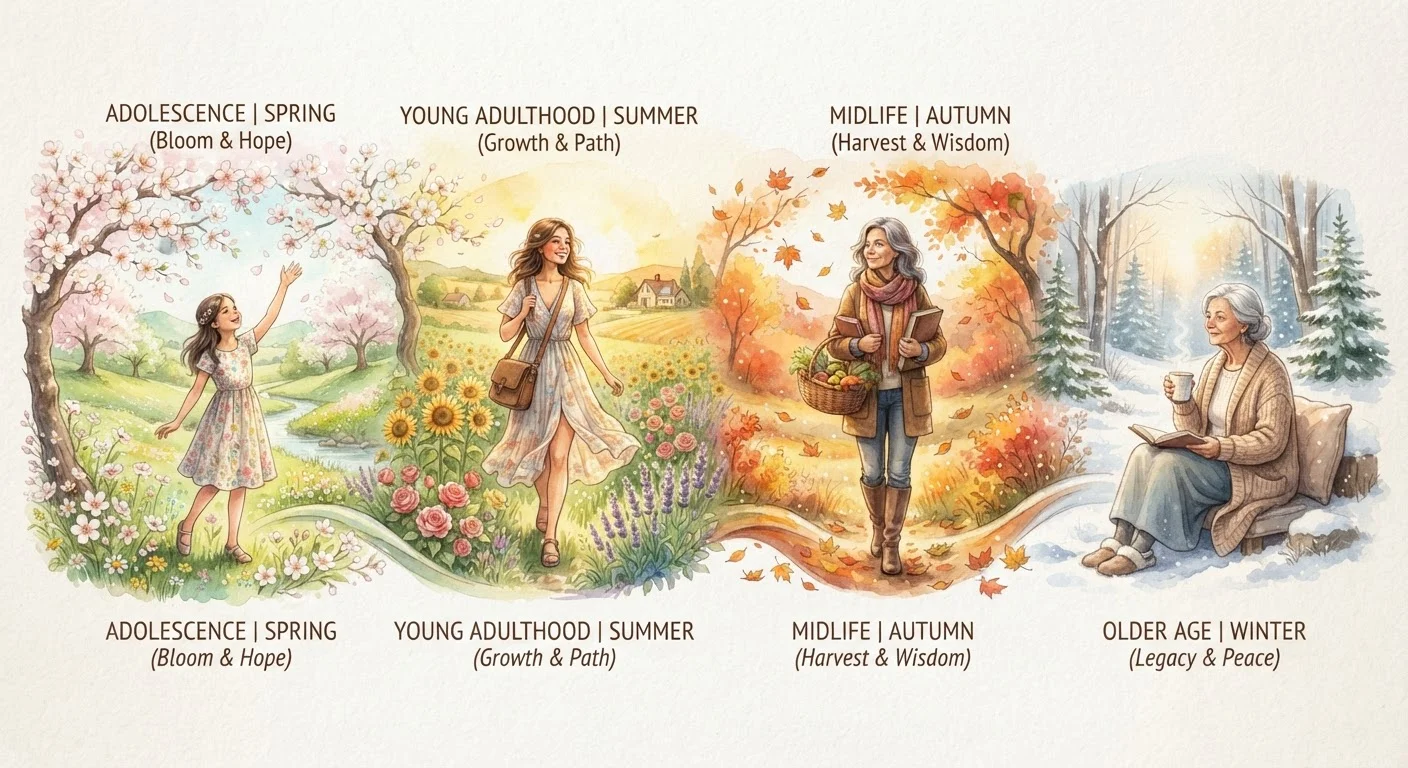
Reproductive health isn't static — it's a dynamic system driven primarily by hormonal signaling that evolves in predictable, research-documented patterns. Understanding those patterns is a form of body literacy that helps women make informed decisions and recognize when something feels off. From the first menstrual cycle to the years well beyond menopause, the reproductive system responds to age, stress, nutrition, environment, and genetics in meaningful ways.
This reference guide walks through the major life stages, outlining what typically changes and why — grounded in established science while acknowledging that individual experience varies considerably. For a parallel look at how hormones shift in men, see our overview of men's hormonal health.
| Typical age of menarche (US) | 12–13 years (American Academy of Pediatrics) |
| Average age of menopause (US) | Around 51 years (North American Menopause Society) |
| Normal menstrual cycle range | 21–35 days (ACOG (American College of Obstetricians and Gynecologists)) |
| Perimenopause duration | 4–8 years on average (North American Menopause Society) |
| Peak bone density age (women) | Late 20s to early 30s (National Institutes of Health, Office of Dietary Supplements) |
| Ovarian reserve decline begins | Gradual from late 20s onward (ACOG) |
This article is for general informational purposes only and is not a substitute for personalized medical advice. Please consult a qualified healthcare provider with any concerns about your reproductive health.
Adolescence (Ages 9–17): The Hormonal Awakening
Puberty marks the reproductive system's activation. Rising levels of estrogen and progesterone — orchestrated by the hypothalamic-pituitary-gonadal (HPG) axis — trigger breast development, pubic hair growth, and eventually menarche (the first menstrual period). Cycles during these early years are often irregular, which is normal: the feedback loops that regulate ovulation take time to mature, sometimes up to two years after menarche.
Estrogen also begins shaping bone density during adolescence, making calcium and vitamin D intake particularly important during this window. Menstrual pain (dysmenorrhea) is common and may signal underlying conditions like endometriosis in more severe cases — something worth flagging to a healthcare provider rather than dismissing.
Menarche
The first occurrence of menstruation, marking the beginning of a person's reproductive years. It typically occurs between ages 10 and 15 in the United States.
HPG Axis
The hypothalamic-pituitary-gonadal axis — a hormonal communication network between the brain and ovaries that regulates the menstrual cycle, ovulation, and reproductive hormones.
Anti-Müllerian Hormone (AMH)
A hormone produced by cells in the ovarian follicles. Blood levels of AMH are used as an indicator of a woman's remaining egg reserve (ovarian reserve).
Perimenopause
The transitional period before menopause, during which hormone levels fluctuate and menstrual cycles become irregular. It can last several years and typically begins in the mid-to-late 40s.
Dysmenorrhea
The medical term for painful menstrual cramps. Primary dysmenorrhea refers to common menstrual pain without an underlying condition; secondary dysmenorrhea may be associated with conditions such as endometriosis.
DEXA Scan
Dual-energy X-ray absorptiometry — a type of imaging used to measure bone mineral density. It is commonly recommended for women after menopause to screen for osteoporosis.
The 20s and 30s: Peak Fertility and Its Nuances
For most women, the mid-20s represent peak reproductive capacity, with regular ovulation, stable hormonal cycles, and relatively high egg quality and quantity. The menstrual cycle — typically 21 to 35 days — becomes a useful health indicator: cycle length, flow, and accompanying symptoms can reflect thyroid function, stress levels, and metabolic health.
Egg reserve (measured by anti-Müllerian hormone, or AMH) begins a gradual natural decline from the late 20s onward. This doesn't represent a cliff — but it is a biological reality worth understanding. Our article on reproductive health after 35 offers a balanced look at what age-related changes actually mean for fertility decisions.
The 30s are also when conditions like polycystic ovary syndrome (PCOS), endometriosis, or uterine fibroids often become more apparent or symptomatic. Building health-supporting habits during this decade pays dividends — see daily habits worth building in your 30s for evidence-informed guidance.
Perimenopause and Menopause (Typically 40s–50s): The Hormonal Transition
Perimenopause — the transitional phase leading to menopause — typically begins in the mid-to-late 40s, though it can start earlier. Estrogen and progesterone levels become increasingly variable as the ovarian reserve depletes. This produces the hallmark symptoms many women recognize: irregular cycles, hot flashes, disrupted sleep, mood changes, and vaginal dryness.
Menopause is defined as 12 consecutive months without a menstrual period, marking the end of ovulation. The average age in the United States is around 51. Post-menopause, estrogen levels stabilize at a lower baseline, which has downstream effects on bone density (accelerated loss), cardiovascular risk, and urogenital health.
Tracking your cycle patterns in the years leading up to this transition can be genuinely informative. Our monthly hormonal health self-check provides a practical framework for noticing meaningful signals.
~51
Average age of menopause in the US
According to the North American Menopause Society, the average age of natural menopause in the United States is approximately 51 years.
1 in 10
Women affected by endometriosis
The World Health Organization estimates that roughly 10% of women of reproductive age globally are affected by endometriosis.
Up to 80%
Women who develop uterine fibroids by age 50
Research published by the National Institutes of Health indicates that up to 80% of women may develop uterine fibroids by age 50, though many experience no symptoms.
Post-Menopause: Long-Term Health in Context
The post-menopausal years can span three or more decades. While reproductive cycling has ended, hormonal health remains relevant — lower estrogen influences bone remodeling, lipid metabolism, cognitive function, and pelvic floor integrity. Conditions like osteoporosis and cardiovascular disease become more prominent health considerations during this phase.
This doesn't mean decline is inevitable. Research consistently shows that physical activity, adequate protein intake, social connection, and preventive healthcare engagement are strongly associated with maintaining quality of life and functional independence. Working with a healthcare provider to monitor bone density (via DEXA scan), cholesterol, and blood pressure is especially important after menopause.
Reproductive health across the decades isn't a series of problems to manage — it's a system to understand. Body literacy, regular check-ups, and open conversations with qualified providers remain the most reliable tools a woman has at every stage.
This article provides general health education and is not intended as medical advice. Always consult a licensed healthcare professional for guidance specific to your health history and needs.