

Key Takeaways
- The ratio of potassium to sodium matters as much as total intake of either mineral alone.
- Potassium helps the kidneys excrete sodium and promotes relaxation of blood vessel walls.
- Most Americans consume far more sodium than the recommended amount and far less potassium.
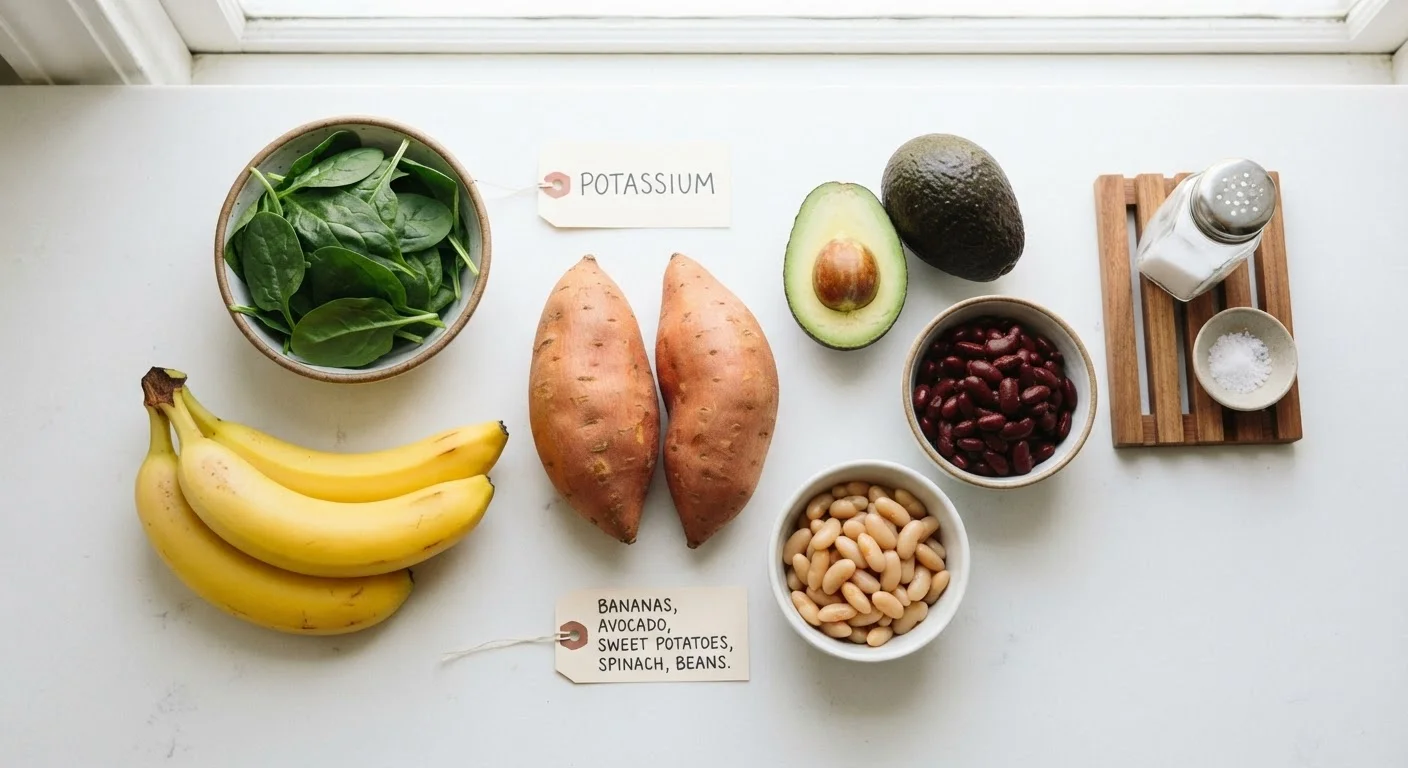
- Whole plant foods — beans, leafy greens, potatoes, and fruit — are the richest dietary potassium sources.
- Reducing ultra-processed foods simultaneously lowers sodium and makes room for higher-potassium choices.
- People with kidney disease or on certain medications should consult a clinician before increasing potassium.
Potassium-Sodium Balance
Potassium and sodium are electrolytes that work in opposition inside the body: sodium pulls water into the bloodstream, raising blood volume and pressure, while potassium helps relax blood vessel walls and encourages the kidneys to excrete excess sodium. The ratio between the two minerals — not just the absolute amount of either — plays a meaningful role in cardiovascular health. Most Americans consume far more sodium than potassium, which may contribute to elevated blood pressure over time.
Research published in journals such as the New England Journal of Medicine has examined urinary sodium-to-potassium ratio as a predictor of cardiovascular risk, suggesting this ratio may be a more informative marker than sodium intake alone.
Why the Ratio Matters More Than Either Mineral Alone
Public health messaging has long focused on limiting sodium — and that guidance has a solid evidence base. But the emerging picture from nutritional research is more nuanced: potassium and sodium function as counterweights inside the body, and the balance between them may be a stronger predictor of cardiovascular risk than sodium intake in isolation.
Sodium encourages the kidneys to retain water, expanding blood volume and pushing pressure higher. Potassium works through complementary mechanisms — signaling the kidneys to excrete more sodium in urine, and encouraging blood vessel walls to relax. When dietary potassium is low relative to sodium, these opposing forces fall out of equilibrium.
The typical American dietary pattern skews this ratio significantly. Ultra-processed foods — which account for a large share of daily calories in the U.S. — are dense in sodium and nearly devoid of potassium. Whole foods with meaningful potassium content, like beans, leafy vegetables, and fruit, represent a much smaller share of most people's plates.
~3,400 mg
Daily potassium adequate intake for adult men
Per the National Academies of Sciences, Engineering, and Medicine — most American men fall well below this level through diet alone.
3,500+ mg
Average daily sodium intake for U.S. adults
The CDC estimates average U.S. sodium intake substantially exceeds the 2,300 mg daily limit recommended in Dietary Guidelines for Americans.
~90%
Americans not meeting potassium intake targets
According to analysis cited in USDA Dietary Guidelines reports, potassium is consistently identified as a nutrient of public health concern in the U.S.
How Potassium Affects the Kidneys and Blood Vessels
Inside each kidney, specialized structures called nephrons continuously filter blood and regulate what gets excreted versus retained. Potassium influences this process: higher potassium intake promotes natriuresis — the technical term for sodium excretion in urine. This effect helps the body shed excess sodium rather than holding it in circulation.
Potassium also influences vascular tone. Smooth muscle cells lining artery walls respond to potassium by relaxing, which widens the vessel and lowers resistance. This vasodilatory effect complements the renal pathway, offering two distinct mechanisms through which potassium supports healthier blood pressure ranges.
These mechanisms are well-established in physiology research, though individual responses to dietary changes vary based on genetics, baseline kidney function, medications, and overall diet quality. The DASH dietary approach was specifically designed to leverage this potassium-sodium interaction and remains one of the more studied dietary strategies for blood pressure management.
Cook Potatoes With the Skin On
A significant portion of a potato's potassium sits just beneath the skin. Baking or roasting potatoes with the skin intact — and eating it — is one of the most efficient ways to boost potassium per meal. Avoid adding high-sodium toppings like processed cheese sauces or salt-heavy seasonings, which would offset the ratio benefit.
Shifting the Balance Through Food Choices
Improving the potassium-to-sodium ratio doesn't require rigid meal planning or supplement use for most healthy adults. Two parallel strategies work together: reducing high-sodium processed foods and replacing them — in part — with potassium-rich whole foods.
Some of the most potassium-dense foods per cooked serving include:
- White and sweet potatoes — one medium baked potato with skin provides roughly 900 mg of potassium
- White beans and lentils — a half-cup of cooked white beans delivers around 500–600 mg
- Spinach and Swiss chard — cooked greens concentrate potassium significantly versus raw
- Avocado — half a fruit provides approximately 500 mg, alongside heart-healthy unsaturated fats
- Plain yogurt — a cup of low-fat yogurt offers around 400–500 mg with added protein
- Bananas — a convenient portable source at approximately 420 mg each
Seasoning food at home with herbs, citrus, and spices rather than table salt is one practical way to manage sodium without sacrificing flavor. Reading nutrition labels for sodium per serving is particularly useful when navigating packaged goods, as sodium content varies widely even within similar product categories.
Broader dietary patterns matter too. Research examining hormonal and metabolic health consistently finds that dietary patterns rich in micronutrients support multiple physiological systems — the potassium-sodium dynamic is one piece of that larger picture.
This article is for general informational and educational purposes only and is not a substitute for personalized medical advice. If you have high blood pressure, kidney disease, or are taking medications that affect electrolyte levels, consult a qualified healthcare professional before making significant dietary changes.