

Key Takeaways
- Haem iron, found in meat and seafood, is absorbed at roughly 15–35%, far exceeding non-haem iron's typical 2–20% rate.
- Non-haem iron absorption is strongly influenced by what else you eat at the same meal.
- Vitamin C consumed alongside plant iron can meaningfully increase its absorption.
- Certain compounds in plant foods — phytates, tannins, and calcium — can inhibit non-haem iron uptake.
- A well-planned plant-based diet can still support healthy iron levels with strategic food combinations.
- People with higher iron requirements, such as women of reproductive age, should monitor status regardless of diet type.
Option A
Haem Iron (Animal Sources)
The highly bioavailable, readily absorbed form.
Best for: People who eat meat and want a reliably efficient route to meeting daily iron needs.
Option B
Non-Haem Iron (Plant Sources)
The versatile, diet-inclusive form that rewards smart food pairing.
Best for: Vegetarians, vegans, and anyone relying primarily on plant foods to maintain adequate iron status.
If you eat meat and want the most efficient path to meeting iron needs
Haem Iron (Animal Sources)
Haem iron is absorbed more consistently and is less affected by other dietary factors, making it the more predictable option for omnivores.
If you follow a vegetarian or vegan diet
Non-Haem Iron (Plant Sources)
With strategic pairing — especially vitamin C-rich foods alongside iron-rich plants — non-haem iron can reliably support healthy iron status.
If you're concerned about iron status and have a complex health history
Non-Haem Iron (Plant Sources)
Non-haem iron is self-regulating — absorption decreases when body stores are adequate — which may be preferable for those managing certain conditions. Always consult a healthcare professional.
Two Forms, One Mineral: What Makes Them Different
Iron in food comes in two chemically distinct forms, and understanding that distinction explains a lot about why some people meet their iron needs effortlessly while others struggle despite eating iron-containing foods regularly.
Haem iron is found exclusively in animal-derived foods — red meat, poultry, and seafood. It's bound within haemoglobin and myoglobin molecules, which the gut absorbs through a dedicated transport pathway that operates largely independently of other dietary factors.
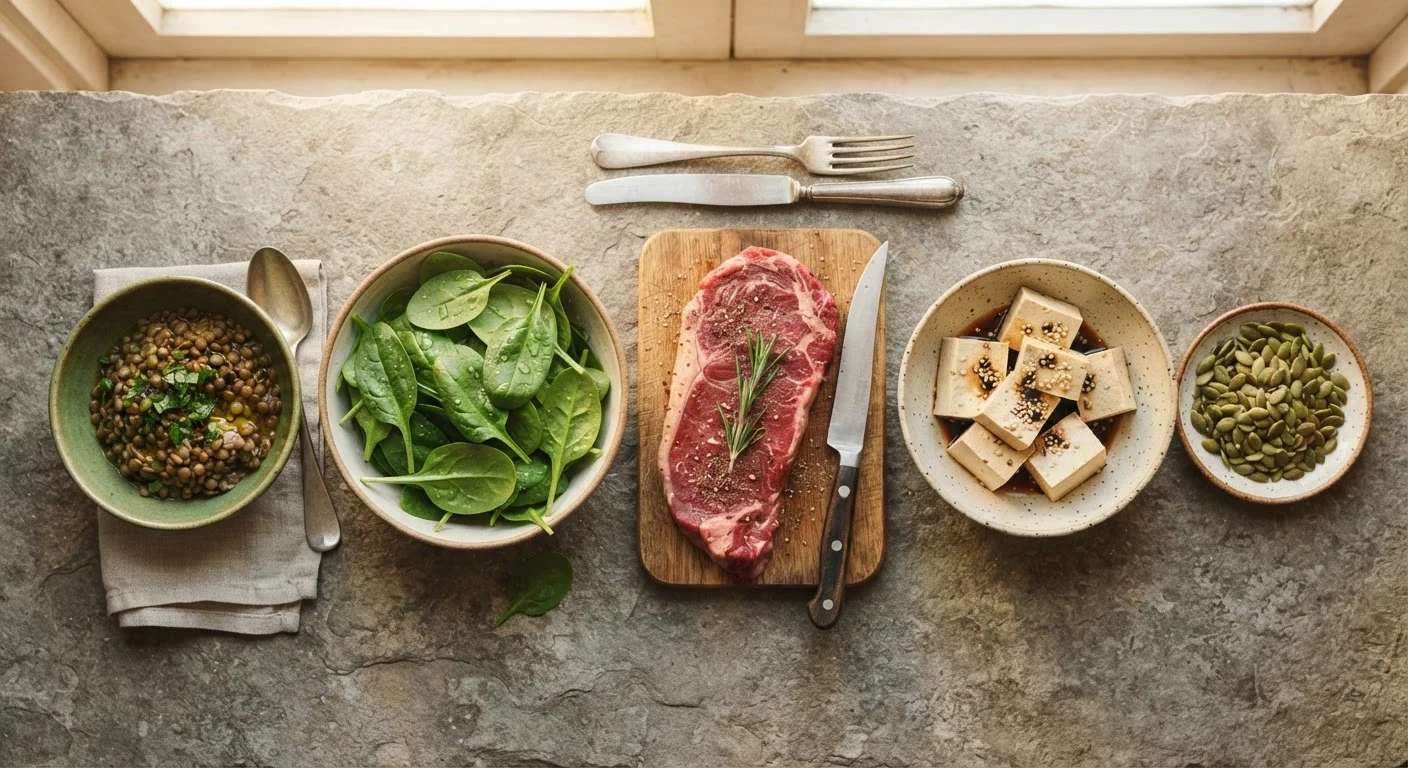
Non-haem iron is the form found in plant foods such as lentils, beans, tofu, fortified grains, leafy greens, and seeds, as well as in eggs and dairy to a smaller degree. It enters the digestive system in a free ionic state, making it far more susceptible to interactions with other compounds in a meal before it ever reaches the intestinal wall.
Both forms ultimately deliver the same mineral to your cells, but the journey — and how much actually arrives — differs considerably.
| Criterion | Haem Iron | Non-Haem Iron |
|---|---|---|
| Food sources | Red meat, poultry, seafood | Legumes, tofu, greens, fortified grains, seeds |
| Typical absorption rate | 15–35% | 2–20% |
| Affected by meal composition | Minimally | Significantly |
| Enhanced by vitamin C | Not meaningfully | Yes — well established |
| Inhibited by phytates/tannins | Not significantly | Yes — notably |
| Self-regulation by body stores | Some | More pronounced |
| Suitable for plant-based diets | No | Yes |
Why Absorption Rates Diverge So Sharply
Haem iron absorption typically ranges from about 15% to 35% of what's consumed. Non-haem iron generally falls between 2% and 20%, depending heavily on the surrounding meal composition and an individual's current iron stores.
2–3×
Haem vs non-haem absorption advantage
Research consistently shows haem iron is absorbed at roughly two to three times the rate of non-haem iron under typical dietary conditions.
Up to 6×
Increase in non-haem absorption with vitamin C
Studies have shown that consuming vitamin C alongside a non-haem iron source can increase iron absorption by several-fold, depending on the dose and baseline stores.
~50%
Reduction in non-haem absorption from tannins
Some research indicates that tannin-containing beverages like tea, consumed with a meal, can reduce non-haem iron absorption by roughly half.
The body does have one meaningful self-regulation mechanism: when iron stores are low, intestinal cells upregulate absorption across both types. This means someone who is iron-deficient will absorb proportionally more from the same food than someone with replete stores — a protective adaptation that applies more visibly to non-haem iron, since haem absorption is already more efficient and less variable.
For plant-based eaters, this regulation provides some buffer, but it doesn't eliminate the importance of thoughtful food choices.
Enhancers and Inhibitors: The Non-Haem Iron Equation
Because non-haem iron exists in a soluble ionic form in the gut, it interacts readily with other food compounds before absorption. Several factors have well-established effects:
- Vitamin C (ascorbic acid) is the most potent known enhancer of non-haem iron absorption. It converts ferric iron (Fe³⁺) to the more readily absorbed ferrous form (Fe²⁺) and forms a chelate that keeps iron soluble in the gut. Pairing a glass of orange juice, a squeeze of lemon, or raw bell pepper with an iron-rich meal is one of the most evidence-backed dietary strategies available.
- Phytates, present in legumes, whole grains, and nuts, bind iron in the gut and can substantially reduce absorption. Soaking, sprouting, or fermenting these foods reduces phytate content.
- Tannins, found in tea, coffee, and red wine, also inhibit non-haem iron uptake. Consuming these beverages away from iron-rich meals is a practical step.
- Calcium, whether from dairy or supplements, competes with iron for intestinal transport. Separating high-calcium foods or supplements from iron-rich meals can help.
- Meat factor: interestingly, consuming small amounts of meat alongside plant iron appears to enhance non-haem absorption — though the mechanism is not fully characterised.
For a broader look at how diet structure affects nutrient intake, see our guide to plant-based, vegan, and whole-food diets.
Practical Implications for Different Eating Patterns
Omnivores who regularly include red meat and seafood tend to maintain iron status with less dietary planning, simply because haem iron absorption is robust and consistent. That said, overall diet quality still matters — and excessive red meat intake carries its own health considerations that are separate from iron nutrition.
Plant-forward eaters can absolutely meet iron requirements, but it takes intentionality. Prioritising high-iron plant foods (lentils, chickpeas, firm tofu, pumpkin seeds, fortified cereals), pairing them with vitamin C sources, and limiting tea or coffee around iron-rich meals are concrete, evidence-informed habits.
Iron needs vary significantly across life stages. Women of reproductive age have higher requirements due to menstrual losses — a reality that makes iron status worth monitoring regardless of diet. If you want to understand the signs that iron stores may be running low, our article on iron deficiency in women covers why it's so frequently overlooked.
If you suspect your iron intake or absorption is inadequate, a serum ferritin test ordered by a healthcare provider gives the clearest picture. Food-first strategies are appropriate for most healthy adults, but supplementation decisions should always involve professional guidance.
This article is for general informational and educational purposes only and does not constitute medical advice. If you have concerns about your iron status or nutritional health, please consult a qualified healthcare professional.