

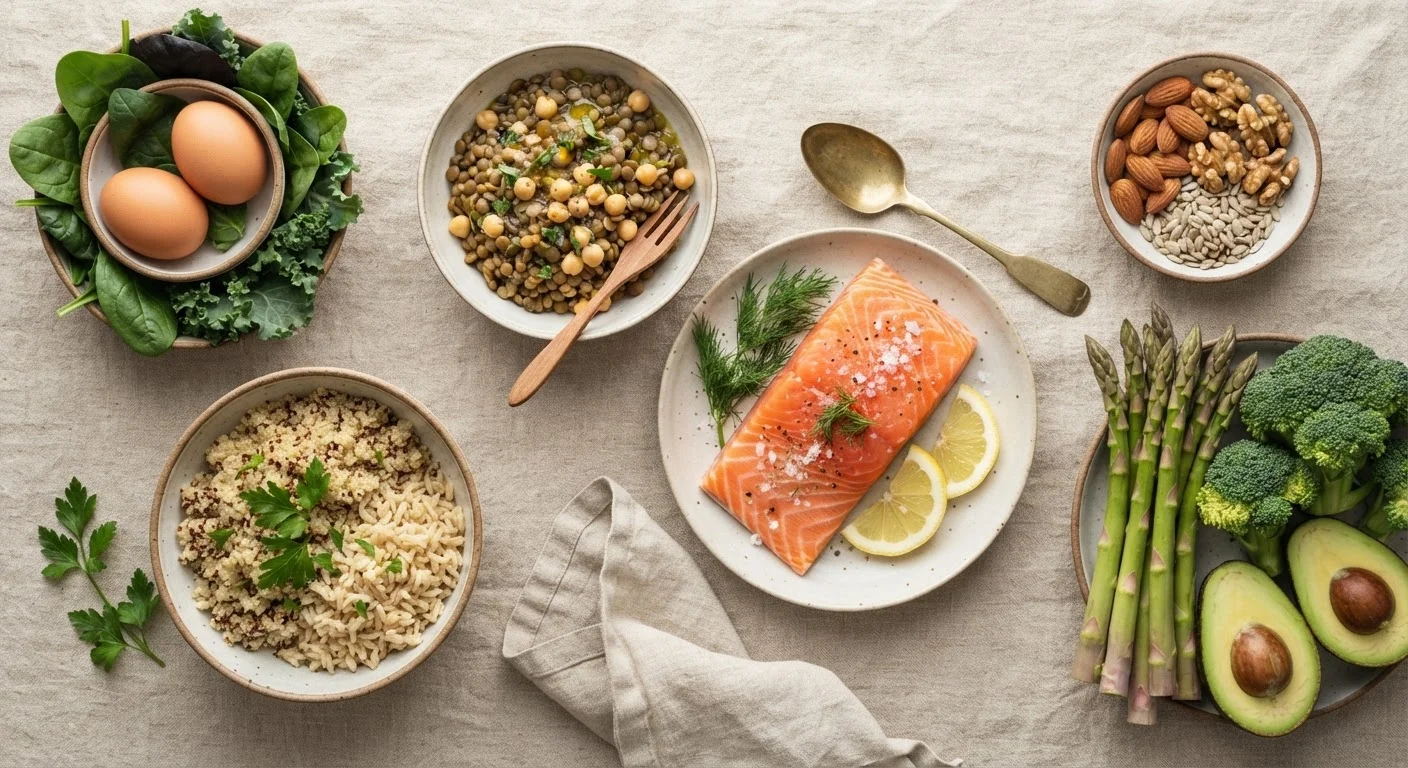
Key Takeaways
- There are eight distinct B vitamins, each with unique food sources and roles in the body.
- Most people can meet their B vitamin needs through varied, whole-food eating patterns.
- Vegans and vegetarians face a genuine gap with B12, which requires particular attention.
- Cooking methods and food processing can meaningfully reduce B vitamin content in meals.
- Certain life stages — pregnancy, older adulthood — increase requirements for specific B vitamins.
What you will need
Why the B Vitamins Deserve Collective Attention
The B vitamins are a family of eight water-soluble nutrients: thiamine (B1), riboflavin (B2), niacin (B3), pantothenic acid (B5), pyridoxine (B6), biotin (B7), folate (B9), and cobalamin (B12). Despite sharing a category name, they are chemically distinct and perform different functions — from supporting cellular energy metabolism to producing red blood cells and synthesizing neurotransmitters.
Because they are water-soluble, the body does not store most B vitamins in significant quantities, making regular dietary intake important. The good news is that no single B vitamin requires exotic foods or complicated protocols. A well-varied diet built around whole foods covers most of the ground effectively. For a broader framework on building that kind of diet, see our complete guide to sustainable daily nutrition.
What You Need Before You Start
Before adjusting your eating patterns, it helps to take stock of where you are. Consider which food groups you eat regularly, whether you have any dietary restrictions, and whether you fall into a group with elevated needs — such as being pregnant, over 50, vegetarian, or vegan.
What you will need
Stock Your Pantry Strategically
Legumes, canned fish, whole grain pasta, and eggs are affordable, long-shelf-life staples that collectively cover a wide range of B vitamins. Building your pantry around these basics makes consistent B vitamin intake much easier. Our wellness-oriented pantry guide covers these staples in practical detail.
A Step-by-Step Food-First Approach
The following steps guide you through identifying and closing gaps in your B vitamin intake using everyday foods. No supplements are required to follow this approach, though individual circumstances may vary — always consult a qualified healthcare professional if you have specific concerns.
Map your current intake against each B vitamin's primary sources
Write out the eight B vitamins and their best food sources, then check which you consume regularly:
- B1 (Thiamine): whole grains, legumes, pork, sunflower seeds
- B2 (Riboflavin): dairy products, eggs, lean meats, almonds, leafy greens
- B3 (Niacin): poultry, fish, peanuts, whole grains, mushrooms
- B5 (Pantothenic acid): chicken, beef, potatoes, oats, sunflower seeds, avocado
- B6 (Pyridoxine): fish, poultry, potatoes, bananas, chickpeas
- B7 (Biotin): eggs (especially yolk), organ meats, seeds, nuts, sweet potatoes
- B9 (Folate): dark leafy greens, legumes, asparagus, fortified grains, citrus
- B12 (Cobalamin): meat, fish, dairy, eggs — found almost exclusively in animal products
Mark any B vitamins whose primary food sources you rarely or never eat. Those are your gaps to address first.
Prioritize B12 if you follow a plant-based diet
Vitamin B12 is the one B vitamin with no reliable plant food sources in meaningful amounts. Fermented foods and some algae contain trace amounts, but evidence does not support relying on these as primary sources. If you are vegetarian or vegan, discuss B12 supplementation or regular intake of fortified foods — such as certain plant milks and breakfast cereals — with a healthcare provider. This is a genuine nutritional gap, not a minor concern.
Boost folate intake through leafy greens and legumes
Folate (B9) is critical for DNA synthesis and cell division, and requirements increase substantially during pregnancy. Emphasize dark leafy greens — spinach, romaine, kale — and legumes like lentils and black beans. Aim to include at least one of these categories daily. People who are pregnant or planning a pregnancy should speak with a healthcare provider specifically about folate or folic acid needs, as this is an area with well-established clinical guidance.
Anchor animal proteins and whole grains as your B-vitamin backbone
For non-vegetarians, lean meats, poultry, fish, eggs, and dairy collectively cover B1, B2, B3, B5, B6, B7, B12, and contribute to folate. Pairing these with whole grains — oats, brown rice, whole wheat bread — reinforces thiamine, niacin, and riboflavin. If you eat these food groups regularly in reasonable variety, your B vitamin intake is likely solid across most categories.
Review and adjust based on life stage or elevated needs
Certain populations have increased requirements for specific B vitamins beyond general dietary guidance:
- Adults over 50: Stomach acid production often declines with age, reducing the body's ability to absorb B12 from food. Healthcare providers may recommend B12 supplementation in this group.
- Pregnant individuals: Folate and B6 requirements increase. Prenatal care providers typically address this directly.
- People with certain gastrointestinal conditions: Malabsorption can affect multiple B vitamins. A healthcare provider can help assess this.
For men specifically, B vitamins play a documented role in physical energy and muscle metabolism — for more context, see our overview of key micronutrients for men's energy and muscle function.
Cooking and Storage Habits That Preserve B Vitamins
B vitamins are sensitive to heat, light, and prolonged cooking in water. Boiling vegetables can leach significant amounts of water-soluble vitamins into the cooking liquid; steaming or roasting tends to preserve more. Whole grains retain more B vitamins than refined counterparts — the milling process removes the bran and germ where many B vitamins concentrate.
Reading food labels can also tell you whether a product has been enriched or fortified with B vitamins, which is particularly relevant for grain products. Our guide to reading nutrition labels walks through how to interpret those figures accurately.
Don't Rely Solely on Supplements Without Guidance
While B vitamin supplements are widely available, high doses of certain B vitamins — particularly B3 (niacin) and B6 — have been associated with adverse effects when taken in large amounts over time. A food-first approach avoids these risks naturally. If you are considering supplementation for any reason, discuss it with a healthcare provider first.
This article is for general informational purposes only and does not constitute medical or nutritional advice. If you have questions about your specific dietary needs, consult a registered dietitian or qualified healthcare provider.