

Key Takeaways
- Nutrient density measures the concentration of vitamins, minerals, and beneficial compounds relative to calories.
- Prioritizing whole, minimally processed foods is the most reliable way to increase dietary nutrient density.
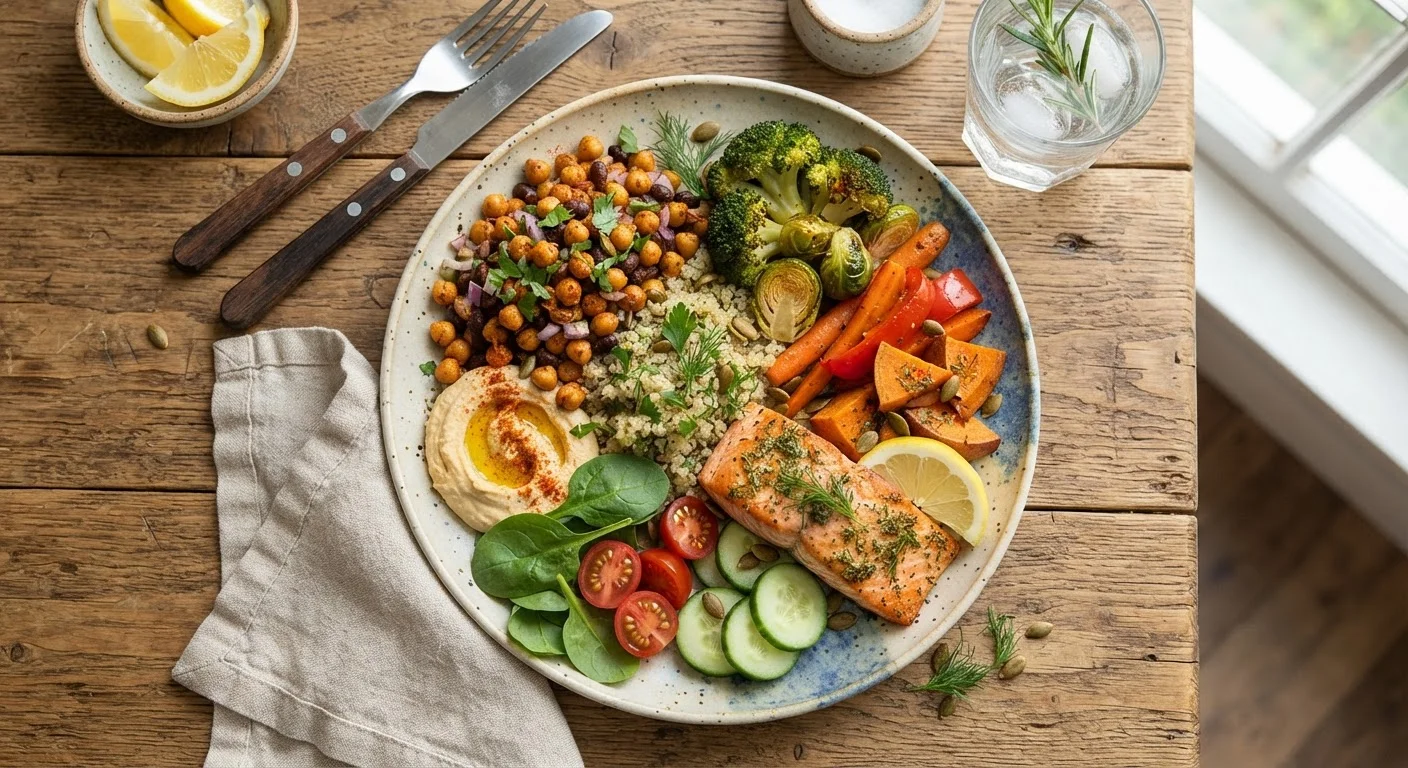
- Color variety on your plate is a practical proxy for micronutrient breadth and phytonutrient diversity.
- Protein quality, fiber content, and healthy fats all contribute independently to a genuinely nourishing meal.
- Building a nutrient-dense plate is a flexible framework, not a rigid prescription — consistency matters more than perfection.
What Nutrient Density Actually Means
Calorie counting has dominated nutrition conversations for decades, but it tells only a fraction of the story. A 200-calorie handful of almonds and a 200-calorie serving of plain crackers are calorically identical — yet nutritionally worlds apart. The concept of nutrient density captures this gap: it describes how many beneficial nutrients — vitamins, minerals, fiber, protein, and health-supportive compounds — a food delivers relative to its caloric content.
Foods high in nutrient density pack meaningful quantities of multiple micronutrients into relatively few calories. Dark leafy greens, legumes, eggs, oily fish, berries, and whole grains consistently rank high on this dimension. Ultra-processed foods — even when fortified — typically deliver isolated nutrients stripped of the complementary compounds found in whole-food sources. Understanding this distinction moves the conversation from "how much am I eating?" to "what is my food actually doing for me?"
For a broader framework on sustainable eating habits, see the complete guide to sustainable daily nutrition.
Core Principles for Building a Nourishing Plate
Applying nutrient-density thinking doesn't require a nutrition degree. The following practices translate the science into straightforward habits you can use at any meal.
Fill at least half your plate with non-starchy vegetables and fruits.
Vegetables and fruits deliver vitamins, minerals, fiber, and phytonutrients — plant compounds associated with reduced inflammation and chronic disease risk. Prioritizing them over refined starches and processed foods shifts the nutrient-to-calorie ratio of a meal substantially.
Choose color variety deliberately, not just incidentally.
Different pigments in plant foods correspond to distinct families of phytonutrients — anthocyanins in purple and blue foods, carotenoids in orange and yellow foods, chlorophyll and sulforaphane in green vegetables. Eating across the color spectrum is the simplest way to achieve phytonutrient breadth without tracking individual compounds.
Include a quality protein source at every meal.
Protein supports muscle maintenance, immune function, and satiety. Not all proteins are equivalent — animal proteins generally provide all essential amino acids, while plant proteins often require thoughtful pairing or variety across the day to meet the full amino acid profile.
Prioritize whole grains over refined grain products.
Whole grains retain their bran and germ, preserving B vitamins, magnesium, iron, and fiber that are substantially reduced during refining. Regular whole grain consumption is associated with better glycemic response and improved gut microbiome diversity.
Include a source of healthy fat to support fat-soluble vitamin absorption.
Vitamins A, D, E, and K require dietary fat for absorption. Eating a fat-free salad with no dressing may significantly reduce the body's ability to absorb the fat-soluble nutrients present in the vegetables. Small amounts of olive oil, avocado, nuts, or seeds address this.
“The best diet is one that is rich in whole, minimally processed foods — vegetables, fruits, legumes, whole grains, nuts, and seeds — and low in ultra-processed products. The evidence consistently points in that direction regardless of macronutrient ratios.”
— Walter Willett, Professor of Epidemiology and Nutrition, Harvard T.H. Chan School of Public Health
Quick Wins You Can Apply Today
Even modest adjustments to your current eating pattern can meaningfully shift the nutrient profile of your meals. The changes below require no special equipment, no rigid meal plan, and no major disruption to your routine.
For those navigating a demanding schedule, building habits that actually stick offers practical strategies tailored to time-pressed adults. And if you'd like to sharpen your ability to evaluate foods at the store, reading food labels without getting lost in the fine print provides a plain-language walkthrough of nutrition panels and ingredient lists.
57%
Calories from ultra-processed foods in average US diet
Research published in the BMJ estimated that ultra-processed foods account for more than half of total daily caloric intake among US adults, largely displacing more nutrient-dense options.
1 in 10
US adults meeting vegetable intake recommendations
According to CDC data, only about one in ten American adults consumes the recommended daily amounts of vegetables, highlighting a widespread nutrient density gap in typical diets.
This article is for general informational and educational purposes only and is not a substitute for professional medical or dietary advice. Consult a qualified healthcare provider or registered dietitian before making significant changes to your diet, especially if you have an existing health condition.