

Key Takeaways
- Antioxidants are real compounds that protect cells, but the 'superfood' label is a marketing term, not a scientific one.
- Higher antioxidant intake from whole foods is associated with health benefits; high-dose supplements show a much murkier picture.
- ORAC scores — once used to rank antioxidant foods — were abandoned by the USDA in 2012 as misleading.
- Dietary variety across colorful plant foods delivers broader antioxidant benefit than focusing on one 'super' ingredient.
- Emerging research on antioxidants is promising but often based on lab or animal studies that don't yet translate to clear human health guidance.
What Antioxidants Actually Are
Antioxidants are molecules that can neutralize free radicals — unstable compounds produced naturally during metabolism and amplified by exposures like cigarette smoke, UV radiation, and pollution. Left unchecked, free radicals can damage DNA, proteins, and cell membranes in a process called oxidative stress, which is implicated in aging and numerous chronic diseases.
The category is broad. Vitamin C, vitamin E, beta-carotene, selenium, and polyphenols like flavonoids and resveratrol all function as antioxidants — but through different mechanisms, in different tissues, at different concentrations. Lumping them under one umbrella label, as much superfood marketing does, obscures meaningful distinctions in how they work and what evidence actually supports.
The body also produces its own antioxidant enzymes. Diet contributes substantially, but it's one input into a complex, self-regulating system — not a simple top-up mechanism.
Myth
Foods with higher antioxidant scores are measurably healthier for you.
Fact
Antioxidant scores like ORAC measure activity in a test tube, not absorption or effect in the human body.
The USDA withdrew its widely cited ORAC database in 2012, explicitly stating that these values had "no relevance to the effects of specific bioactive compounds" in the human body. Digestion, metabolism, and individual biology determine how much antioxidant activity actually occurs at the cellular level — a process that cannot be inferred from a laboratory score.
Myth
Taking antioxidant supplements gives you the same benefits as eating antioxidant-rich foods.
Fact
Whole foods deliver antioxidants alongside fiber and co-nutrients that interact in ways supplements cannot replicate.
Research consistently finds that isolated antioxidant supplements do not reproduce the health associations seen with whole-food diets. High-dose supplements have, in some clinical trials, produced adverse outcomes — particularly high-dose beta-carotene in smokers and high-dose vitamin E in general populations. The matrix effect of whole foods — the interaction among hundreds of compounds — appears to be fundamental to observed benefits.
Myth
More antioxidants are always better, so it's worth maximizing intake through any means.
Fact
Antioxidants function within tightly regulated biological systems; excessive amounts can disrupt normal cellular signaling.
Free radicals, while damaging in excess, also play legitimate roles in immune response and cellular communication. Flooding the body with high-dose antioxidants can blunt these beneficial processes. Research has also found that very high antioxidant intake around exercise may reduce some of the adaptive benefits of physical training. Balance — achieved naturally through varied whole-food intake — is supported by evidence; maximization is not.
Myth
The 'superfood' designation means a food has proven disease-preventing properties.
Fact
Superfood is an unregulated marketing term with no scientific or regulatory standing.
No health authority — including the FDA, EFSA, or WHO — recognizes superfood as a meaningful category. Foods marketed this way are often nutritious, but the label reflects commercial positioning rather than clinical evidence. The health associations seen in studies are almost always with overall dietary patterns, not with consuming large quantities of any single ingredient.
Myth
Exotic imported berries and powders are superior antioxidant sources compared to everyday foods.
Fact
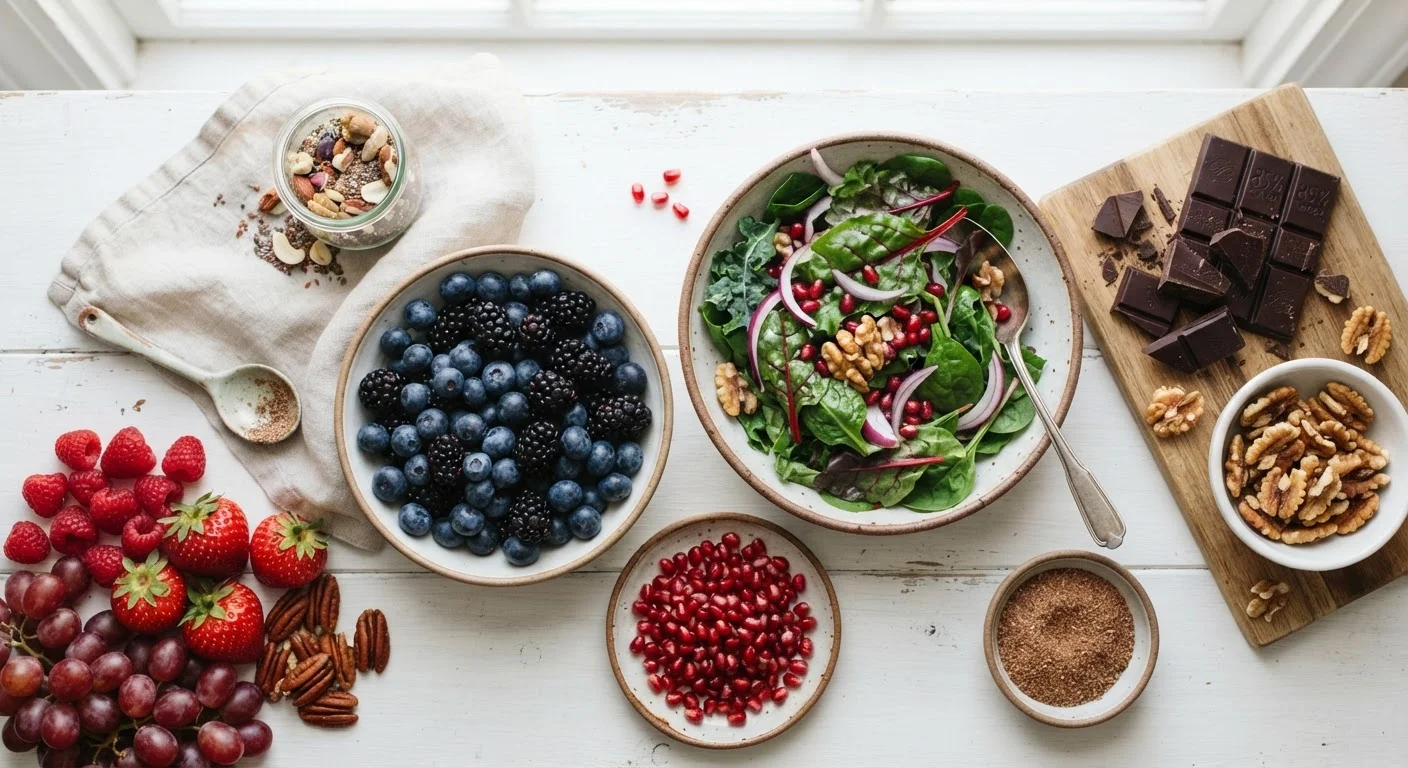
Commonplace foods like blueberries, red cabbage, spinach, and black beans are excellent antioxidant sources.
Marketing has successfully positioned high-cost exotic ingredients — acai, goji berries, maqui — as uniquely potent. While these foods can be part of a healthy diet, standard grocery-store produce provides comparable antioxidant diversity. Blueberries, for example, have a substantial body of research supporting their antioxidant and cardiovascular-adjacent properties. Spending more does not reliably translate into meaningfully greater health benefit.
Why the Superfood Label Misleads
The term superfood has no regulatory or scientific definition. It's a marketing designation applied to foods associated with high antioxidant content, often using a metric called the ORAC score (Oxygen Radical Absorbance Capacity). The USDA removed its ORAC database in 2012, noting that antioxidant capacity measured in a test tube doesn't predict what happens in the human body after digestion and absorption.
2012
Year USDA removed ORAC database
The USDA discontinued its antioxidant ORAC database, stating the scores were being misused to make unsubstantiated health claims.
~90%
US adults not meeting vegetable intake targets
According to CDC dietary surveillance data, the vast majority of American adults fall short of recommended daily vegetable consumption.
That doesn't mean blueberries, pomegranates, or dark leafy greens aren't genuinely nutritious. They are. The problem is the causal leap from "high in antioxidants" to "prevents disease" — a leap the current evidence rarely supports cleanly. Observational studies consistently show that people who eat more antioxidant-rich plant foods have lower rates of cardiovascular disease and certain cancers, but those diets also tend to be lower in processed foods and higher in fiber, so isolating one variable is difficult.
For a broader framework on reading nutrition evidence critically, see how to evaluate conflicting nutrition advice.
The Supplement Problem
If antioxidants are beneficial, shouldn't concentrated antioxidant supplements amplify those benefits? The clinical evidence says no — and in some cases, the opposite.
High-Dose Antioxidant Supplements Carry Real Risks
Clinical trials have linked high-dose beta-carotene supplements to increased lung cancer risk in smokers, and high-dose vitamin E supplementation has been associated with adverse outcomes in some populations. These are not theoretical concerns — they emerged from large, well-designed randomized trials. Do not self-prescribe high-dose antioxidant supplements, and consult a healthcare provider before adding any supplement to your routine.
Large randomized trials of high-dose beta-carotene supplements in smokers found increased lung cancer risk. High-dose vitamin E supplementation has been associated in some studies with slightly elevated prostate cancer risk and all-cause mortality. The National Institutes of Health notes that antioxidants from food are consistently associated with health benefits, while the evidence for high-dose supplements is inconsistent and sometimes harmful.
One likely explanation: antioxidants operate within finely balanced systems. At physiological concentrations found in food, they protect cells; at pharmacological doses from supplements, they may interfere with normal signaling processes or even promote oxidation under certain conditions. This is a key reason why regulatory bodies generally caution against high-dose supplementation without medical oversight.
This dynamic — where whole-food sources outperform isolated compounds — also appears in research on other botanicals. For perspective on a related example, see what clinical research shows about turmeric and ginger.
What a Practical, Evidence-Based Approach Looks Like
The most consistent finding across nutrition research is that dietary patterns matter more than individual nutrients. Diets high in varied colorful vegetables, fruits, legumes, whole grains, nuts, and seeds deliver a broad spectrum of antioxidants alongside fiber, vitamins, minerals, and phytonutrients that interact synergistically. This is a central feature of the Mediterranean dietary pattern, which has one of the strongest evidence bases in nutritional science — reviewed in detail in our breakdown of Mediterranean diet research.
Practical guidance grounded in current evidence:
- Prioritize variety — different pigments (red, purple, orange, green) signal different antioxidant classes.
- Choose whole foods over supplements unless a documented deficiency or specific medical need exists.
- Minimize foods that increase oxidative stress: heavily processed items, refined carbohydrates, and excessive alcohol.
- Cooking method matters — some antioxidants are heat-sensitive (vitamin C), while others become more bioavailable with light cooking (lycopene in tomatoes).
No single food will compensate for an overall poor dietary pattern, and no superfood label changes that equation. Consistent eating habits across a variety of plants is where the evidence reliably points.
This article is for informational purposes only and does not constitute medical advice. Consult a qualified healthcare professional before making significant dietary changes, particularly if you have a health condition or take medications.