

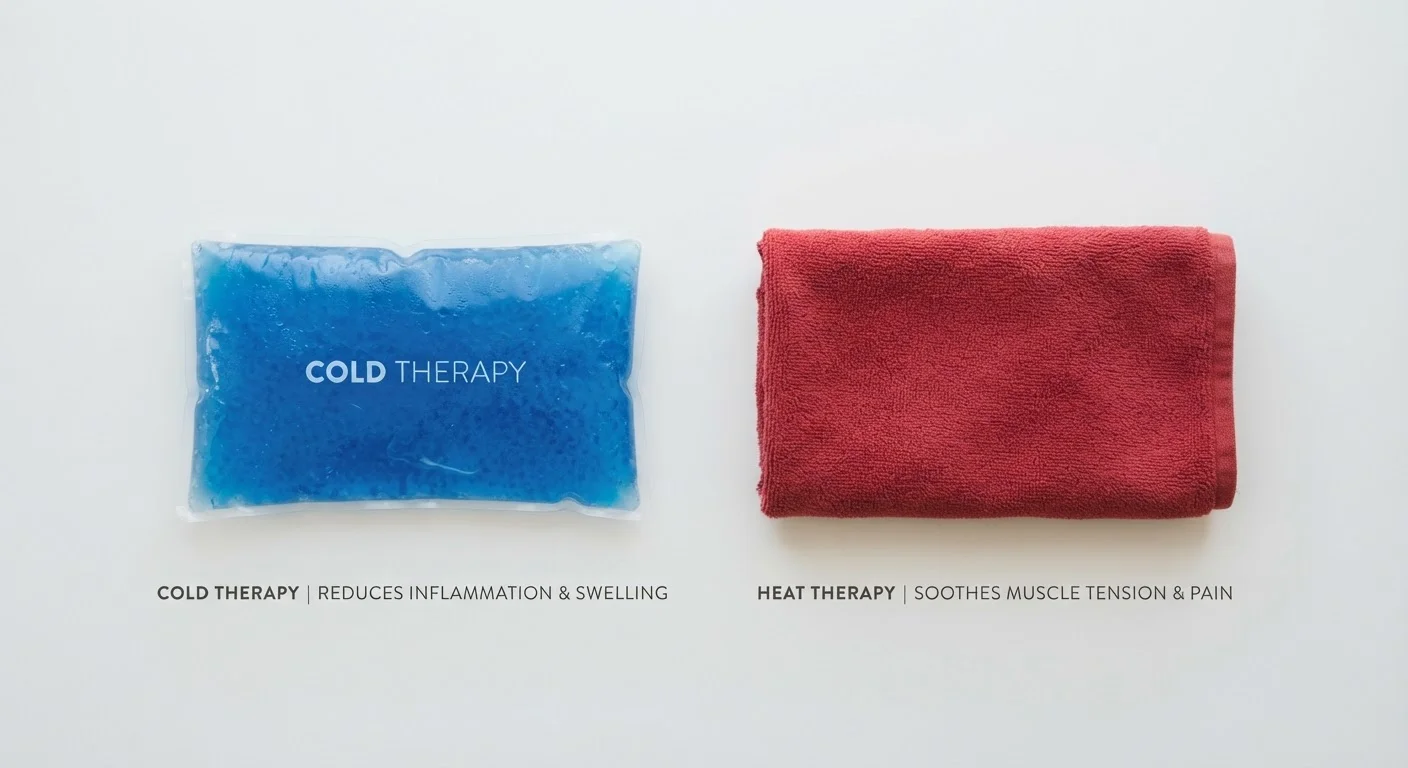
Key Takeaways
- Cold compresses reduce blood flow and inflammation, making them appropriate for acute injuries within the first 48–72 hours.
- Warm compresses increase circulation and relax muscle tissue, suited for chronic pain and stiffness rather than fresh injuries.
- Applying heat to a new injury can worsen swelling; applying cold to a muscle spasm may increase tension.
- Neither compress type is a substitute for medical evaluation when pain is severe, persistent, or unexplained.
- Both methods carry safety considerations, including risks of skin burns or frostbite from improper use.
Option A
Cold Compress
The inflammation-fighter for acute injuries and swelling.
Best for: Best for fresh injuries, acute swelling, and conditions where reducing blood flow and numbing pain is the priority.
Option B
Warm Compress
The tension-reliever for chronic pain and muscle stiffness.
Best for: Best for chronic muscle aches, stiffness, and conditions where increasing circulation and relaxing tissue is beneficial.
If you've just sprained an ankle or sustained a fresh bruise
Cold Compress
Cold reduces acute swelling and numbs sharp pain in the first 48–72 hours. Heat applied at this stage can increase inflammation and worsen the injury.
If you're dealing with chronic neck stiffness or persistent lower back tension
Warm Compress
Heat promotes blood flow, relaxes muscle fibers, and eases stiffness — effects that are counterproductive in acute injury but valuable for ongoing muscular discomfort.
If you have a tension headache or jaw tightness
Warm Compress
A warm compress applied to the back of the neck or jaw can help relax contracted muscles contributing to tension-type headaches.
If you experience post-exercise soreness 24–48 hours after a workout
Warm Compress
Delayed-onset muscle soreness (DOMS) involves micro-inflammation that has already peaked; gentle heat can ease residual tightness without worsening tissue damage.
If you have a minor insect sting or localized allergic skin reaction
Cold Compress
Cold slows histamine response at the local level and provides numbing relief from itching and stinging without stimulating additional blood flow to the area.
How Each Compress Works: The Physiology
The choice between cold and heat is not simply about comfort preference — each compress type triggers a distinct physiological response that can either support or hinder recovery depending on the situation.
Cold compresses work through vasoconstriction — the narrowing of blood vessels beneath the skin. This slows blood flow to the area, which limits the accumulation of fluid in tissue (edema) and reduces localized inflammation. Cold also slows nerve conduction velocity, which is why it produces a numbing effect on acute pain. These mechanisms are most useful in the immediate aftermath of an injury, typically within the first 48 to 72 hours.
Warm compresses produce the opposite response: vasodilation, or widening of blood vessels. Increased blood flow brings oxygen and nutrients to the area, promotes the removal of metabolic waste, and raises the extensibility of connective tissue — making it easier to move stiff joints and relax contracted muscles. This is why heat feels relieving for chronic tightness but can be harmful when applied to a fresh injury, where it risks increasing swelling.
| Criterion | Cold Compress | Warm Compress |
|---|---|---|
| Primary mechanism | Vasoconstriction, numbing | Vasodilation, relaxation |
| Best timing | First 48–72 hours post-injury | Chronic or subacute pain |
| Effect on swelling | Reduces swelling | Can increase swelling if acute |
| Effect on muscle tension | May increase tension | Reduces tension and spasm |
| Pain relief mechanism | Slows nerve conduction | Promotes circulation, relaxes tissue |
| Risk if misapplied | Frostbite, increased stiffness | Increased inflammation, burns |
| Recommended session length | 15–20 minutes maximum | 15–20 minutes maximum |
For a broader comparison of cold and heat therapies at the systemic level, see our article on cold exposure vs. heat therapy.
When to Use a Cold Compress
Cold compresses are generally appropriate when tissue is acutely injured, actively swollen, or producing sharp, localized pain. Common scenarios include:
- Sprains and strains — particularly within the first two to three days, when swelling and inflammation are at their peak.
- Bruising — cold can slow the spread of blood under the skin and limit bruise size if applied promptly.
- Minor burns — cool (not ice-cold) water or a cloth compress may reduce heat retained in the tissue.
- Swollen joints — for conditions such as gout flares or acute bursitis, cold can help manage reactive swelling.
- Insect stings and skin reactions — cold reduces local histamine-driven responses and dulls itching.
Safety note: Never apply ice directly to bare skin. Always wrap ice or a gel pack in a cloth and limit application to 15–20 minutes at a time to prevent frostbite or nerve damage. People with conditions affecting skin sensation should use extra caution and consult a healthcare provider before regular cold application.
The RICE Method and Cold Therapy
Cold compresses are a core component of the traditional RICE protocol (Rest, Ice, Compression, Elevation) for acute soft-tissue injuries. More recent frameworks such as PEACE & LOVE have refined this guidance, suggesting that some inflammation is a necessary part of healing. This means aggressive icing to entirely suppress inflammation may not always be ideal. Discuss the most current approach with a physiotherapist or sports medicine professional if you're managing a significant injury.
When to Use a Warm Compress
Heat is most appropriate when the goal is to relax muscle tissue, restore mobility, or address chronic rather than acute pain. Suitable applications include:
- Muscle stiffness and spasms — warmth reduces muscle spindle sensitivity, which can ease involuntary tightness.
- Chronic lower back and neck pain — research suggests moist heat can provide short-term relief for non-specific low back pain.
- Tension headaches — a warm compress at the base of the skull or across the shoulders may relieve muscle-driven head pain.
- Menstrual cramps — heat applied to the lower abdomen has reasonably good evidence for reducing cramping pain by relaxing uterine muscle.
- Delayed-onset muscle soreness (DOMS) — once the acute inflammatory phase has passed (typically 48+ hours after exercise), gentle heat can ease residual tightness.
Safety note: Heat should not be applied to open wounds, inflamed or infected skin, areas with impaired sensation, or any acutely swollen injury. Limit sessions to 15–20 minutes and avoid falling asleep with a heating pad to prevent burns. For broader plant-based and topical approaches to muscle recovery, explore our guide to natural topical treatments for muscle soreness.
Common Mistakes and When to See a Professional
The most frequent error is applying heat to a fresh injury out of instinct — heat feels soothing, but in the acute phase it amplifies inflammation and swelling. Equally, applying ice to a chronically stiff or spasmed muscle can cause the tissue to contract further rather than relax.
If you're unsure whether your pain is acute or chronic, erring toward a neutral approach — rest, gentle movement — is safer than guessing wrong with temperature therapy.
Seek professional evaluation if:
- Pain is severe, does not respond to basic home care, or worsens over 48–72 hours.
- Swelling is accompanied by significant bruising, deformity, or inability to bear weight.
- You experience recurring pain in the same location without clear cause.
- You have underlying conditions such as diabetes, peripheral neuropathy, circulatory disorders, or are pregnant.
For readers interested in combining temperature therapy with other recovery modalities, our comparison of cold therapy, foam rolling, and stretching explores how these tools interact. Those dealing with bruising or sprains may also find value in our look at arnica vs. comfrey for bruises and sprains.
This article is for general informational purposes only and does not constitute medical advice. Always consult a qualified healthcare professional for guidance on personal health conditions, symptoms, or treatment decisions.