

Key Takeaways
- Research supports meditation's ability to lower cortisol and reduce perceived stress over time.
- Benefits typically require consistent practice — occasional sessions produce limited lasting change.
- Meditation does not replace professional mental health treatment for clinical anxiety or depression.
- Even five to ten minutes daily can begin to shift how your nervous system responds to stress.
- Meditation works best as one part of a broader stress management strategy, not a standalone fix.
Activates the body's relaxation response quickly
Even brief meditation sessions can shift the nervous system from sympathetic (fight-or-flight) to parasympathetic (rest-and-digest) activity. This lowers heart rate and reduces the physical tension that accompanies stress.
Reduces perceived stress with consistent practice
Multiple controlled studies, including research on Mindfulness-Based Stress Reduction (MBSR), show that participants report meaningfully lower perceived stress after eight weeks of structured practice.
Improves emotional regulation over time
Regular meditators show changes in brain regions associated with emotional processing. This can make it easier to pause before reacting, rather than being swept along by stress responses.
Requires no equipment and very little time
A five-minute focused breathing practice at a desk or on a commute counts. Unlike many wellness habits, meditation has almost no barrier to entry for busy adults.
Complements other stress relief strategies well
Meditation pairs effectively with exercise, journaling, and breathwork, often amplifying the benefits of each when used together as part of a consistent routine.
Benefits fade without regular, sustained practice
Research consistently shows that stress-reduction gains from meditation are tied to ongoing practice. Sporadic sessions provide limited durable change, which frustrates many beginners.
Not effective as standalone treatment for clinical conditions
Meditation is not a substitute for evidence-based treatment of clinical anxiety, depression, or PTSD. For these conditions, professional evaluation and therapy remain essential first steps.
Can feel difficult or uncomfortable at first
Sitting with thoughts rather than escaping them can initially increase awareness of stress rather than reduce it. Some people find early sessions frustrating, leading them to abandon the practice prematurely.
Effect sizes in research are modest, not dramatic
A widely cited meta-analysis found meditation's effects on anxiety and stress are real but moderate — comparable to other active treatments, not dramatically superior to them.
Rare adverse effects have been documented
A small proportion of practitioners, particularly those with trauma histories, report increased anxiety or distressing thoughts during intensive practice. Guidance from a qualified instructor can reduce this risk.
Our Verdict
Meditation is one of the better-studied, most accessible tools available for everyday stress management. The evidence for regular practice is solid enough to recommend it with confidence — but it's not a cure, and it isn't right for every person or every moment. Approached honestly, with realistic expectations, it can meaningfully improve how you experience and recover from daily stress.
Meditation is best suited to adults dealing with everyday stress who are willing to practice consistently and want a low-cost, science-supported habit they can build into any schedule.
What the Evidence Actually Shows
Meditation has accumulated a meaningful body of research behind it — more than most wellness practices. Studies on Mindfulness-Based Stress Reduction (MBSR), a structured eight-week program developed at the University of Massachusetts Medical School, consistently show reductions in self-reported stress, anxiety, and emotional exhaustion. The physiological side is real too: regular practice is associated with lower cortisol levels and reduced blood pressure in stressed populations.
That said, effect sizes are generally moderate. A large meta-analysis published in JAMA Internal Medicine found mindfulness meditation programs produced meaningful but not dramatic improvements in anxiety, depression, and pain — roughly comparable to other active interventions. Meditation is not a breakthrough cure; it's a reliable, low-risk tool. For a broader look at where the research stands across multiple techniques, see stress relief techniques backed by research.
~38%
Reduction in perceived stress (MBSR research)
A frequently cited clinical trial found participants in an eight-week MBSR program reported roughly 38% lower perceived stress scores compared to baseline.
8 weeks
Minimum practice period for measurable change
Most well-designed meditation studies use an eight-week intervention period before measuring meaningful psychological or physiological outcomes.
5–10 min
Daily practice linked to beginner stress benefits
Research on brief interventions suggests even short daily sessions can begin reducing stress reactivity in people new to meditation, provided the practice is consistent.
The Real Advantages of a Regular Practice
What makes meditation genuinely useful for busy adults is its accessibility. There's no equipment, no gym membership, and no minimum session length that disqualifies you. Research on brief mindfulness interventions suggests five to ten consistent minutes daily can begin shifting stress reactivity — the speed and intensity with which your body responds to perceived threats.
Over weeks of practice, meditators tend to develop stronger emotional regulation. Brain imaging studies have found changes in the prefrontal cortex and amygdala — regions involved in emotional processing and the stress response — in long-term practitioners. You don't need months to feel something shift, but you do need consistency.
Activates the body's relaxation response quickly
Even brief meditation sessions can shift the nervous system from sympathetic (fight-or-flight) to parasympathetic (rest-and-digest) activity. This lowers heart rate and reduces the physical tension that accompanies stress.
Reduces perceived stress with consistent practice
Multiple controlled studies, including research on Mindfulness-Based Stress Reduction (MBSR), show that participants report meaningfully lower perceived stress after eight weeks of structured practice.
Improves emotional regulation over time
Regular meditators show changes in brain regions associated with emotional processing. This can make it easier to pause before reacting, rather than being swept along by stress responses.
Requires no equipment and very little time
A five-minute focused breathing practice at a desk or on a commute counts. Unlike many wellness habits, meditation has almost no barrier to entry for busy adults.
Complements other stress relief strategies well
Meditation pairs effectively with exercise, journaling, and breathwork, often amplifying the benefits of each when used together as part of a consistent routine.
Meditation also integrates well with other strategies. If you already journal or use breathwork, meditation can deepen both practices. For a side-by-side comparison with another well-studied option, see how meditation compares to progressive muscle relaxation.
Where Meditation Falls Short
Honesty matters here: meditation is not for everyone in every situation, and overstating its benefits does readers a disservice.
Benefits fade without regular, sustained practice
Research consistently shows that stress-reduction gains from meditation are tied to ongoing practice. Sporadic sessions provide limited durable change, which frustrates many beginners.
Not effective as standalone treatment for clinical conditions
Meditation is not a substitute for evidence-based treatment of clinical anxiety, depression, or PTSD. For these conditions, professional evaluation and therapy remain essential first steps.
Can feel difficult or uncomfortable at first
Sitting with thoughts rather than escaping them can initially increase awareness of stress rather than reduce it. Some people find early sessions frustrating, leading them to abandon the practice prematurely.
Effect sizes in research are modest, not dramatic
A widely cited meta-analysis found meditation's effects on anxiety and stress are real but moderate — comparable to other active treatments, not dramatically superior to them.
Rare adverse effects have been documented
A small proportion of practitioners, particularly those with trauma histories, report increased anxiety or distressing thoughts during intensive practice. Guidance from a qualified instructor can reduce this risk.
Meditation Is General Wellness Information, Not Medical Advice
The information in this article is intended for general educational purposes only. If you are experiencing symptoms of clinical anxiety, depression, or any other mental health condition, please consult a qualified healthcare professional. Meditation should complement — not replace — professional care when it's needed.
One of the most common misconceptions is that meditation alone can manage clinical-level anxiety or depression. It cannot reliably replace cognitive behavioral therapy, medication when indicated, or other evidence-based treatments. If your stress is significantly disrupting sleep, relationships, or work, a licensed mental health professional is the right first call — not a meditation app.
It's also worth checking your expectations against some popular stress myths. Many people arrive at meditation believing stress is purely a mindset issue that focused thinking can resolve. Stress relief myths that science has largely debunked explores why that framing is more complicated than it sounds.
How to Start Without Overcomplicating It
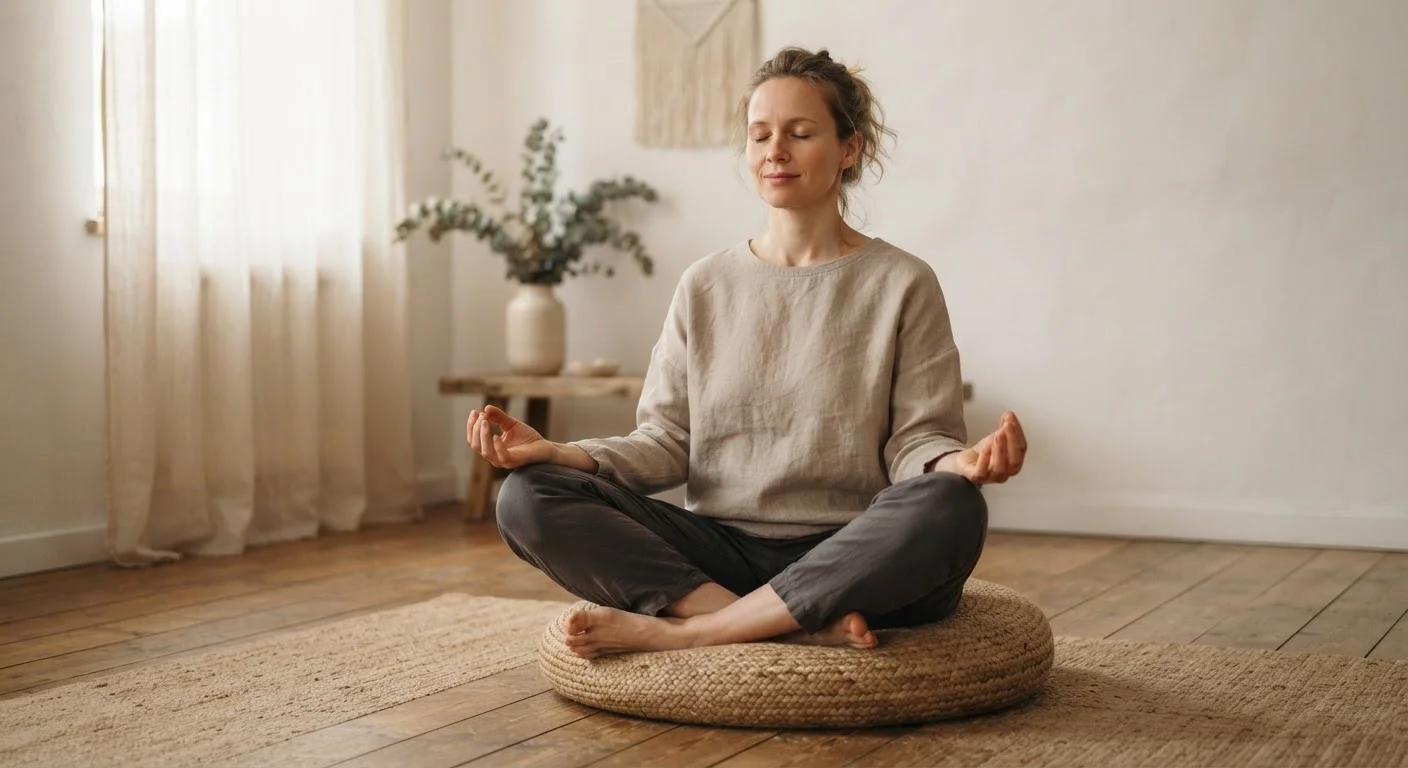
The best meditation practice is one you'll actually return to. For beginners, a simple breath-focused approach works well: sit comfortably, close your eyes, and direct attention to the physical sensation of breathing. When your mind wanders — and it will — gently return your focus without judgment. That return is the practice, not a failure of it.
Start with five minutes once a day, at a consistent time. Morning sessions before checking email or news can be particularly effective at setting a calmer baseline for the day. Apps and guided audio can help with structure early on, though they aren't required. Explore the full range of stress relief tools available to you, including journaling — which has its own set of advantages and limitations worth understanding.
This article is for general informational and educational purposes only and does not constitute medical or mental health advice. Always consult a qualified healthcare professional for guidance specific to your situation.