

Key Takeaways
- Mindfulness-based stress reduction (MBSR) has strong evidence for reducing perceived stress and anxiety symptoms.
- Slow, controlled breathing can activate the parasympathetic nervous system within minutes.
- Regular moderate exercise consistently shows stress-buffering effects across multiple study designs.
- Cognitive reframing, a core CBT skill, helps change stress responses at a thought level.
- Nature exposure has emerging evidence for lowering cortisol and improving mood.
- No single technique works for everyone — combining approaches tends to improve outcomes.
Why Evidence Matters When Choosing Stress Strategies
Stress management advice is everywhere, but not all of it is grounded in research. Some popular approaches have been rigorously tested across thousands of participants; others rest on anecdote or tradition. Knowing the difference helps you invest your limited time and energy in strategies that are genuinely likely to help — rather than simply feel appealing in the moment.
This overview covers techniques with meaningful research support, while being honest about where evidence is strong, where it is promising but still developing, and where gaps remain. It is not a substitute for professional mental health care. If your stress is severe, persistent, or interfering with daily functioning, please speak with a qualified healthcare provider. For a deeper look at combining these approaches, see our guide to building a personal stress toolkit.
Mindfulness-Based Stress Reduction (MBSR)
Developed in a clinical setting, MBSR is an eight-week structured program combining body-scan meditation, sitting meditation, and gentle movement. It is among the most studied behavioral stress interventions, with meta-analyses consistently showing meaningful reductions in self-reported stress, anxiety, and depressive symptoms across diverse populations.
The core skill is deliberate, non-judgmental attention to present-moment experience. This is thought to interrupt automatic stress-amplifying thought patterns. Even abbreviated versions — such as brief daily mindfulness check-ins — appear to offer some benefit, though formal programs tend to show larger effects in studies.
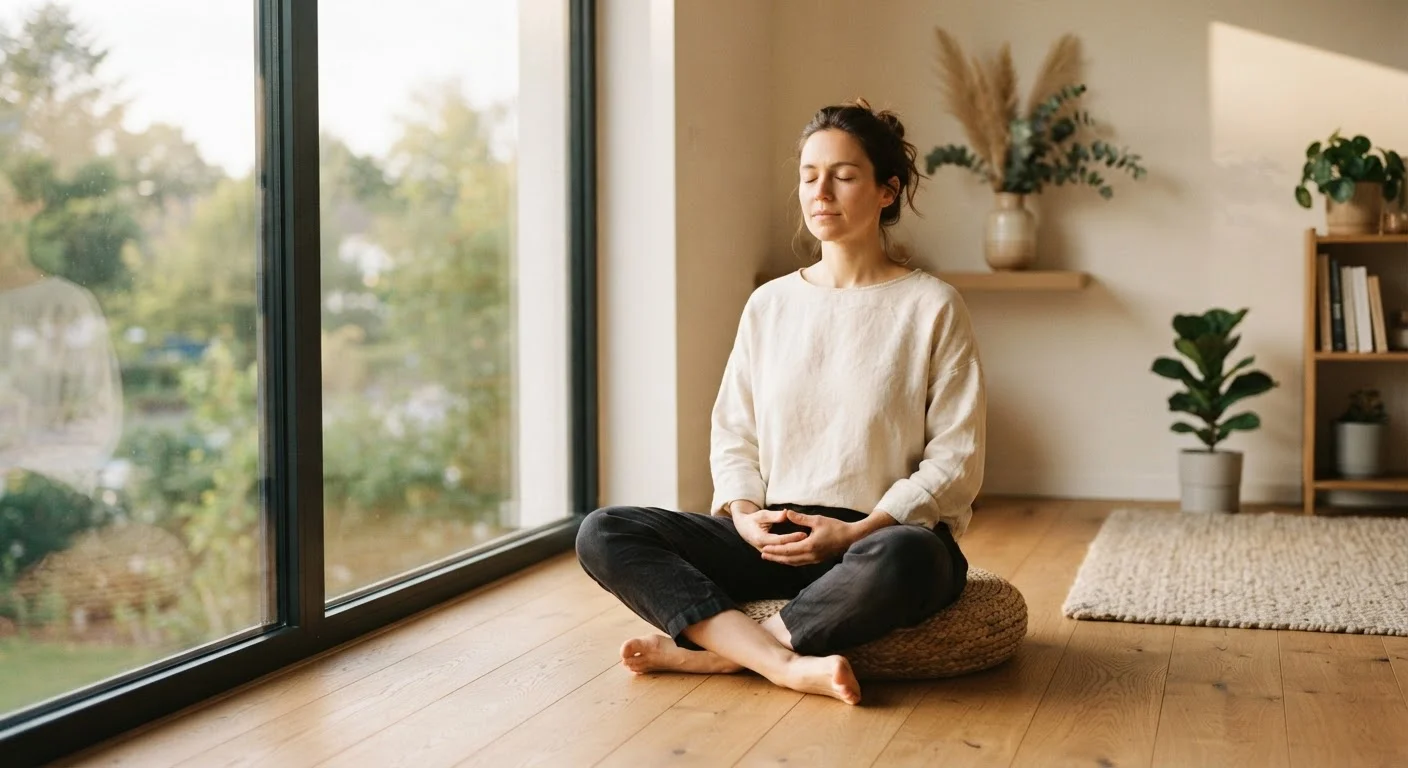
MBSR is one of the most studied behavioral interventions for reducing perceived stress and anxiety.
Slow, Controlled Breathing (Diaphragmatic and Paced Breathing)
Deliberately slowing the breath — typically to around five to six breaths per minute — engages the vagus nerve and can shift the nervous system toward a calmer parasympathetic state. Research on paced breathing has found reductions in heart rate variability markers of stress and self-reported anxiety within a single session.
Techniques such as box breathing (inhale four counts, hold four, exhale four, hold four) and the physiological sigh (double inhale through the nose followed by a long exhale) are simple enough to practice anywhere. The evidence here is promising and the risk profile is very low, making it a practical first step for most adults.
Slowing the breath to around five breaths per minute can shift nervous system state within minutes.
Cognitive Behavioural Techniques (CBT-Based Approaches)
Cognitive behavioural therapy is among the most extensively researched psychological treatments for stress, anxiety, and low mood. Its core insight: the way we interpret a situation shapes our stress response as much as the situation itself. Identifying and gently questioning unhelpful thought patterns — such as catastrophising or all-or-nothing thinking — can reduce emotional reactivity over time.
Self-guided CBT tools, including structured journaling and thought records, have shown benefit in several trials even without a therapist. That said, working with a trained therapist tends to produce larger and more durable effects, particularly for more complex presentations. For perspective on when professional input becomes important, see our look at common stress relief myths.
Identifying and questioning unhelpful thought patterns is a well-supported way to reduce emotional reactivity.
Regular Moderate Exercise
The stress-buffering effects of physical activity are among the most replicated findings in behavioral health research. Aerobic exercise appears to reduce baseline cortisol reactivity, improve mood through endorphin and monoamine pathways, and support better sleep — itself a critical stress buffer. Even a single bout of moderate activity can produce measurable short-term reductions in anxiety.
Studies suggest that consistency over weeks and months drives the most meaningful changes. The type of exercise matters less than regularity: walking, cycling, swimming, and dancing all appear in the supporting literature. Resistance training also shows emerging stress-reduction benefits, though aerobic exercise has a larger evidence base in this specific context.
Consistent moderate exercise reduces baseline cortisol reactivity and supports better mood over time.
Nature Exposure and Green Space
Spending time in natural environments — parks, forests, coastal areas — is associated in observational and experimental studies with lower cortisol levels, reduced rumination, and improved subjective wellbeing. The Japanese practice of shinrin-yoku (forest bathing) has been studied with physiological measures including salivary cortisol and blood pressure, with generally positive results.
The evidence is promising but still developing: most studies are relatively small, and mechanisms are not fully established. Current findings suggest even short exposures — twenty to thirty minutes in a green or natural setting — may offer measurable benefit. Urban residents with limited access to nature may gain some effect from parks or tree-lined streets, though this is less well studied.
Even short periods in natural settings are associated with lower cortisol and reduced rumination in early research.
Social Connection and Emotional Support
A robust body of research links perceived social support to lower stress reactivity and better mental health outcomes. Close relationships appear to act as a physiological buffer: interacting with trusted others can reduce cortisol responses to stressors, and loneliness is associated with elevated stress markers. This holds across age groups and cultures in population studies.
Importantly, quality appears to matter more than quantity. A few reliable, supportive relationships tend to be more protective than a large but superficial social network. For those with limited social support, structured group activities, community involvement, and peer support programs have shown some benefit in research contexts.
Close, reliable social relationships consistently appear as one of the strongest buffers against chronic stress.
Putting the Evidence Into Practice
Research consistently points to one practical reality: consistency matters more than perfection. A five-minute breathing exercise done daily tends to outperform a thirty-minute session done sporadically. Start with one technique, practice it regularly, and add others gradually rather than overhauling everything at once. Our companion piece on sustainable stress relief principles explores how to build this kind of durable resilience.
Start With One Technique
Attempting to adopt several new habits simultaneously often leads to none sticking. Choose the technique that fits most naturally into your current routine and practice it consistently for two to three weeks before adding another. Small, sustainable changes tend to compound into meaningful long-term shifts in how you experience and respond to stress.
It is also worth being realistic about what lifestyle adjustments alone can achieve. Stress rooted in significant trauma, unmanaged anxiety disorders, or chronic mental health challenges often requires professional support. For clarity on the types of professional help available, understanding the differences between therapy, coaching, and counselling is a useful starting point. And if you are curious about nutritional angles, what dietary research tells us about stress-supporting nutrients offers an honest look at that evidence.
This article is for general informational purposes only and does not constitute medical advice. Always consult a qualified healthcare professional for concerns about your mental or physical health.