

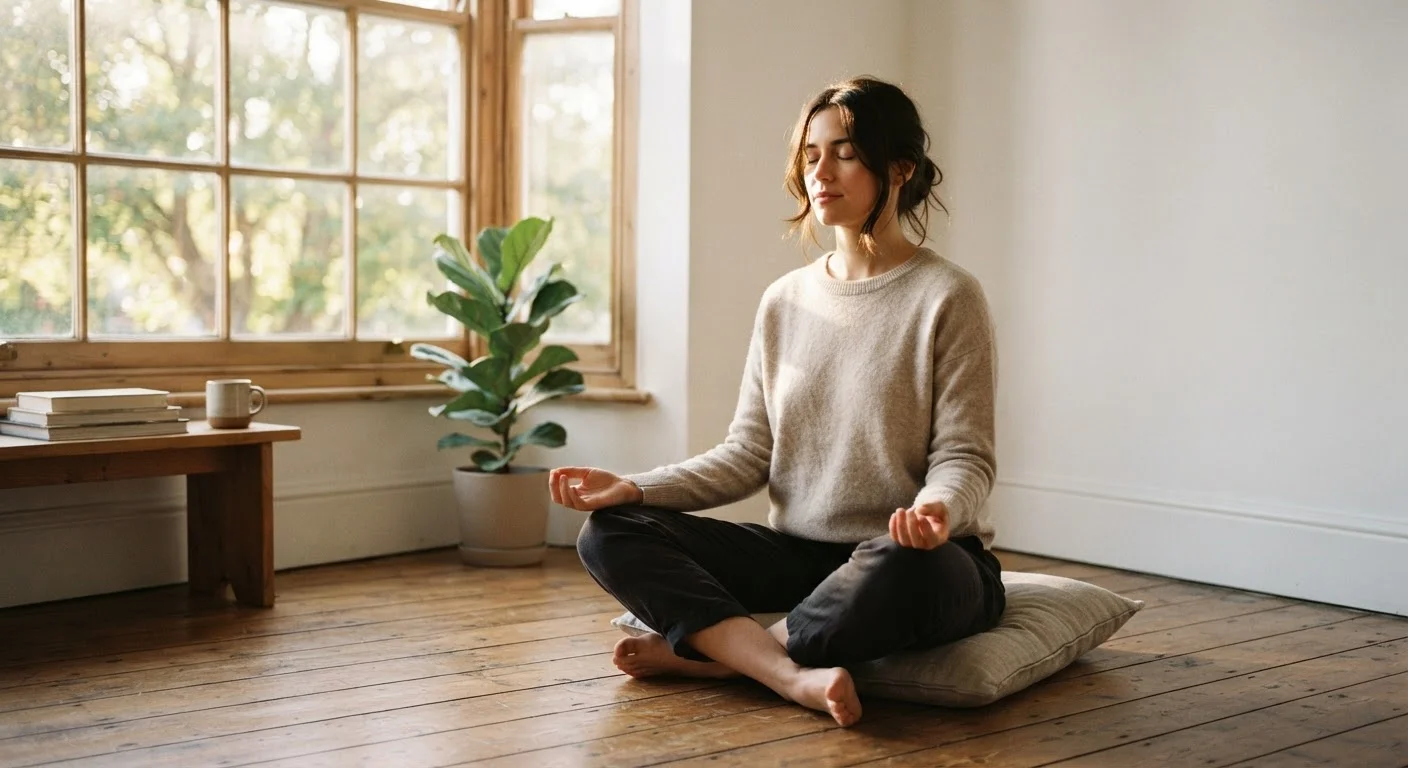
Key Takeaways
- A wandering mind during meditation is not failure — it is how the practice works.
- Noticing distraction and gently returning focus is the core skill meditation builds.
- Anchoring attention to the breath, body, or a sound gives the mind something concrete to return to.
- Short, consistent sessions are more effective than occasional long ones for building focus.
- Self-compassion during practice reduces frustration and makes sessions sustainable long term.
What you will need
Why Your Mind Wanders (and Why That's Not the Problem)
One of the most persistent myths about meditation is that a 'good' session is one where the mind stays perfectly quiet. In reality, the brain's default mode network — a set of regions active during rest and self-referential thought — keeps generating mental content even when you intend to be still. This is normal neurological function, not a character flaw.
What meditation actually trains is the ability to notice that you've been pulled away and to return without drama. Every redirect is a moment of mindfulness. The more often you practice that return, the more naturally it happens in daily life, including during stressful situations when you most need it. If you've been wondering whether a racing mind disqualifies you from meditating, see our piece on meditation myths that keep beginners from starting — it addresses this misconception directly.
This Is General Information, Not Medical Advice
The techniques described in this article are general mindfulness practices intended for educational purposes. If you experience significant anxiety, trauma responses, or difficulty functioning day-to-day, please consult a qualified mental health professional before starting a meditation practice.
What You'll Need Before You Begin
Meditation requires almost no equipment, but a few simple conditions lower the friction enough to make the practice stick. Review the list below before your first session.
What you will need
Timer or meditation app
Defines the session length so your attention stays inward rather than checking the clock.
Meditation cushion or supportive chair
Supports an upright, comfortable posture that keeps you alert without physical tension.
Notebook or journal
Useful for jotting recurring distracting thoughts before a session so the mind feels less compelled to hold them.
If background noise is a persistent barrier in your home or commute, the article on meditating in noisy environments offers specific adaptations worth reading first.
Step-by-Step: Working With a Restless Mind
The following steps walk you through a complete session designed specifically for people whose minds feel too busy to meditate. Follow them in order for your first several sessions, then adapt as you learn what works for you.
Prepare your space and body before sitting
Spend two minutes setting conditions that reduce unnecessary distraction. Silence your phone, close unnecessary tabs, and choose a seat where your spine can be upright without effort. Rest your hands on your thighs or in your lap. See the beginner's meditation preparation checklist for a fuller pre-session routine.
Choose a single anchor for your attention
Pick one concrete object of focus before you close your eyes. The most common choice for beginners is the physical sensation of breathing — the rise of the chest, the air passing through the nostrils, or the pause between breaths. Alternatively, a low ambient sound or the feeling of your feet on the floor works equally well. Committing to one anchor removes the mid-session decision of where to return when distracted.
Set a modest, realistic session length
Start with five minutes. Research on habit formation consistently shows that small, repeated actions build more durable routines than ambitious, infrequent ones. Use a gentle alarm tone so the session end doesn't jolt you. Once five-minute sessions feel comfortable on most days, extend gradually. The five-minute meditation formats for busy days article offers structured short formats if you need a template.
Notice when the mind wanders — without judgment
When you realize your attention has drifted to a plan, a worry, or a random memory, that moment of noticing is the practice. Neuroscientific research on the default mode network suggests the mind naturally wanders when not engaged in an external task — this is not a personal failing. Simply acknowledge the distraction with a neutral label ('thinking,' 'planning') and redirect.
Return gently to your anchor — every single time
The act of redirecting attention back to the breath or chosen anchor is the functional unit of meditation, equivalent to a repetition in strength training. Do it without self-criticism. If you notice frustration arising, acknowledge it ('frustration') and treat it as another thought to release before returning to the anchor. Consistent redirection, not sustained blankness, is what builds attentional skill over time.
Close the session with a brief transition moment
When the timer sounds, resist the urge to immediately pick up your phone or jump to the next task. Spend 30–60 seconds sitting quietly with eyes still closed, noticing how your body feels. Then open your eyes slowly and take one deliberate breath before moving. This transition helps carry the calmer mental state into the rest of your day rather than immediately dissolving it.
Label Thoughts to Loosen Their Grip
When a thought captures your attention, try silently naming its category — 'planning,' 'worry,' or 'memory.' Research in affective neuroscience suggests that labeling emotions and thoughts can reduce their intensity, making it easier to let them pass without following them down a mental rabbit hole.
Don't Force Stillness — It Backfires
Trying to suppress thoughts or demand mental silence during meditation typically increases mental tension rather than reducing it. The goal is gentle, non-judgmental awareness — not control. If a session feels distressing rather than merely challenging, it is fine to stop, move around, and try again later.
Building Consistency Without Burning Out
The most common reason new meditators quit isn't that the technique fails — it's that they set expectations too high and then interpret a hard session as evidence they 'can't do it.' Consistency across imperfect sessions outperforms perfection across rare ones. A helpful read on the subtle patterns that derail early practice is our article on things that make it harder to build a meditation habit.
If sitting-based meditation continues to feel inaccessible, movement-based approaches like gentle yoga can develop similar attentional skills. The complete guide to yoga for calm covers breath-linked movement practices that many people find easier to sustain. For broader stress-management tools that complement a meditation habit, explore the Stress Relief Tools hub.
This article is for general informational and educational purposes only and does not constitute medical or psychological advice. If you are experiencing significant mental health difficulties, please consult a qualified healthcare professional.