

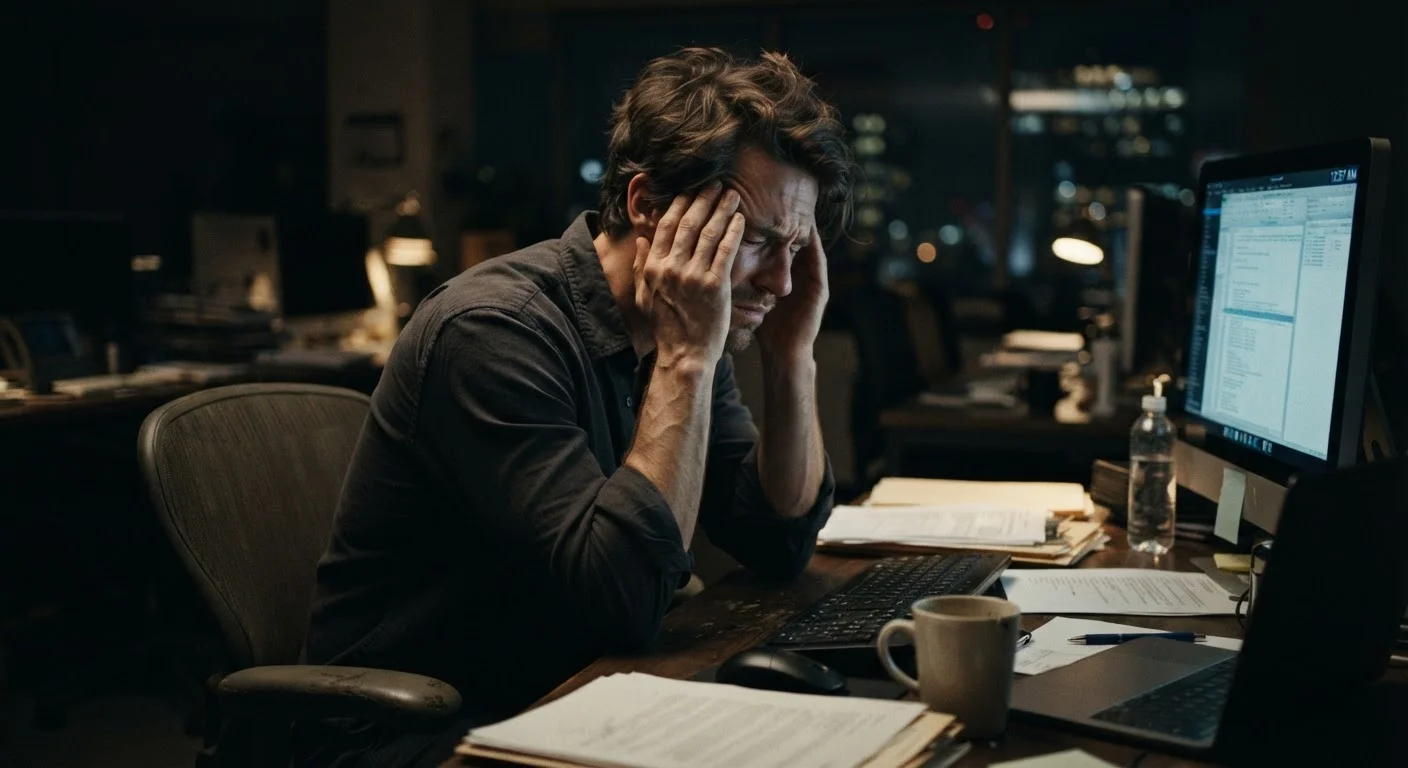
Key Takeaways
- Work stress is typically tied to specific pressures; burnout reflects a prolonged depletion of emotional and physical resources.
- Stress can still feel motivating — burnout is characterized by detachment, cynicism, and a sense that effort is pointless.
- Burnout does not resolve with a weekend off; it usually requires systemic changes to workload, support, or environment.
- Both conditions carry real health consequences, including disrupted sleep, hormonal shifts, and cardiovascular strain.
- Identifying which state you are in is the necessary first step before choosing a recovery strategy.
- A qualified mental health professional should be consulted if either condition is significantly impairing daily functioning.
Option A
Work Stress
The acute pressure state that still has an off switch.
Best for: Understanding short-to-medium-term strain tied to identifiable demands and workload spikes.
Option B
Burnout
The chronic depletion state that rest alone won't fix.
Best for: Recognizing a deeper erosion of motivation, identity, and emotional reserves requiring structured recovery.
If your strain is tied to a specific deadline or project
Work Stress
Identifiable, time-limited pressure suggests situational stress. Targeted recovery tools and workload management are typically effective.
If you feel emotionally numb or detached from work you used to care about
Burnout
Loss of meaning and chronic disengagement are hallmarks of burnout, which requires more than short-term stress relief strategies.
If a good night's sleep or a day off largely restores your energy
Work Stress
Responsiveness to rest indicates your recovery system is still intact — a strong signal this has not progressed to burnout.
If rest brings no relief and you've felt this way for months
Burnout
Persistent exhaustion that doesn't respond to conventional recovery is the clearest indicator of burnout requiring professional support.
If you still feel capable but overwhelmed
Work Stress
Retained sense of competence alongside high pressure points to stress rather than the efficacy collapse typical of burnout.
Why the Distinction Actually Matters
Most men chalk up persistent exhaustion, short tempers, and lost motivation to being "stressed at work" — a catch-all that can obscure what's really going on. Work stress and burnout are related, but they are not the same condition, and treating burnout as though it were ordinary stress is one of the most common reasons recovery stalls.
Understanding what's happening in your body under stress is a useful starting point, but the behavioral and emotional profile of each state diverges significantly. Stress tends to be energizing in short bursts — it sharpens focus and drives action. Burnout does the opposite. It produces a kind of flatness: effort feels pointless, care evaporates, and the usual recovery tools stop working.
The World Health Organization classifies burnout as an occupational phenomenon, not a medical diagnosis, defined by three dimensions: feelings of energy depletion or exhaustion, increased mental distance from one's job, and reduced professional efficacy. Work stress, by contrast, is a physiological and psychological response to demands that feel manageable — or at least survivable — with time and support. Confusing the two leads men to push harder when they need to pull back, or to rest passively when what's needed is structural change.
Stress vs. Burnout: Side-by-Side
The table below contrasts both states across the dimensions that matter most for self-assessment. No single criterion is definitive — look for patterns across several categories.
| Criterion | Work Stress | Burnout |
|---|---|---|
| Core experience | Overload; too much to handle | Emptiness; nothing left to give |
| Emotional tone | Anxious, urgent, reactive | Detached, numb, cynical |
| Motivation | Reduced but still present | Largely absent or inverted |
| Response to rest | Noticeably improves | Minimal or no improvement |
| Sense of competence | Intact; feel capable but overwhelmed | Eroded; feel ineffective regardless of output |
| Duration | Often tied to specific demands | Prolonged; weeks to months |
| Recovery approach | Rest, boundary-setting, coping tools | Structural change, often professional support |
One meaningful signal: how you respond to a weekend or vacation. Stress typically softens with genuine recovery time. Burnout, as research consistently shows, does not resolve with rest alone — because the underlying drivers (excessive demands, lack of autonomy, absence of recognition) remain intact. For a deeper look at how stress escalates over time, see our guide on acute versus chronic stress.
Physical Signals Your Body Is Sending
Both conditions activate the body's stress-response architecture — particularly the hypothalamic-pituitary-adrenal (HPA) axis — but burnout is associated with dysregulation of that system over time. Cortisol patterns in people with burnout can shift from the high-output state of acute stress toward abnormally flattened or blunted cortisol curves, which affects immune function, sleep architecture, and metabolic regulation.
~23%
Workers reporting frequent burnout
A Gallup workplace study found roughly 23% of employees reported feeling burned out at work very often or always.
3–4×
Increased likelihood of health issues
Research published in occupational health literature links chronic burnout to significantly elevated risk of cardiovascular problems compared to non-burned-out peers.
76%
Workers experiencing workplace stress
The American Psychological Association's Work and Well-Being survey has consistently found a large majority of US workers report at least some job-related stress.
Common physical indicators that something has moved beyond ordinary work pressure include persistent sleep disruption that doesn't improve with time off, recurring headaches or gastrointestinal complaints without a clear medical cause, significant changes in appetite, and a lowered threshold for illness. Physical, behavioral, and emotional signs that stress has exceeded normal range are worth knowing before symptoms compound further.
Burnout-specific presentations often include emotional blunting — a reduced ability to feel enthusiasm, warmth, or engagement — alongside a profound sense of inefficacy. Men in burnout frequently report that work that once felt meaningful now feels pointless, regardless of external outcomes.
What Recovery Actually Looks Like for Each
Stress responds reasonably well to targeted interventions: structured rest, physical activity, social connection, and deliberate boundary-setting around workload. Evidence-based tools like mindfulness and progressive muscle relaxation have demonstrated real utility here — see our comparison of mindfulness meditation versus progressive muscle relaxation for a practical breakdown. A broader overview of research-backed stress relief techniques is also available if you want to evaluate your options systematically.
Burnout recovery is a different undertaking. Research suggests it requires changes at the source: renegotiating workload or role expectations, addressing organizational factors like lack of fairness or inadequate support, and often, professional mental health support. Simply adding recovery practices on top of an unchanged environment tends to produce limited results. Proper rest and recovery remain essential, but they are a foundation — not the complete solution.
If burnout symptoms are significantly impairing your relationships, physical health, or ability to function, consulting a licensed mental health professional is the appropriate next step. This article provides general educational information only and is not a substitute for personalized clinical assessment.
This article is for informational purposes only and does not constitute medical or mental health advice. Always consult a qualified healthcare professional for concerns about your personal health.