

Key Takeaways
- Most over-the-counter testosterone boosters lack robust clinical evidence supporting meaningful hormone increases.
- Lifestyle factors like resistance training, sleep quality, and stress management have the strongest research backing for hormonal support.
- Supplements are not regulated with the same rigor as medications, making ingredient quality and dosing unreliable.
- Natural testosterone decline with age is normal and does not always require intervention.
- Always consult a healthcare professional before starting any supplement or making significant changes to address hormonal concerns.
Option A
Testosterone Boosters (Supplements)
The marketed shortcut to hormonal optimization.
Best for: Men seeking a convenient, product-based approach — though evidence for most formulas remains limited.
Option B
Lifestyle Changes
The evidence-backed, foundational approach to hormonal health.
Best for: Men committed to sustainable, multi-system improvements in energy, mood, and hormonal balance.
If you want the most evidence-supported approach to hormonal health
Lifestyle Changes
Resistance training, adequate sleep, and stress reduction have consistent, credible research supporting their role in maintaining healthy testosterone levels across decades.
If you're considering supplements as a convenient add-on
Lifestyle Changes first, then consult a doctor
Supplements marketed as testosterone boosters are not a substitute for foundational habits, and their formulas vary widely in quality and transparency.
If you have confirmed low testosterone symptoms affecting daily life
Consult a healthcare professional
Neither OTC supplements nor lifestyle changes alone may be sufficient for clinically low testosterone — a physician can guide appropriate evaluation and treatment options.
If you are in your 20s or 30s looking to optimize energy and vitality
Lifestyle Changes
Building strong sleep, exercise, and nutritional habits now provides durable hormonal and metabolic benefits throughout your life.
What Testosterone Boosters Actually Claim — and What They Deliver
Walk through any supplement aisle or scroll through fitness content online and you'll encounter dozens of products promising to "boost" or "optimize" testosterone. These formulas typically contain a mix of vitamins, minerals, and herbal extracts — commonly zinc, vitamin D, ashwagandha, fenugreek, or D-aspartic acid — marketed on the premise that they raise circulating testosterone levels.
The reality is more complicated. Some individual ingredients, like zinc and vitamin D, do play a documented role in testosterone synthesis — but primarily in men who are deficient in those nutrients. Correcting a deficiency can help normalize levels; supplementing beyond sufficiency generally does not produce further gains. For other herbal ingredients, clinical evidence is either preliminary, inconsistent, or conducted in very small populations, making it difficult to draw firm conclusions.
Critically, the supplement industry in the United States is not subject to the same pre-market approval process as prescription medications. The FDA regulates supplements as food, not drugs, meaning manufacturers are not required to prove efficacy before selling. This matters when evaluating any "testosterone booster" label claim. To understand why hormonal balance affects so much more than physical performance, see our article on how testosterone influences mood, energy, and cognition.
| Criterion | Testosterone Boosters | Lifestyle Changes |
|---|---|---|
| Evidence quality | Limited; often preliminary or industry-funded | Strong; consistent across independent studies |
| Regulatory oversight | Low — regulated as food, not drugs | N/A — behavioral, not a product |
| Mechanism of action | Varies by ingredient; often unclear | Well-understood hormonal and metabolic pathways |
| Consistency of results | Highly variable between products and individuals | Reliable when habits are sustained |
| Broader health benefits | Minimal beyond targeted claims | Cardiovascular, metabolic, cognitive, and mental health |
| Cost over time | Ongoing; cumulative supplement expense | Low to moderate; primarily time and effort |
| Risk profile | Potential for undisclosed ingredients or interactions | Low when approached gradually and appropriately |
What the Evidence Says About Lifestyle Changes
In contrast, lifestyle modifications carry considerably stronger and more consistent scientific support for maintaining healthy testosterone levels. The key pillars are well-established:
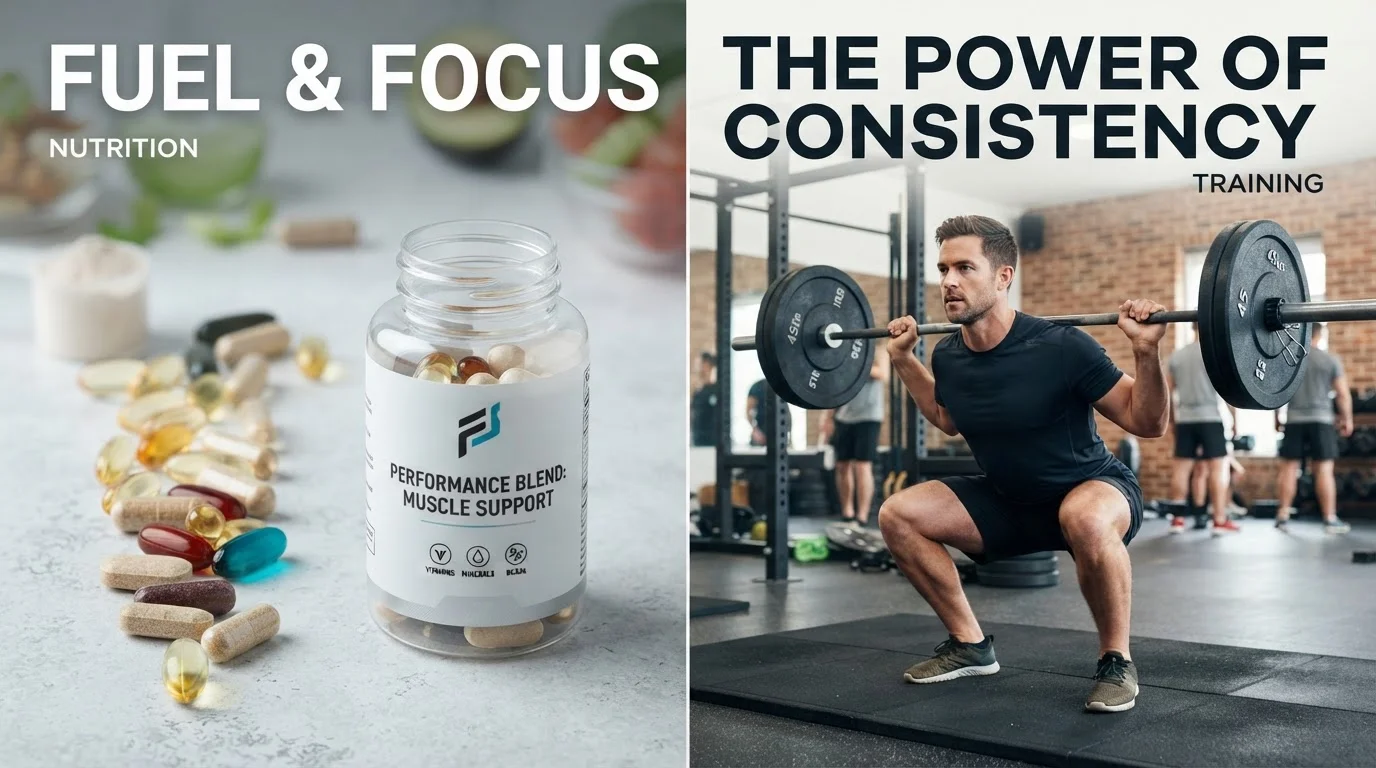
- Resistance training: Compound movements like squats, deadlifts, and presses have been shown to acutely stimulate testosterone release and, with regular practice, support hormonal health over time.
- Sleep quality: The majority of testosterone is produced during sleep. Research consistently shows that even short-term sleep restriction — less than five hours per night — can meaningfully reduce morning testosterone levels in healthy men.
- Body composition: Excess adipose (fat) tissue, particularly visceral fat, is associated with increased aromatase activity, the enzyme that converts testosterone to estrogen. Weight management through sustainable dietary habits can help moderate this effect.
- Stress and cortisol: Chronically elevated cortisol — the body's primary stress hormone — competes with testosterone production at the hormonal level. Stress management practices, including mindfulness and recovery prioritization, are therefore relevant to hormonal health.
For a deeper look at which specific lifestyle strategies have the most credible research behind them, explore natural approaches to supporting testosterone. And to understand how hormones naturally shift across your lifespan, the article on testosterone changes from your 20s to your 60s provides useful context.
~1%
Annual testosterone decline after age 30
Research published in journals including the Journal of Clinical Endocrinology & Metabolism suggests total testosterone decreases gradually beginning in a man's early 30s.
10–15%
Testosterone reduction from sleep deprivation
A University of Chicago study found that men sleeping fewer than five hours per night showed significantly reduced daytime testosterone compared to those sleeping eight hours.
~24%
Share of supplement labels with inaccurate claims
FDA analyses and independent third-party testing have repeatedly found that supplement products, including hormone-related formulas, may not match label claims for ingredient content.
Making an Informed Choice
The framing of "boosters versus lifestyle" can be misleading if it implies the two are equal alternatives. They are not directly comparable — one category has a substantial, replicable evidence base; the other is largely driven by marketing claims backed by preliminary or manufacturer-funded research.
That said, dismissing supplements entirely ignores nuance. If a blood test reveals a vitamin D or zinc deficiency, addressing it — ideally under clinical guidance — is entirely reasonable and may benefit more than hormonal health alone. The issue is treating proprietary supplement blends as a substitute for foundational habits, or as a treatment for clinically meaningful hormonal decline.
When to Involve a Healthcare Professional
Clinically low testosterone — a condition called hypogonadism — is a medical diagnosis requiring laboratory testing, not a self-assessed condition. Over-the-counter supplements are not approved to treat hypogonadism, and attempting to self-manage significant hormonal deficiency without medical guidance can delay appropriate care. If your symptoms are persistent or disruptive, speak with your primary care physician or an endocrinologist.
If you are experiencing persistent fatigue, low mood, reduced libido, or other symptoms that concern you, the first step is a conversation with a qualified healthcare provider — not a supplement purchase. Testosterone levels vary significantly between individuals, and symptoms alone are not a reliable diagnostic tool. For men interested in the broader landscape of physical vitality, lifestyle-first strategies remain the most durable and accessible foundation.
This article is for general informational and educational purposes only and does not constitute medical advice. Always consult a qualified healthcare professional before starting any supplement regimen or making changes to address hormonal health concerns.