

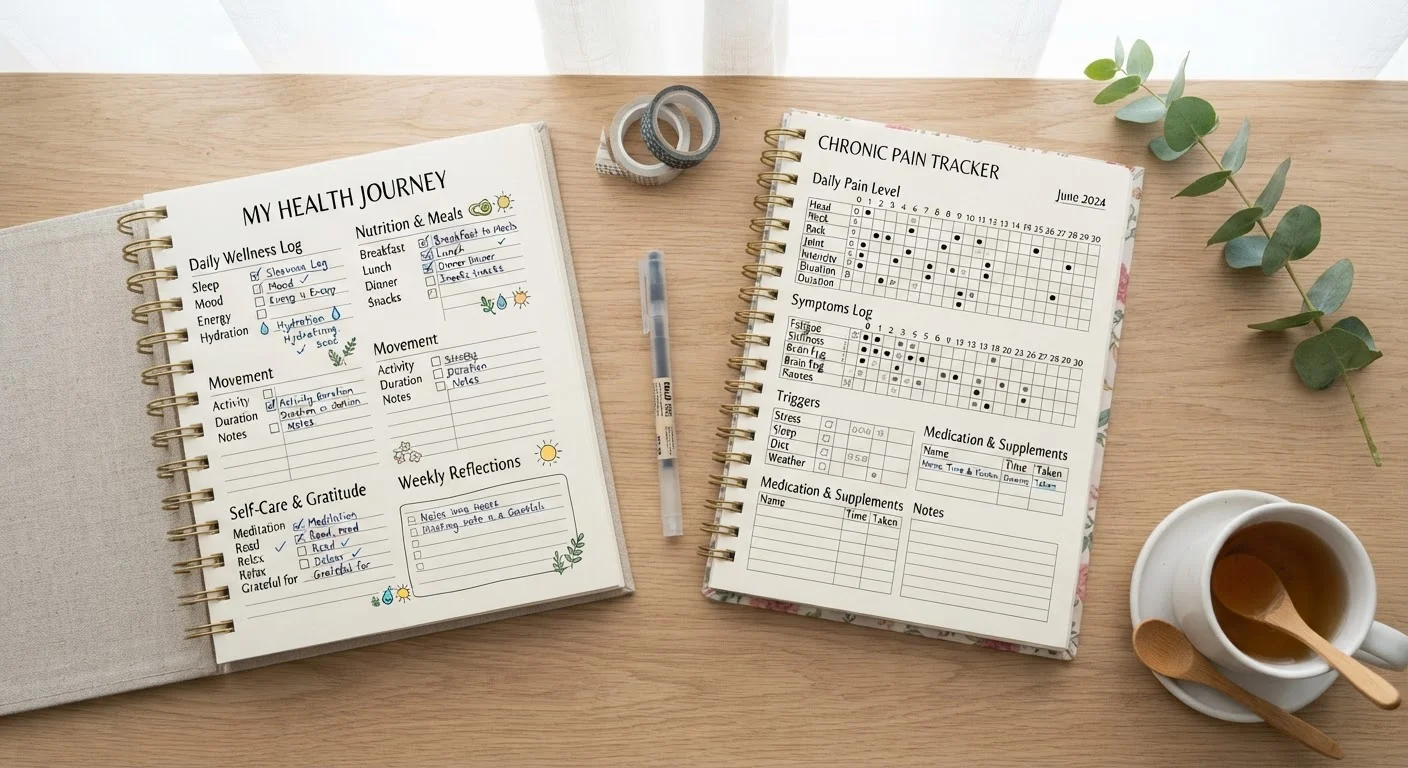
Key Takeaways
- General trackers capture broad patterns across multiple health dimensions simultaneously.
- Condition-specific trackers provide structured, targeted data relevant to one diagnosis or concern.
- Your tracking goal — exploration versus monitoring — is the most useful guide to format choice.
- Both formats can complement each other when managing a known condition alongside general wellness.
- Consult a healthcare provider to determine which data points are most clinically meaningful for your situation.
Our Verdict
General symptom trackers suit people who are still exploring what affects their health or who want a broad-view wellness log. Condition-specific trackers excel when a known diagnosis requires focused, consistent monitoring. For many people with a chronic condition, using both formats in parallel — one for day-to-day wellness context and one for condition-relevant detail — can yield the most actionable data.
| Best for | Recommended |
|---|---|
| Those exploring new or unexplained symptoms | General tracker |
| People managing a diagnosed chronic condition | Condition-specific tracker |
| Anyone tracking multiple health dimensions simultaneously | General tracker |
| Preparing detailed records for a specialist appointment | Condition-specific tracker |
What Each Format Actually Does
A general symptom tracker is an open-ended log covering multiple health dimensions — mood, sleep quality, energy, pain location, digestion, and whatever else feels relevant on a given day. It casts a wide net and is especially useful when you haven't yet identified a root cause or when you want to see how different variables interact. See our guide to tracking multiple health dimensions for a closer look at how this cross-variable approach works.
A condition-specific tracker is purpose-built around one health concern — migraine frequency and triggers, blood glucose patterns, asthma peak flow readings, or joint pain severity in arthritis, for example. It uses predefined fields chosen because they are clinically or practically meaningful for that condition. The depth is greater, but the scope is narrower by design. Tracking for chronic conditions requires this kind of structured, consistent approach.
Comparing the Two Formats
Neither format is universally superior. The right choice depends on where you are in your health journey and what you need the data to do.
| General Tracker | Condition-Specific Tracker | |
|---|---|---|
| Best use case | Unexplained or multi-symptom situations | Diagnosed, ongoing health condition |
| Scope | Broad — multiple health dimensions | Narrow — one condition's key metrics |
| Setup effort | Low — flexible, open fields | Moderate — predefined structured fields |
| Pattern detection | Cross-variable connections | Condition-specific trends over time |
| Usefulness for appointments | Good for general practitioners | Excellent for specialists |
| Risk of noisy data | Higher without consistent habits | Lower due to structured fields |
| Flexibility | High — adapts as needs change | Low — fixed to one condition's framework |
One important nuance: condition-specific trackers can feel limiting when symptoms don't fit neatly into preset fields. General trackers, meanwhile, can produce noisy, hard-to-interpret records if entries are inconsistent. Both problems are solvable with good recording habits — something covered in depth in our piece on why symptom trackers stop being useful.
When to Choose a General Tracker
Start with a general format when you are in a discovery phase — symptoms are present but undiagnosed, or you want to understand your overall wellness baseline. A broad log lets you spot unexpected connections: perhaps your energy dips consistently the day after poor sleep and high-stress days together, not either factor alone.
Combine Formats When It Makes Sense
If you have a known diagnosis but also experience symptoms outside its scope, consider running both formats in parallel. Use a brief general log for daily wellness context and a dedicated condition-specific record for the metrics your care team monitors. Keeping them separate prevents one set of data from muddying the other, while still giving you a complete picture of how you feel day to day.
General trackers also serve well when managing multiple mild concerns simultaneously. Rather than keeping five separate logs, one structured daily entry covering mood, sleep, pain, digestion, and energy can surface cross-dimensional patterns a siloed approach would miss. For guidance on which details actually belong in any log, see what to record in a symptom log.
When a Condition-Specific Tracker Is the Better Tool
Once a diagnosis is established, a condition-specific format usually provides more actionable data. Fields are designed around the metrics your care team actually uses — seizure duration and postictal recovery for epilepsy, or stool consistency and urgency for irritable bowel syndrome. This precision makes it far easier to identify meaningful change over time and to share records that a clinician can interpret quickly.
Condition-specific trackers also help during treatment adjustments. If your provider has changed a management strategy, a focused log can show whether target symptoms are responding — information a general wellness journal may obscure. Be aware, though, that even detailed self-tracking has clear limits: it records what you observe, not what causes it. Our article on the real limits of self-tracking explains where self-collected data reliably ends and clinical assessment begins.
If you are deciding between a paper diary and a digital tool for either format, the medium matters too — explore the trade-offs between paper and digital tracking before committing.
This article is for informational purposes only and is not a substitute for professional medical advice, diagnosis, or treatment. Always consult a qualified healthcare provider about any health concerns or before making changes to how you monitor or manage a health condition.