
Cruciferous Vegetables and Their Bioactive Compounds: What Nutritional Research Shows

Key Takeaways
- Cruciferous vegetables contain glucosinolates, which convert into bioactive compounds during digestion.
- Sulforaphane, derived from broccoli, is among the most researched of these compounds.
- Cooking method significantly affects how much bioactive potential these vegetables retain.
- Current research is promising but largely preliminary; no specific health outcomes are guaranteed.
- Eating a variety of cruciferous vegetables regularly is supported by broad dietary science.
Cruciferous Vegetable Bioactive Compounds
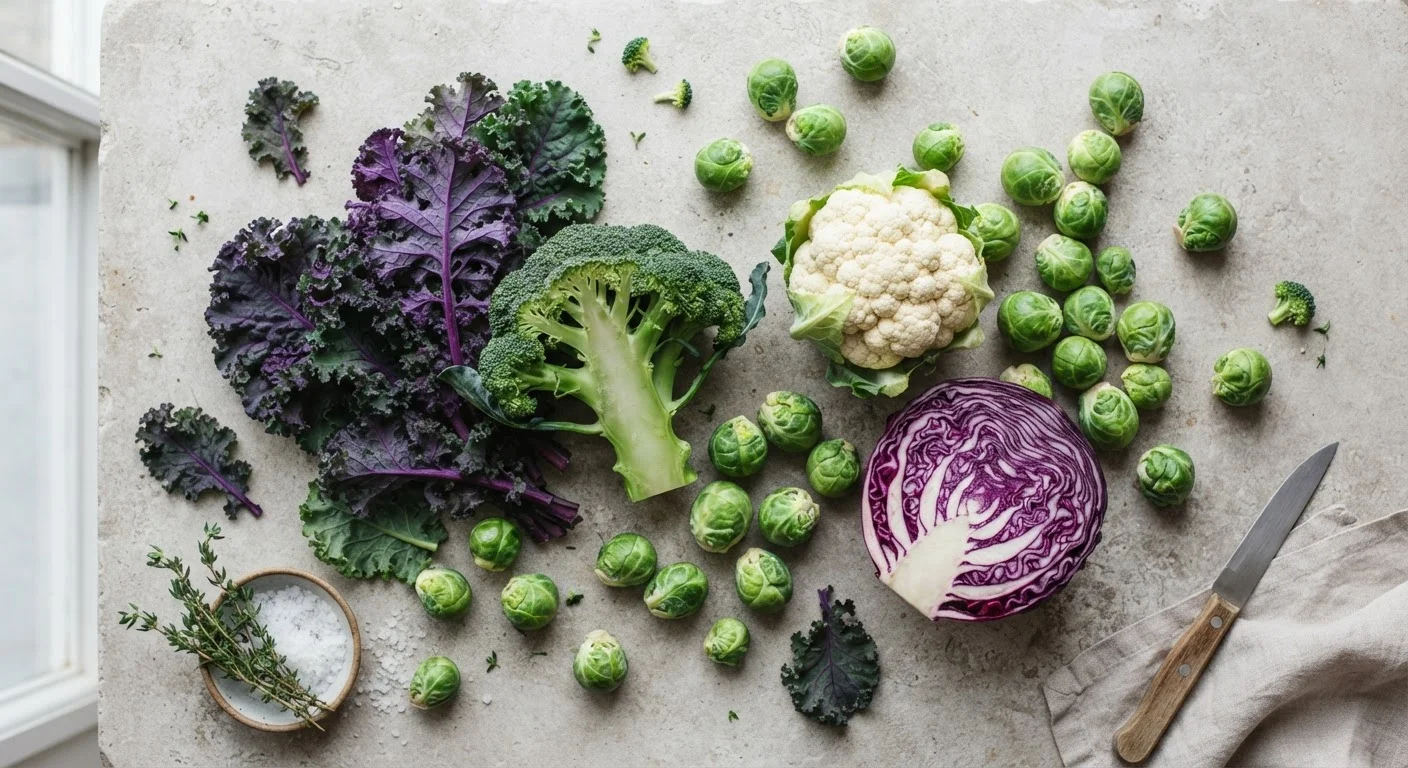
Cruciferous vegetables — a family that includes broccoli, kale, cabbage, and Brussels sprouts — contain naturally occurring plant chemicals called glucosinolates. When these vegetables are chewed or chopped, an enzyme called myrosinase breaks glucosinolates down into biologically active molecules, the most studied being sulforaphane and indole-3-carbinol. These compounds interact with cellular processes in ways that nutritional researchers continue to investigate.
Glucosinolates are sulfur-containing glycosides. Their hydrolysis products — isothiocyanates, nitriles, and indoles — vary depending on plant species, preparation method, and the gut microbiome's myrosinase-like activity.
What Are Glucosinolates and Why Do Researchers Study Them?
Glucosinolates are a class of sulfur-containing compounds produced naturally by plants in the Brassicaceae family — the botanical group that gives us broccoli, cauliflower, kale, arugula, bok choy, and mustard greens. Plants likely evolved these molecules as a chemical defense against insects and pathogens. For humans, they interact with biology in ways that have attracted significant scientific attention over the past four decades.
The key activation mechanism is enzymatic. When plant tissue is disrupted — by chewing, chopping, or blending — an enzyme called myrosinase comes into contact with glucosinolates and catalyzes their breakdown into several compounds, primarily isothiocyanates (like sulforaphane), indoles (like indole-3-carbinol), and nitriles. Each class of breakdown product has different chemical properties and interacts with different biological pathways.
Nutritional researchers are drawn to glucosinolates because population studies have repeatedly observed associations between higher cruciferous vegetable consumption and various markers of health — though causality is difficult to establish in observational research, and whole-diet confounders are always present.
~120+
Glucosinolates identified in cruciferous vegetables
According to published reviews in journals such as the Journal of Agricultural and Food Chemistry, more than 120 distinct glucosinolates have been characterized across the Brassicaceae family.
10–100×
More glucoraphanin in broccoli sprouts vs. mature heads
Research published by scientists at Johns Hopkins University found broccoli sprouts can contain dramatically higher glucoraphanin concentrations than mature broccoli florets per gram of fresh weight.
~3–4 min
Optimal light-steaming time to preserve myrosinase
Food science research on thermal processing indicates brief steaming around 3–4 minutes preserves a significant portion of myrosinase activity compared to longer cooking durations.
Sulforaphane: The Most Studied Isothiocyanate
Sulforaphane, produced primarily from the glucosinolate glucoraphanin found in high concentrations in broccoli and broccoli sprouts, is the most extensively researched bioactive compound in this family. Laboratory and animal studies have examined its role in activating the Nrf2 pathway — a cellular signaling route that upregulates the body's own antioxidant and detoxification enzyme systems.
Human clinical research remains more limited and mixed. Some trials have looked at sulforaphane's potential effects on markers of oxidative stress, inflammation, and carcinogen metabolism, with varying results depending on dose, study population, and measurement approach. It is important to note that findings from cell studies and rodent models do not automatically translate to meaningful human health outcomes.
Maximize Sulforaphane: Chop Before You Cook
Chopping or chewing broccoli before applying heat gives myrosinase time to act on glucoraphanin before the enzyme is denatured. Letting chopped broccoli rest for about 40 minutes at room temperature before cooking may help preserve more sulforaphane production. This simple step costs nothing and requires no special equipment.
Broccoli sprouts deserve particular mention: they can contain 10 to 100 times more glucoraphanin per gram than mature broccoli heads, making them a concentrated research subject — though this does not mean eating them produces proportionally stronger effects in the body.
Indole-3-Carbinol and Other Bioactive Compounds
Indole-3-carbinol (I3C) is another glucosinolate breakdown product, generated primarily from indole glucosinolates found in cabbage, Brussels sprouts, and kale. In the acidic environment of the stomach, I3C converts partially into a compound called diindolylmethane (DIM), which has been studied for its interactions with estrogen metabolism pathways.
Both I3C and DIM have been examined in the context of hormone-sensitive cellular processes, though human evidence remains preliminary. Some clinical trials have used supplemental doses far exceeding what is achievable through food — a context that differs meaningfully from ordinary dietary intake.
Other notable compounds in cruciferous vegetables include quercetin (found in kale and broccoli), kaempferol, and standard micronutrients like vitamin K, vitamin C, and folate. These work alongside — not independently of — the glucosinolate-derived molecules, illustrating why whole-food research contexts matter.
How Preparation Affects Bioactive Compound Availability
The way cruciferous vegetables are prepared has a measurable impact on their glucosinolate content and the enzyme activity needed to convert them into bioactive compounds.
- Raw: Myrosinase is fully intact, supporting maximum conversion — but some people find raw cruciferous vegetables harder to digest in large quantities.
- Lightly steamed (2–4 minutes): Research suggests this method preserves a meaningful portion of myrosinase activity while improving digestibility.
- Boiled: Glucosinolates are water-soluble and leach significantly into cooking water. Boiling for extended periods also denatures myrosinase, reducing bioactive conversion. Saving cooking water for soups can partially recapture leached compounds.
- Microwaved at high intensity: Tends to degrade myrosinase rapidly; combining microwaved broccoli with fresh mustard (a source of external myrosinase) has been studied as a workaround.
The gut microbiome also plays a role: certain gut bacteria carry myrosinase-like enzymes that can partially compensate for heat-denatured plant enzymes, meaning individual response to cooked cruciferous vegetables varies.
Individual Gut Microbiome Differences Matter
Research suggests that people with higher populations of myrosinase-producing gut bacteria — such as certain Lactobacillus and Bacteroides species — may convert more glucosinolates into active compounds from cooked vegetables than those without. This means the bioactive yield from the same meal can vary considerably between individuals, a factor that observational studies on cruciferous vegetable intake often cannot fully account for.
This article is for general informational and educational purposes only and does not constitute medical or dietary advice. Consult a qualified healthcare professional or registered dietitian before making significant changes to your diet, especially if you have a pre-existing health condition.