

Key Takeaways
- Meditation works by activating the parasympathetic nervous system, shifting the body away from fight-or-flight.
- Even short sessions of focused breathing can lower measurable cortisol and heart rate.
- Regular practice appears to physically reshape brain regions linked to emotional regulation.
- You do not need prior experience — noticing distraction and returning attention is the core skill.
- Meditation complements other calming practices like breathwork and gentle yoga for broader stress relief.
Meditation (Stress Response)
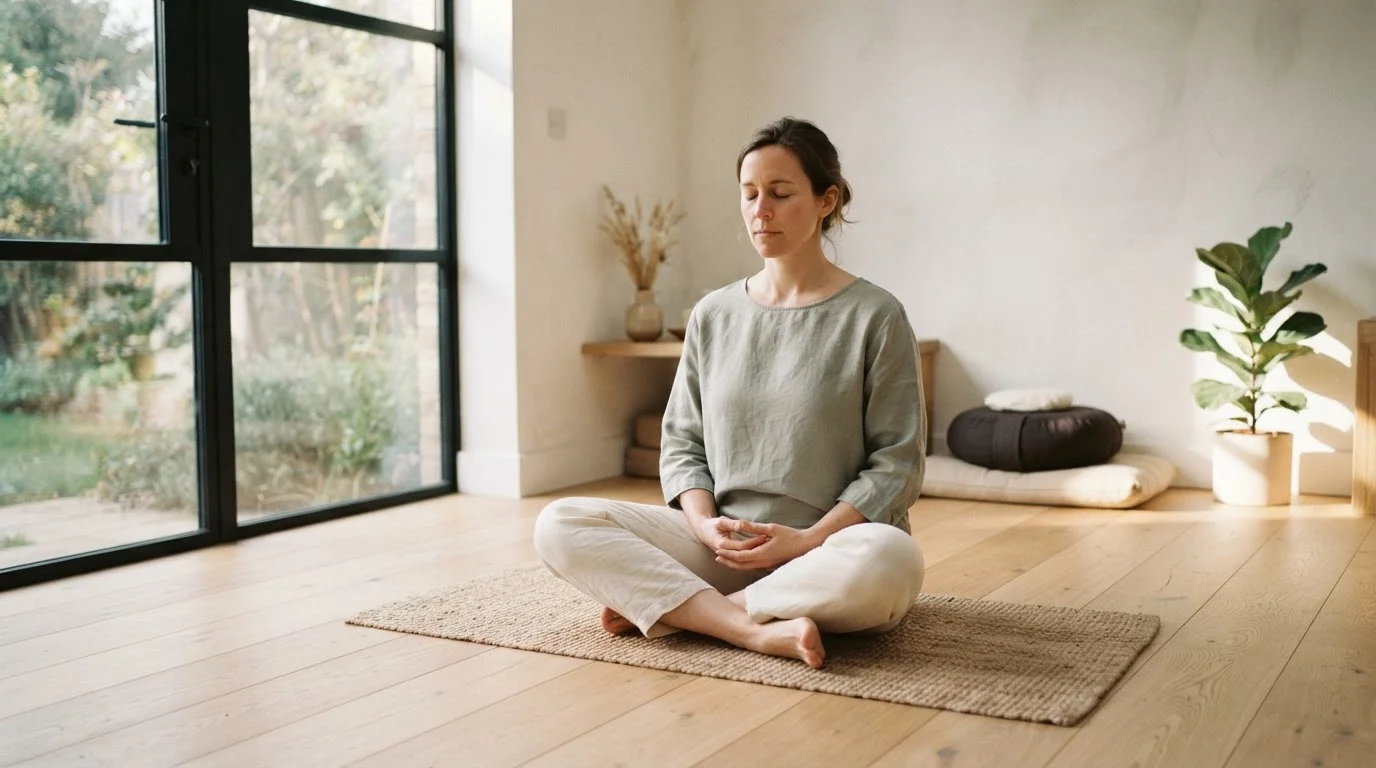
Meditation is a mental training practice that deliberately shifts your attention — often to the breath, a word, or bodily sensations — to interrupt automatic stress-driven thinking. When practiced regularly, it produces measurable changes in how the brain and nervous system respond to everyday pressures. It does not require prior experience, special equipment, or a particular belief system.
Neuroimaging research has associated consistent meditation practice with reduced activity in the amygdala — the brain's threat-detection center — and thickening of the prefrontal cortex, which governs deliberate, calm decision-making.
What Your Brain Is Actually Doing Under Stress
When life feels relentless, your brain isn't being dramatic — it's executing a well-evolved survival program. The amygdala, a small almond-shaped structure deep in the brain, scans continuously for threat. The moment it detects one — a tense email, a crowded schedule, a difficult conversation — it triggers the hypothalamic-pituitary-adrenal (HPA) axis to release cortisol and adrenaline. Your heart rate rises, muscles tighten, and attention narrows to the perceived danger.
This system is brilliant in a genuine emergency. The problem is that the modern brain often cannot easily distinguish a deadline from a predator. The result is a nervous system stuck in a low-grade alert state — which is exactly where meditation intervenes.
To understand the physical side of this experience in more depth, see our explanation of why stress feels physical, which covers how cortisol and adrenaline translate into headaches, tight muscles, and fatigue.
8 weeks
Time for measurable brain structure changes
Research published in Psychiatry Research: Neuroimaging found detectable changes in amygdala gray matter density after an eight-week MBSR program.
~26%
Reduction in perceived stress scores
A meta-analysis in JAMA Internal Medicine reviewing mindfulness meditation programs found meaningful reductions in self-reported stress and anxiety across multiple trials.
5–10 min
Minimum effective session length studied
Several controlled studies have explored brief mindfulness sessions and found measurable effects on heart rate variability and mood within single sittings.
How Meditation Shifts the Nervous System
Meditation's core mechanism involves deliberately activating the parasympathetic nervous system — sometimes called the "rest and digest" branch — to counteract the sympathetic "fight-or-flight" response. Slow, intentional breathing is the most direct pathway into this shift. When you lengthen your exhale and anchor attention to the breath, sensory signals travel via the vagus nerve to the brainstem, signaling that the body is safe enough to downregulate its alert state.
Heart rate slows. Blood pressure eases. Cortisol output decreases. These are not metaphors — they are measurable physiological changes documented in peer-reviewed research across multiple studies.
A closely related practice, diaphragmatic breathing, isolates this mechanism further and can serve as a powerful stand-alone reset when a full meditation session isn't possible.
Extend Your Exhale for a Faster Calming Effect
If you want a quick physiological shift, try making your exhale slightly longer than your inhale — for example, inhale for four counts, exhale for six. This ratio preferentially stimulates the vagus nerve and parasympathetic activity. Even three to five breath cycles using this pattern can produce a noticeable sense of calm.
What Research Says About the Meditating Brain
Neuroimaging studies have produced some of the most compelling evidence for meditation's effects. Researchers have observed that long-term meditators show reduced gray matter density in the amygdala — suggesting the brain's threat-detection center becomes less reactive over time. Simultaneously, the prefrontal cortex, which handles deliberate attention and emotional regulation, appears to become structurally thicker in regular practitioners.
Jon Kabat-Zinn's Mindfulness-Based Stress Reduction (MBSR) program, developed at the University of Massachusetts Medical School, has been one of the most rigorously studied meditation frameworks. Participants in MBSR trials have shown reductions in self-reported stress, anxiety, and markers of immune function disruption, though researchers note that study designs vary and more high-quality trials are ongoing.
“Mindfulness means paying attention in a particular way: on purpose, in the present moment, and nonjudgmentally. This kind of attention nurtures greater awareness, clarity, and acceptance of present-moment reality.”
— Jon Kabat-Zinn, Founder of Mindfulness-Based Stress Reduction (MBSR), Professor Emeritus of Medicine
It is worth being honest about the limits of the science: much meditation research uses small samples, self-reported outcomes, or short follow-up periods. The findings are encouraging, but not every claim you encounter about meditation is equally well-supported. Emerging evidence is still evidence — not settled consensus.
How to Start — Even With Five Minutes and a Busy Schedule
The single most common barrier to meditation is the belief that you are doing it wrong. You are not. The core skill is simple: choose an anchor for attention (your breath works well), notice when the mind wanders, and return gently. That cycle — wander, notice, return — is the practice. Distraction is not failure; it is the repetition that builds the mental muscle.
A practical starting point for busy adults:
- Choose a consistent time. Immediately after waking or before a meal tends to require less willpower than carving out mid-day time.
- Set a modest timer. Five minutes is genuinely enough to begin. Consistency matters more than duration.
- Sit comfortably, close your eyes, and breathe naturally. Notice the physical sensation of each inhale and exhale.
- When your mind wanders — and it will — simply return attention to the breath. No judgment required.
Meditation pairs naturally with gentle movement. If you find sitting stillness challenging, the nervous system effects of gentle yoga offer a complementary on-ramp. For a broader toolkit, our Stress Relief Tools hub brings together evidence-backed techniques you can mix and match.
This article is for general informational purposes only and does not constitute medical advice. If you have concerns about your mental health or stress levels, please consult a qualified healthcare professional.