

Key Takeaways
- Self-medication feels effective short-term because it genuinely blunts discomfort — temporarily.
- Common coping habits like overworking, drinking, or constant distraction can mask symptoms that need real attention.
- The shift from healthy coping to harmful self-medication is gradual, making it easy to miss.
- Recognising the pattern is the first step; professional support is available and effective.
- Men are statistically less likely to seek mental health care, increasing vulnerability to entrenched coping habits.
Why Coping Habits Feel Like Solutions
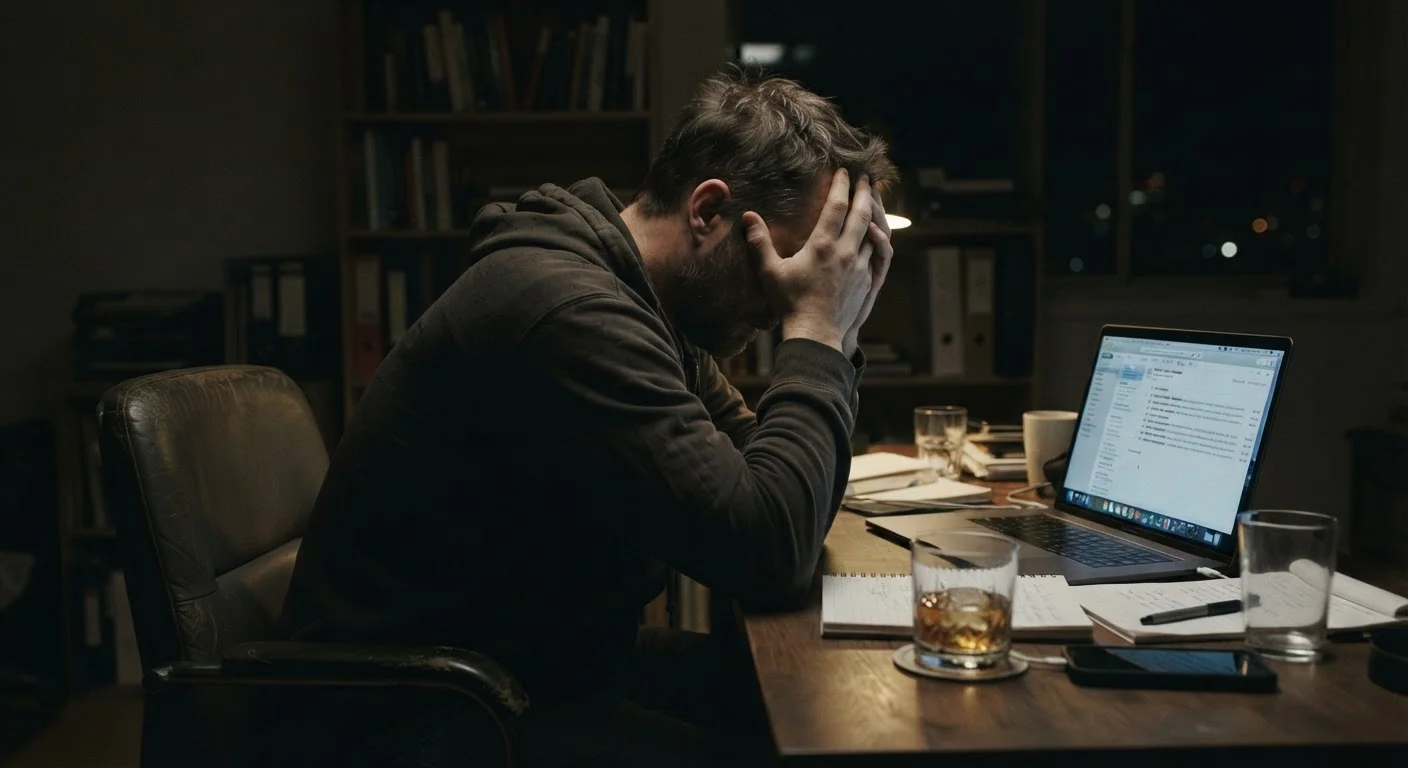
A drink to decompress. A late-night work session to outrun worry. A few hours of scrolling to switch the brain off. None of these behaviours starts as a problem — and that's precisely why this pattern is so difficult to catch early. Coping strategies, by definition, work. They reduce discomfort in the moment. The issue is not that relief is sought, but that certain methods of seeking it eventually create their own costs while leaving the underlying difficulty untouched.
Men face particular pressure here. Cultural norms around stoicism and self-sufficiency often make emotional acknowledgement feel like weakness. This makes indirect coping — staying busy, staying numb, staying distracted — not just common but actively reinforced. Understanding the mechanism without shame is the starting point for change.
This Is Information, Not a Diagnosis
The patterns described in this article are general and educational. They are not a substitute for professional assessment. If you recognise concerning behaviours in yourself, speak with a qualified healthcare provider or mental health professional rather than attempting to self-diagnose or self-treat.
Common Mistakes That Cross the Line
The following patterns represent some of the most prevalent ways coping habits shift from functional to counterproductive. Recognising them is not about self-criticism — it's about clarity.
Using alcohol as a reliable stress reliever after a hard day.
Why it happens: Alcohol does produce short-term sedation and social ease, which the brain quickly learns to associate with relief. Over time, the threshold rises and the original stress remains unaddressed.
Treating overwork as productivity rather than avoidance.
Why it happens: In many workplace cultures, busyness is rewarded. Men in particular may conflate exhaustion with purpose, using a packed schedule to crowd out anxiety, grief, or relationship tension they don't know how to process.
Relying on constant digital distraction to avoid uncomfortable emotions.
Why it happens: Scrolling, gaming, or binge-watching provide genuine dopamine responses that feel restorative. The problem is that they prevent the emotional processing that would actually resolve the underlying tension.
Treating exercise as punishment for emotional states rather than as health maintenance.
Why it happens: Exercise benefits mental health, but driven compulsively — running until you're numb, training through injury to "earn" calm — it becomes another form of avoidance. The behaviour looks healthy from the outside, which makes it especially easy to rationalise.
Monitoring symptoms obsessively as a substitute for addressing root causes.
Why it happens: Tracking feels productive and rational — particularly appealing to men who are more comfortable with data than with emotional disclosure. But logging every symptom without acting on the information can itself become a compulsive habit that heightens rather than reduces anxiety.
3:1
Male-to-female ratio of suicide deaths in the US
Data from the CDC consistently shows men die by suicide at approximately three times the rate of women, a disparity researchers link partly to underutilisation of mental health services.
~40%
Men with depression who receive treatment
Research published in journals including JAMA Psychiatry suggests fewer than half of men experiencing depression access any form of formal treatment, often citing stigma and self-reliance as barriers.
Recognising the Shift Before It Solidifies
The clearest marker that a coping strategy has become part of the problem is dependency: when the habit is no longer a choice but a compulsion, when skipping it produces disproportionate distress, or when it is consistently used to avoid rather than to recover. A secondary signal is tolerance — needing more of the behaviour to achieve the same effect.
It's also worth noting that some coping patterns can themselves generate health data that then feeds anxiety. Recognising when symptom tracking becomes counterproductive offers useful perspective on how monitoring can loop back into the stress it was meant to relieve.
When to Seek Help Immediately
If a coping habit has escalated to the point of physical dependency — such as withdrawal symptoms when you stop drinking — or if you are experiencing thoughts of self-harm, contact a medical professional or crisis service without delay. These situations require clinical care, not willpower alone.
If you identify with one or more patterns described here, that recognition is useful — not a verdict. The next step is talking with a qualified mental health professional who can provide a proper assessment and support that is actually matched to what's going on. General health information, including articles like this one, cannot substitute for that.
This article is for general informational and educational purposes only and does not constitute medical or psychological advice. Always consult a qualified healthcare professional for guidance specific to your circumstances.